

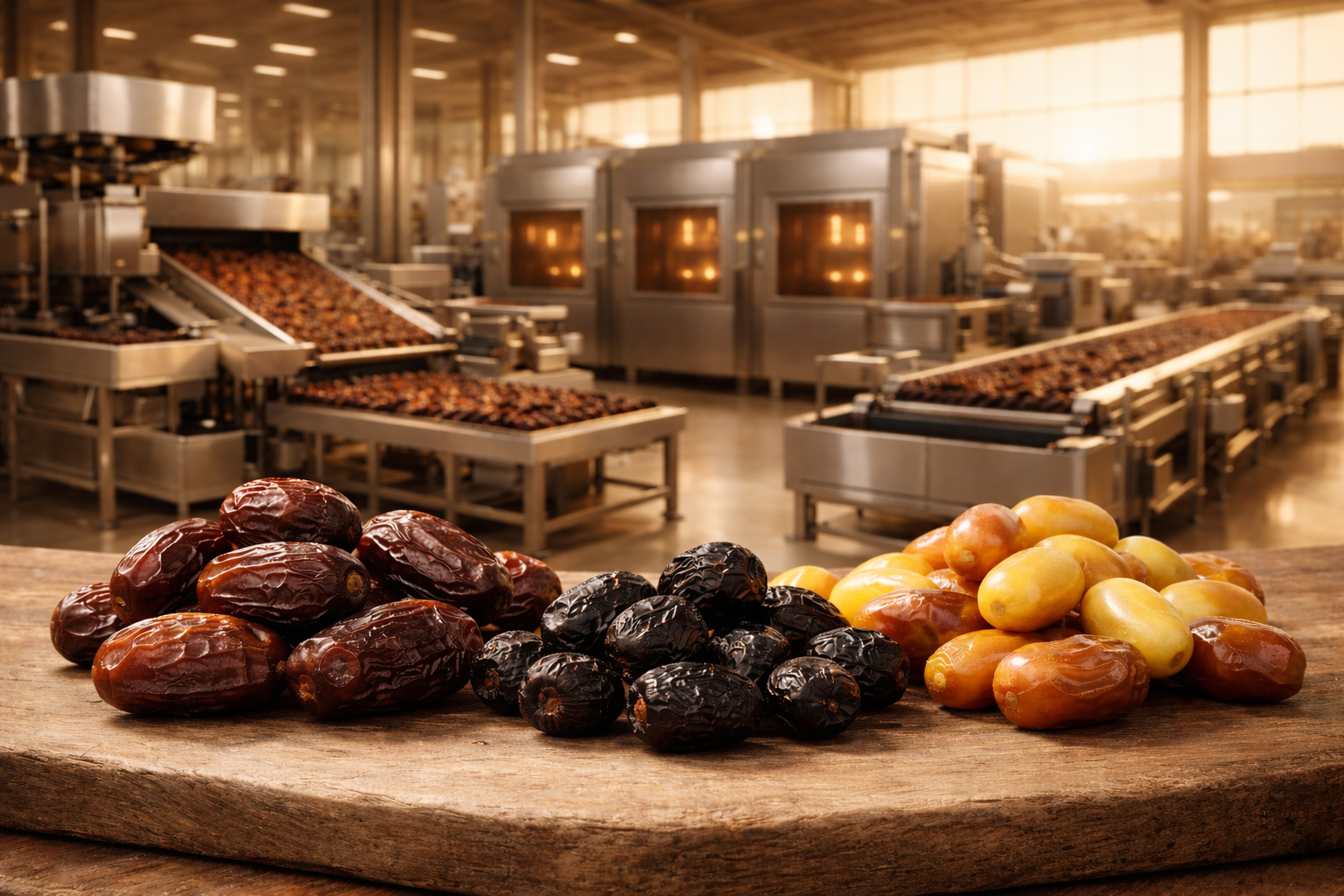
Dates are one of the oldest cultivated fruits and play a crucial role in nutrition, culinary traditions, and the food industry. Understanding the types of dates, their characteristics, and applications is essential for consumers, retailers, and industrial producers. Today, date production has evolved into a structured industrial process that ensures quality, consistency, and scalability in commercial operations.
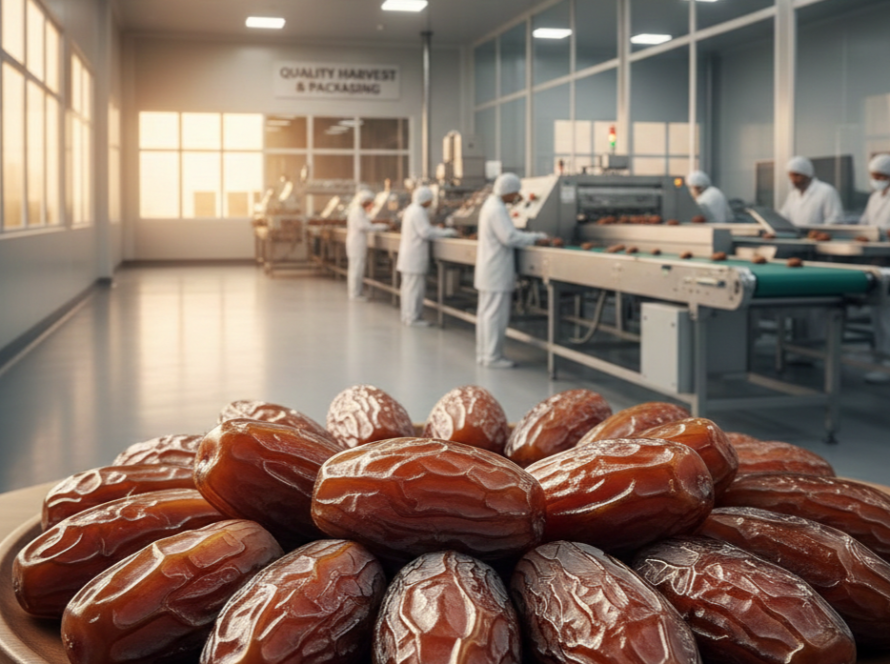
Modern date farms and processing facilities rely on advanced harvesting techniques, sorting and grading systems, precise moisture control, and automated packaging solutions. Proper handling ensures that types of dates retain flavor, texture, and nutritional value while meeting safety and quality standards.
At ProNano, we support commercial date producers through variety analysis, quality assessment, moisture optimization, and process optimization for large-scale date operations.
What Are Types of Dates?
Types of dates refer to the different cultivars of date palms (Phoenix dactylifera) that vary in size, texture, color, sweetness, and suitability for specific uses. Unlike small-scale home production, industrial date production focuses on optimizing each variety for commercial distribution, processing, and long shelf life. Key factors distinguishing types of dates include:
• Fruit texture: soft, semi-dry, or dry
• Sugar content: high, medium, or low
• Color: light, golden, brown, or dark
• Size and shape: elongated, round, or oval
• End-use suitability: fresh consumption, cooking, baking, or industrial extraction
Common Types of Dates
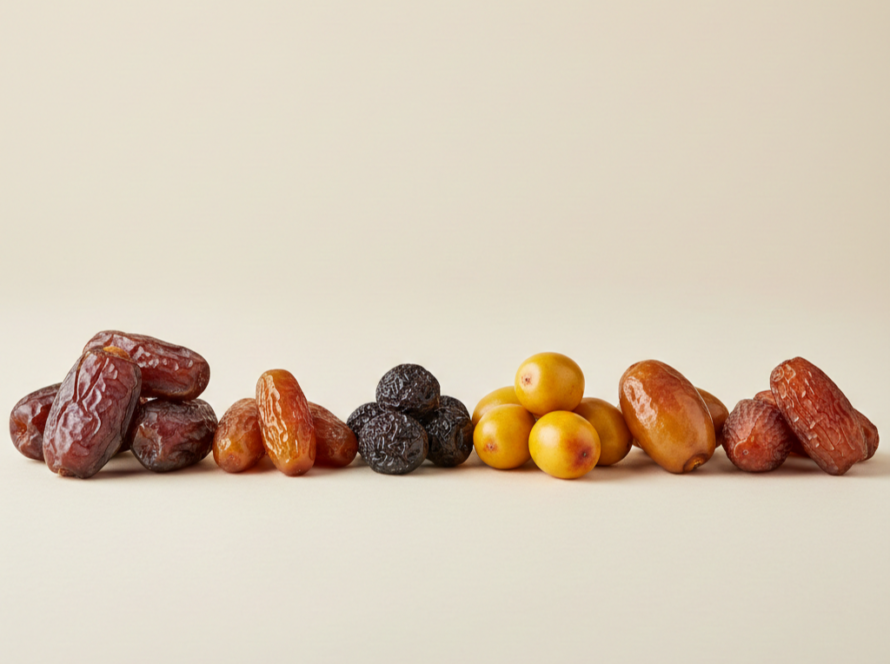
The most commercially important types of dates include:
• Medjool: Large, soft, and extremely sweet; ideal for fresh consumption and premium products.
• Deglet Noor: Semi-dry with delicate sweetness; widely used in baking and industrial applications.
• Barhi: Soft, creamy texture; often consumed fresh and appreciated for dessert use.
• Ajwa: Dark, chewy, and flavorful; prized for health benefits and religious traditions.
• Zahidi: Semi-dry with firm texture; commonly used in cooking and confectionery.
• Khadrawy: Soft and caramel-like; suitable for direct consumption and desserts.
Understanding these types of dates helps producers select the right variety for processing, packaging, and target markets.
Date Production Process
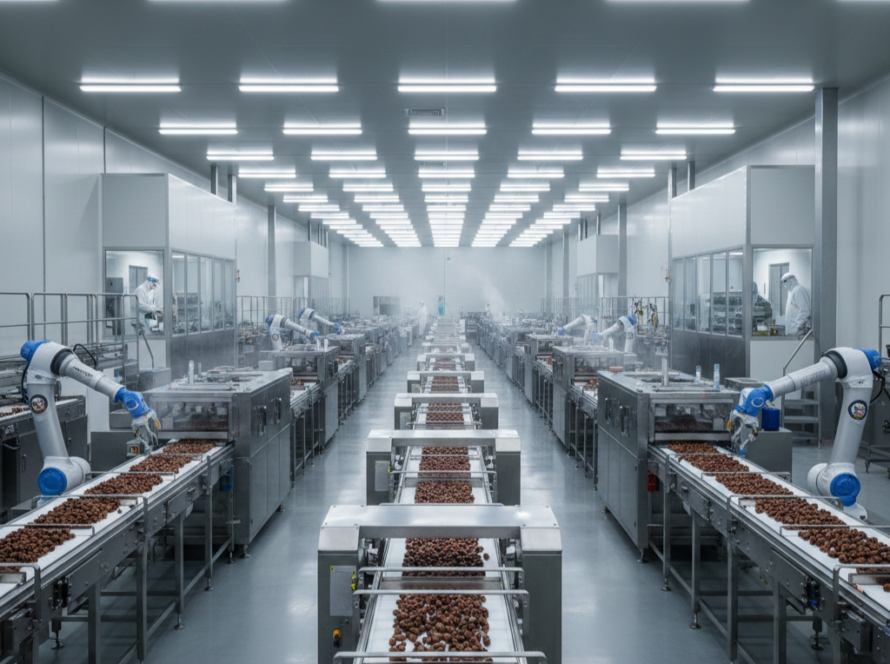
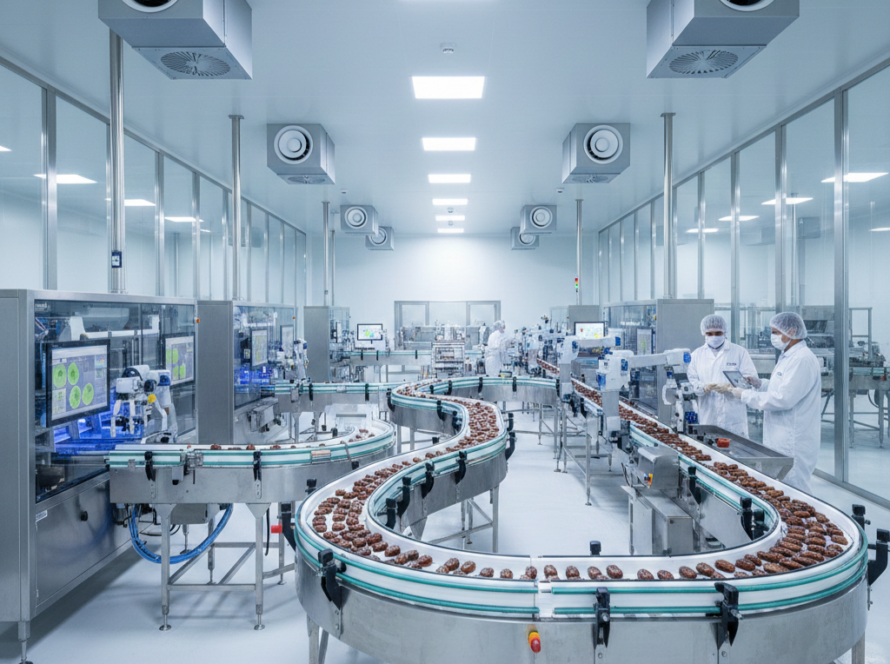
Industrial date production ensures consistent quality and shelf life for each variety. The process includes:
Harvesting
• Select fully ripened fruits based on color, firmness, and sugar content
• Harvest manually or mechanically depending on orchard size
• Handle dates gently to avoid bruising
Cleaning and Sorting
• Wash fruits to remove dust and debris
• Sort by size, color, and quality
• Remove damaged or insect-affected dates
Moisture Control
• Reduce moisture to safe storage levels (typically 18–22%)
• Use controlled drying rooms for semi-dry and dry varieties
• Monitor temperature and relative humidity precisely
Grading and Packaging
• Grade according to size, weight, and appearance
• Package for fresh, frozen, or processed distribution
• Label with variety, origin, and quality specifications
Optional Processing
• Pitting and slicing for confectionery or industrial use
• Coating, stuffing, or blending for value-added products
• Paste production for bakery, beverage, or food ingredient industries

Industrial Uses of Dates
Types of dates are highly versatile and used across multiple industries:
• Food Industry: Confectionery, bakery products, energy bars, and snacks
• Beverage Production: Date syrups, juices, and natural sweeteners
• Nutritional Supplements: High-energy formulations and health-focused products
• Export Markets: Premium date varieties for global trade
Understanding each variety’s characteristics is critical for optimizing taste, texture, and shelf life in industrial applications.
Technical Parameters and Quality Standards
Industrial date production requires careful monitoring of measurable quality indicators:
• Moisture content: 18–22%
• Sugar content: 60–75% (varies by variety)
• pH level: 5.0–6.5
• Firmness: measured through texture analyzers
• Microbiological safety: Salmonella and mold-free
• Packaging integrity: vacuum-sealed or controlled atmosphere
Compliance standards include:
• HACCP food safety system
• ISO 22000 certification
• Traceability and origin documentation
• Allergen control and labeling
Common Challenges in Date Processing
Industrial producers face several challenges with types of dates:
• Moisture Imbalance
• Cause: uneven drying
• Solution: controlled drying with sensors
• Fermentation or Spoilage
• Cause: high moisture or poor hygiene
• Solution: temperature and humidity management
• Inconsistent Quality
• Cause: mixed varieties or manual grading errors
• Solution: automated sorting and quality monitoring
• Shelf Life Limitations
• Cause: inadequate packaging or high sugar content
• Solution: optimized storage, vacuum sealing, and refrigeration
Case Study – Industrial Date Optimization
A commercial date processing facility producing 10 tons/day faced inconsistent moisture levels and 7% product waste. After implementing process optimization:
• Moisture standardized at 20%
• Automated sorting and grading installed
• Variety-specific storage conditions applied
• Packaging optimized for shelf life
Results achieved:
• Waste reduced to 2%
• Quality consistency improved by 22%
• Shelf life extended by 3 weeks
• Operational efficiency increased by 12%
Frequently Asked Questions About Types of Dates
• What is the best variety for baking?
• Deglet Noor and Zahidi are preferred for pastries.
• Can dates be processed on a large scale?
• Yes, through industrial sorting, drying, and packaging systems.
• How is moisture controlled in semi-dry dates?
• Controlled drying rooms with precise humidity monitoring.
• Which types of dates are best for direct consumption?
• Medjool, Barhi, and Khadrawy offer premium taste and texture.
• Are all date varieties suitable for syrup production?
• Yes, especially high-sugar types like Medjool and Deglet Noor.
Strategic Conclusion
Types of dates represent a fusion of traditional cultivation and modern industrial processing. Producers who invest in structured processing, moisture control, quality monitoring, and variety-specific handling achieve enhanced consistency, extended shelf life, and higher profitability. Factories seeking a competitive edge should integrate variety selection, technical monitoring, and automated processing to fully unlock the benefits of industrial date production.
Want to elevate your date production performance? Contact ProNano today for expert consulting in commercial date processing, large-scale drying, and quality optimization.
Read more about Sustainable development in the date industry.