Coffee Production is no longer a simple roasting activity, it has evolved into a highly strategic industrial sector driven by global demand, specialty market growth, and private label expansion.
For investors and manufacturers, success is not determined by machinery alone. It depends on process engineering, operational precision, quality consistency, and scalable business design.
Today, competitive advantage belongs to producers who master cost control, product differentiation, supply chain efficiency, and brand positioning, without compromising flavor integrity or food safety.
Understanding the Core Process
Although profitability drives investment decisions, understanding the technical backbone of Coffee Production is essential for long-term stability.
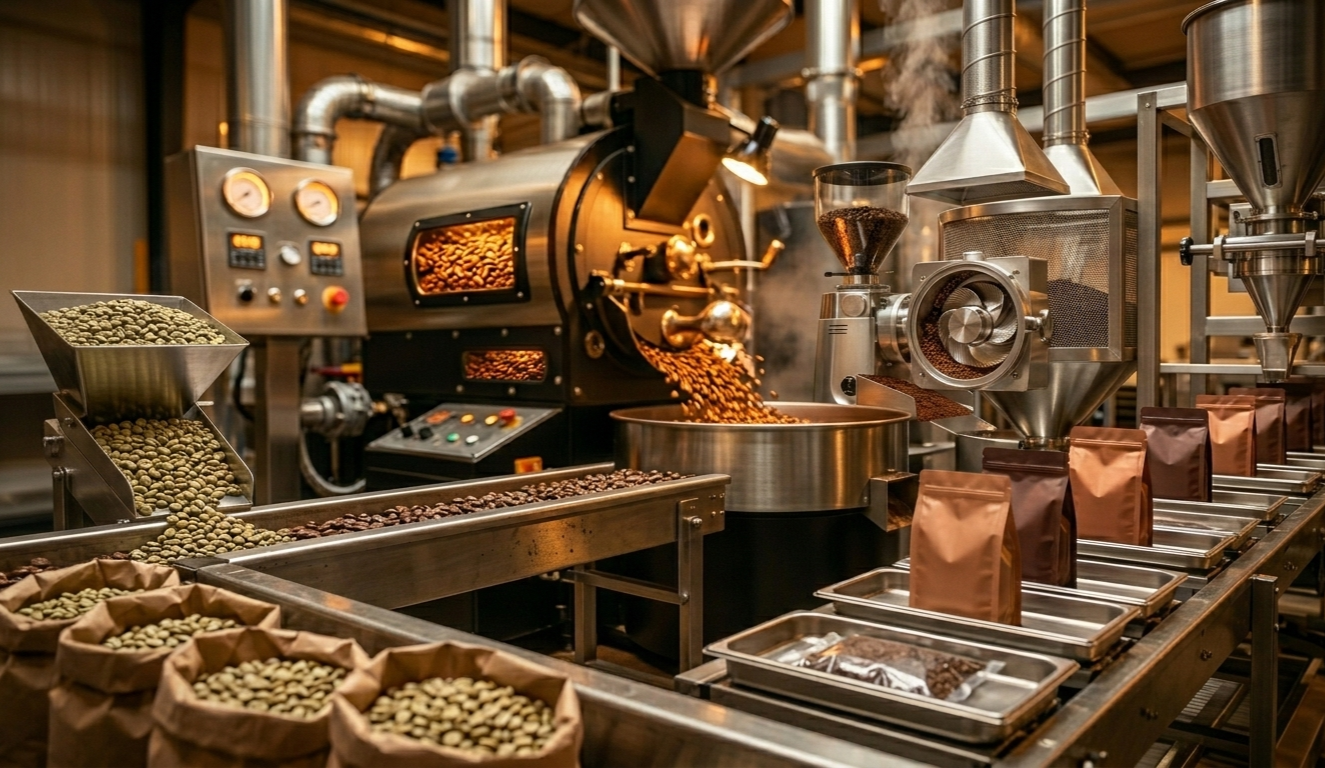
Industrial Coffee Production typically includes:
• Green coffee bean sourcing and grading
• Cleaning and foreign material removal
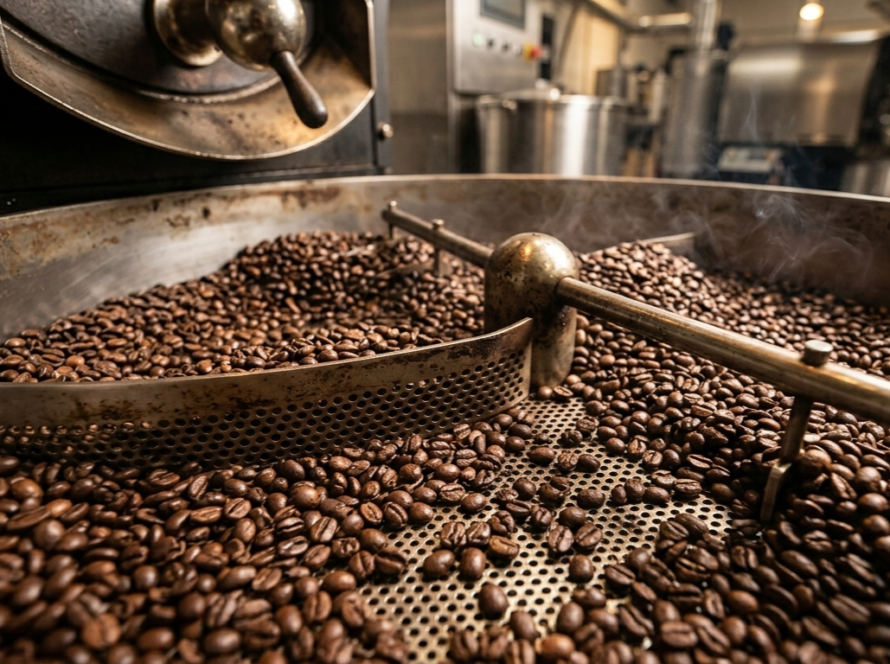
• Controlled roasting with thermal profiling
• Precision grinding (if required)
• Degassing and stabilization
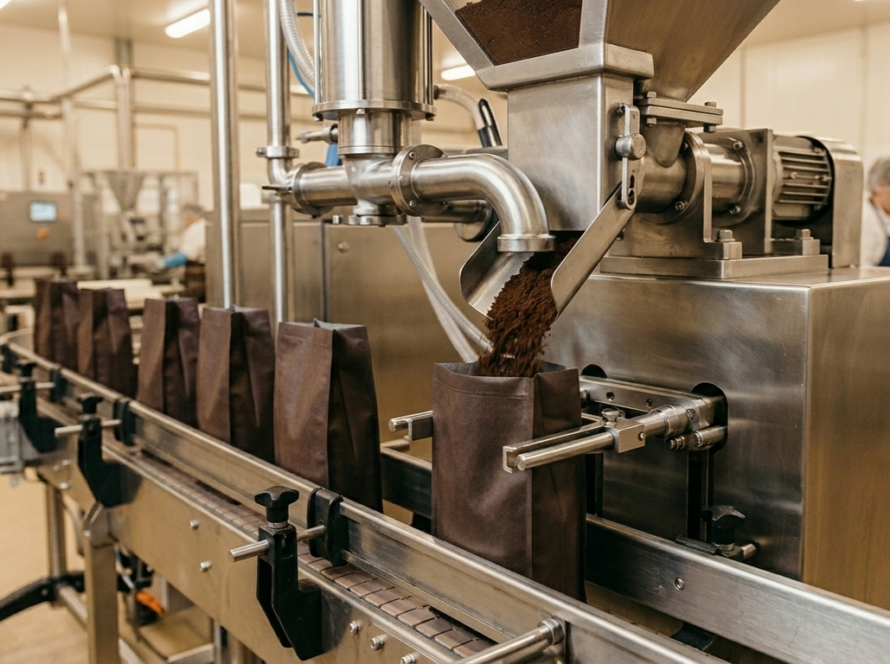
• Automated filling and protective packaging
Critical performance indicators include:
• Roast profile consistency
• Moisture stability
• Particle size uniformity
• Aroma retention
• Shelf-life durability
However, true industrial strength does not lie in performing these steps, it lies in controlling and integrating them within a stable production ecosystem.
Why Many Coffee Production Projects Underperform
Many facilities invest heavily in roasting equipment but overlook strategic design.
Common weaknesses include:
• Poor alignment between bean origin and roasting configuration
• Inconsistent moisture and temperature control
• Overestimated production capacity assumptions
• Weak automation integration
• Lack of product positioning strategy
The result?
• Flavor inconsistency
• Reduced shelf life
• High product waste
• Shrinking profit margins
Coffee Production must be engineered, not improvised.
What Makes Coffee Production Truly Profitable
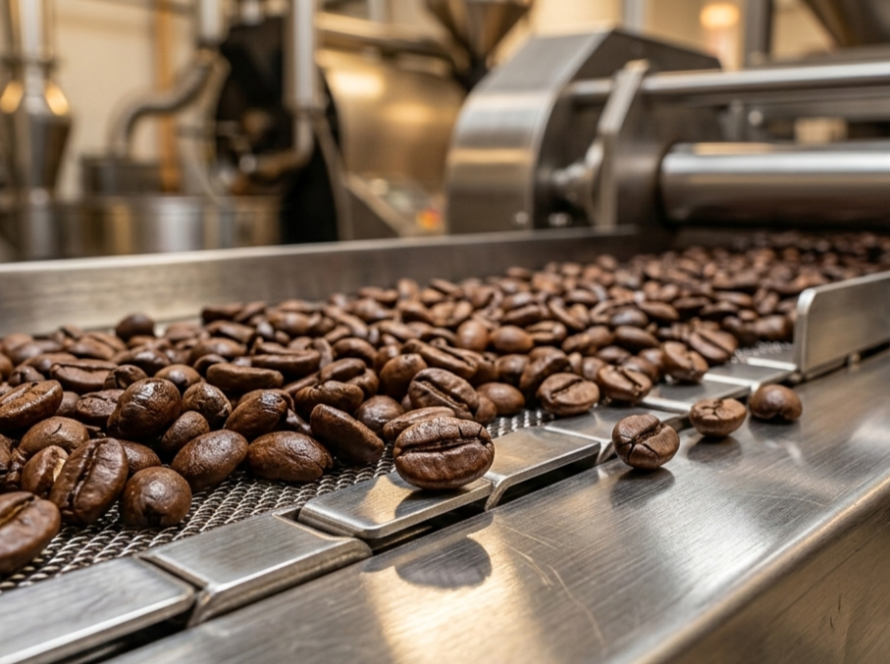
Smart Facility Design
A high-performing Coffee Production facility is designed around:
• Target output capacity
• Energy efficiency
• Labor optimization
• Logical process flow
• Future scalability
Correct planning from day one prevents costly operational corrections later.
Roast Precision & Flavor Stability
Flavor is the primary market differentiator.
Improper roasting or cooling can cause:
• Burnt or underdeveloped taste
• Aroma loss
• Inconsistent color
• Retail rejection
Precise thermal management ensures brand reliability and long-term customer trust.
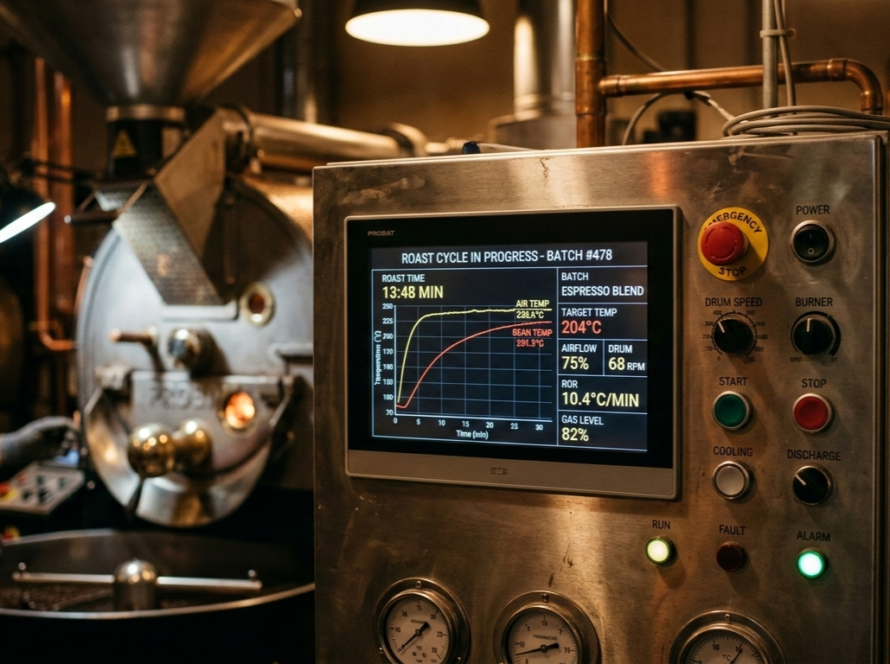
Automation & Process Monitoring
Modern Coffee Production relies on:
• Real-time roasting analytics
• Automated temperature control
• Data-driven batch tracking
• Predictive maintenance systems
Automation is not an expense, it is a risk reduction and profitability multiplier.
Product Diversification Strategy
High-performing producers never depend on a single SKU.
Scalable Coffee Production operations expand into:
• Specialty single-origin lines
• Espresso blends
• Filter coffee variants
• Capsule-compatible formats
• Private label manufacturing
Diversification strengthens market position and protects margins against price fluctuations in green beans.
Market Opportunity: Why Now Is the Right Time
Global coffee consumption continues to rise due to:
• Urban lifestyle acceleration
• Premiumization trends
• Growth of specialty cafés
• Expansion of e-commerce channels
• Export-focused brand development
Coffee Production aligns perfectly with scalable, export-oriented industrial investment strategies.
The market rewards consistent and efficient producers, not average ones.
Risk Reduction Through Strategic Planning
Entering Coffee Production without structured planning may lead to:
• Capital inefficiency
• Extended ROI periods
• Operational instability
• Export compliance challenges
• Competitive disadvantages
Strategic planning transforms uncertainty into measurable growth.
ProNano’s Coffee Production Approach
At ProNano, we approach Coffee Production as a fully integrated industrial system, not just a roasting line.
Our focus areas include:
• Feasibility studies and ROI modeling
• Roast system configuration optimization
• Moisture and thermal balance validation
• Production flow engineering
• Cost-per-ton calculation strategies
• Food safety integration (HACCP and ISO 22000 readiness)
• Scalability planning for future capacity expansion
We work closely with manufacturers to transform Coffee Production operations into stable, competitive, and export-ready industrial structures.
The objective is not only to roast coffee, but to build a resilient and profitable production ecosystem.
Strategic Conclusion
When approached strategically, Coffee Production becomes one of the most resilient sectors within the global food industry.
Manufacturers who invest in:
• Structured facility design
• Advanced process control
• Intelligent diversification
• Data-driven optimization
Achieve:
• Higher operational efficiency
• Reduced production losses
• Stronger brand positioning
• Extended shelf-life stability
• Sustainable profitability
In a market defined by speed and consistency, success belongs to those who engineer performance from day one.
Ready to elevate your Coffee Production strategy?
Contact ProNano to design, optimize, and scale your industrial coffee operation with confidence.
Read more about How to Become a Leader in the Iced Coffee Industry?