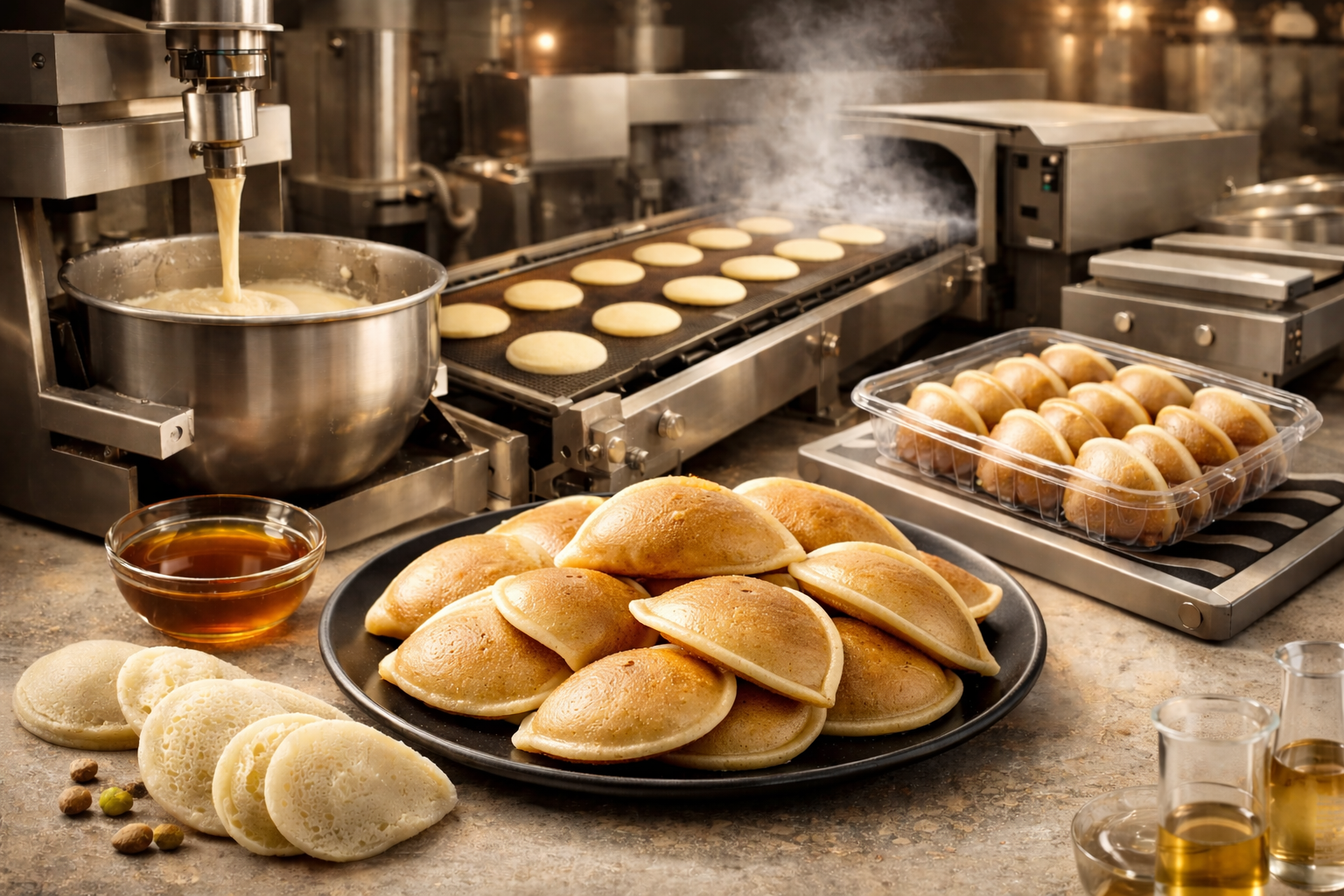
Qatayef is a high-demand seasonal product. However, the real challenge for manufacturers is not sales volume, but the ability to transform it into a stable industrial product suitable for refrigerated distribution with a defined shelf life of several days, without losing softness, flexibility, or post-frying performance stability.
Transitioning from artisanal preparation to Industrial Qatayef Production requires precise scientific control of batter rheology,
structured moisture management, engineered temperature control, and the development of a repeatable production system capable of delivering consistent batch-to-batch stability.
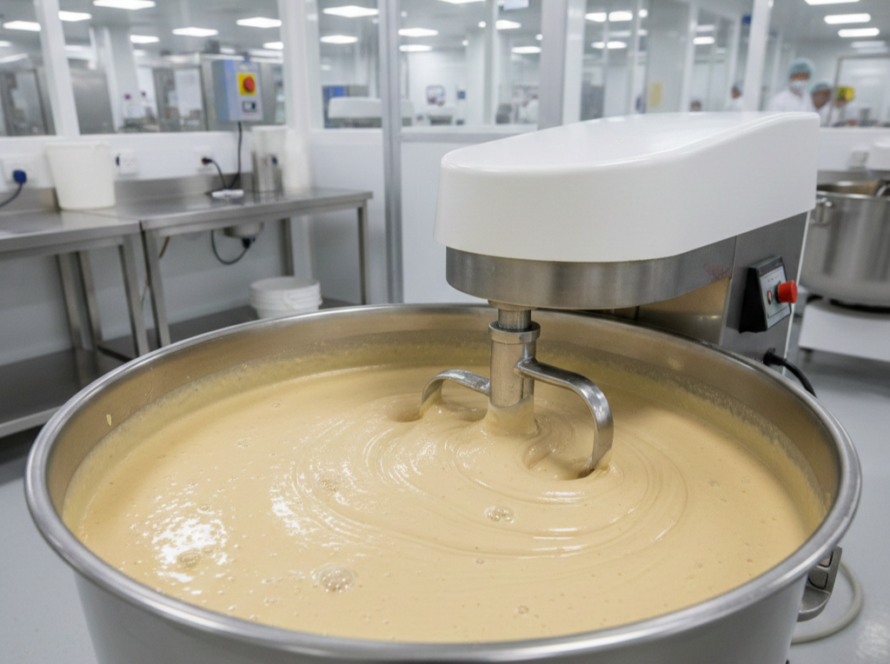
Why Does Industrial Qatayef Production Face Technical Challenges?
When a traditional recipe is transferred to an industrial production line, several operational issues emerge that affect product stability and quality:
• Rapid drying after baking due to uncontrolled moisture loss
• Cracking during filling caused by weak structural elasticity
• Loss of crispness after frying due to unbalanced porosity
• Variability in sponge structure between batches
• Color inconsistency due to unstable heat distribution
• Accelerated microbial growth caused by high water activity
The root cause of these challenges lies in the absence of scientific control over critical parameters such as:
• Batter viscosity
• Fermentation rate and gas generation
• pH levels
• Water activity (Aw)
• Thermal management during baking and cooling
Successful Industrial Qatayef Production depends on controlling these variables within a measurable and stable production system.
The Scientific Foundation of Stable Industrial Qatayef Production
Sponge Structure Engineering
An ideal industrial Qatayef structure requires:
• A precise balance between protein and starch
• Controlled viscosity that enables uniform bubble distribution
• Regulated fermentation to prevent large unstable air pockets
• Consistent baking temperatures to avoid premature surface drying
Any imbalance in these factors results in weak filling tolerance or structural collapse after frying.
Moisture and Water Activity Management
In Industrial Qatayef Production, moisture is a decisive factor in shelf life determination.
The industrial objective includes:
• Targeting Aw below 0.92 at packaging
• Minimizing surface moisture loss through controlled cooling
• Using ingredients that retain bound water
• Preventing condensation inside packaging
Achieving this balance allows a refrigerated shelf life of 3 to 5 days while maintaining product softness.
Controlling Staling and Starch Retrogradation
Starch retrogradation begins immediately after temperature reduction and is the primary cause of firmness during storage.
In Industrial Qatayef Production, manufacturers must focus on:
• Precise cooling phase management
• Reducing starch recrystallization rates
• Supporting internal structural stability
• Maintaining surface flexibility throughout shelf life
Post-Frying and Syrup Absorption Performance
Industrial products are evaluated after frying, not before.
A stable Qatayef product must achieve:
• Balanced external crispness
• Controlled syrup absorption
• Internal structural integrity after soaking
• Texture stability without collapse
Any weakness in sponge structure engineering will directly affect consumer experience.
Components of an Industrial Qatayef Production Line
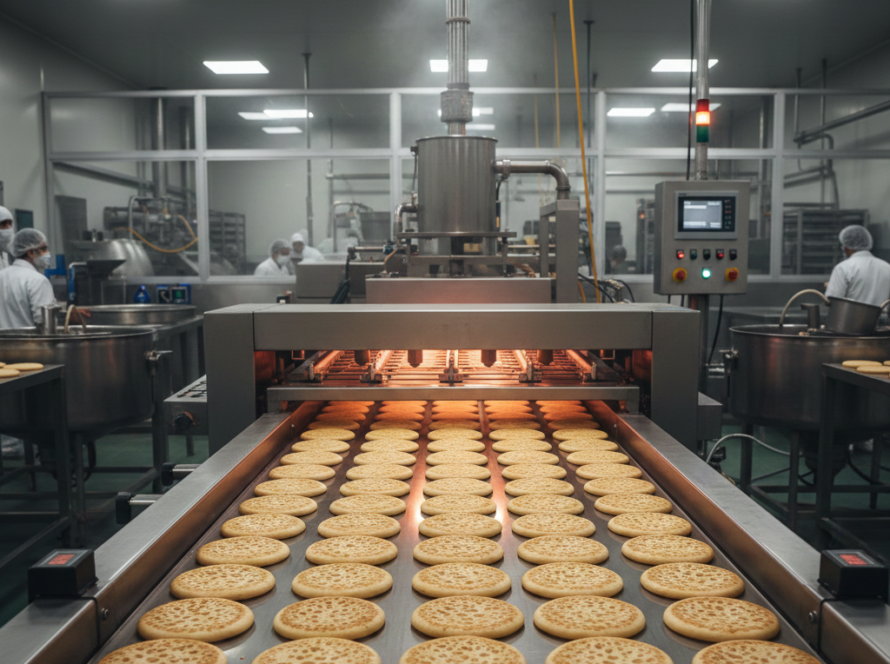
Transforming Qatayef into a scalable brand-ready product requires an integrated operational system that includes:
• Industrial mixer with multi-speed control
• Continuous pumping system to maintain batter homogeneity
• Controlled baking plate or thermal tunnel
• Gradual controlled cooling system
• Immediate hygienic packaging
• Moisture-resistant packaging or MAP system
Industrial Qatayef Production is not driven by speed alone, but by consistency and repeatability.
The Role of Improvers in Quality Stability
In artisanal production, experience compensates for variability. In Industrial Qatayef Production, technical control tools are essential.
A specialized Qatayef improver contributes to:
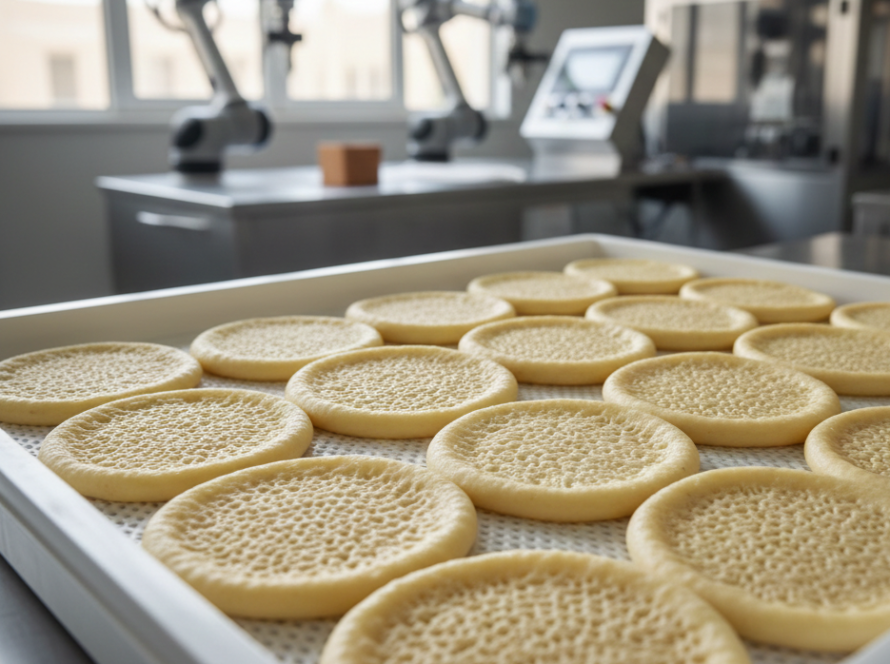
• Uniform pore distribution
• Enhanced elasticity and crack prevention
• Slower softness degradation
• Reduced filling-stage waste
• Improved post-frying stability
• Reduced batch-to-batch variability
The improver functions as an engineering control component within the production system, not merely as an optional additive.
From Seasonal Product to Sustainable Brand
To convert Industrial Qatayef Production into a long-term stable project, manufacturers must focus on:
• Production standardization
• Implementation of SOPs
• Clearly defined and validated shelf life
• Structured refrigerated distribution chain
• Professional, scalable packaging identity
This is where the product transitions from rapid seasonal sales to a scalable market brand.
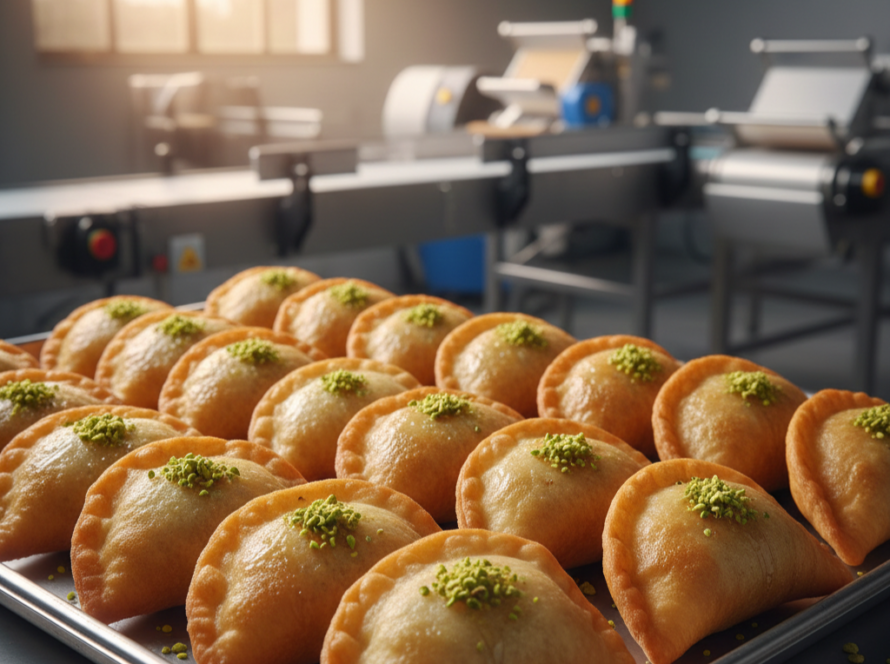
Develop Your Industrial Qatayef Production with ProNano
If your objective is to improve product quality, extend shelf life, and reduce batch variability, upgrading Industrial Qatayef Production begins with building a complete scientific production system rather than simply adjusting ingredients.
At ProNano Food Consulting, we work on:
• Developing industrial formulations with measurable stability standards
• Engineering process optimization to reduce waste and improve efficiency
• Designing or upgrading Industrial Qatayef Production lines
• Managing water activity and moisture for extended shelf life
• Providing professional Qatayef improvers tailored for industrial production
With ProNano, Industrial Qatayef Production is transformed into a stable operational system that ensures:
• Consistent batch quality
• Balanced post-frying and syrup performance
• Reliable refrigerated shelf life
• Readiness for sustainable brand development
Start today with a comprehensive technical evaluation of your production line, and contact ProNano to elevate your Industrial Qatayef Production into a disciplined, stable, and scalable operational system built for confident market expansion.
Read more about Types of Dates in Industrial Production.