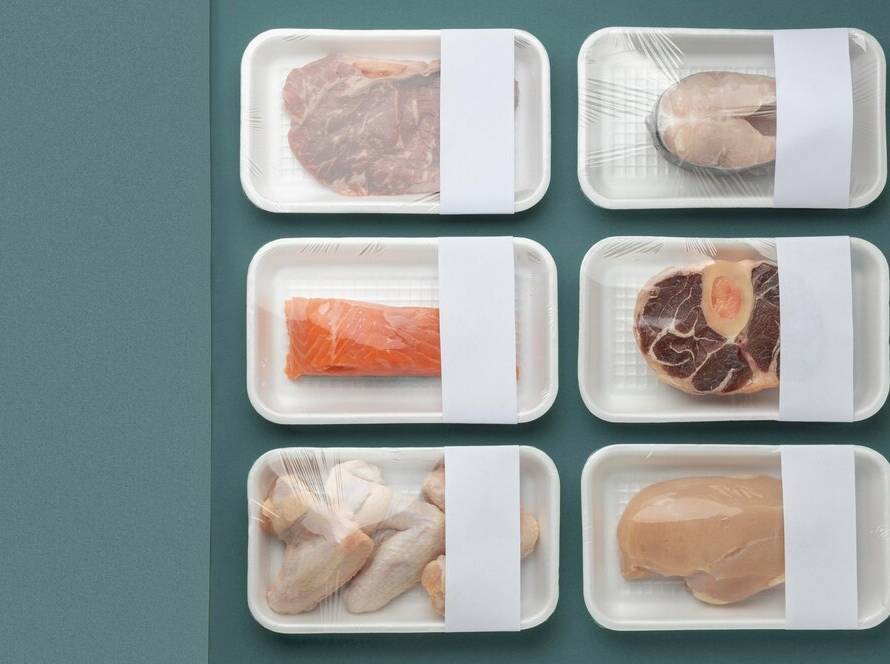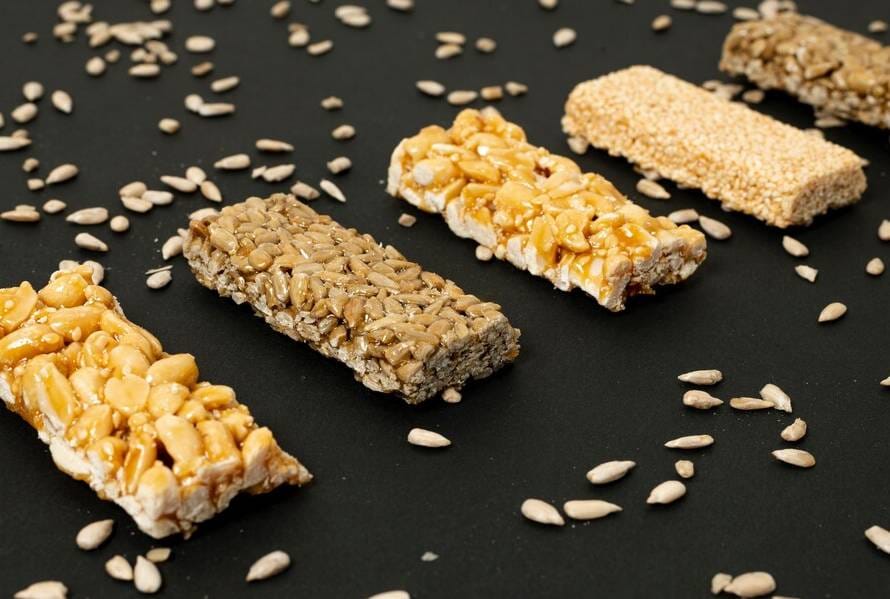
The idea of “brain food” has quickly moved from a niche concept into a mainstream product category, appearing in beverages, snacks, and everyday formats that promise focus, clarity, and mental balance. But beyond the marketing, a more practical question naturally emerges: do these products actually deliver consistent results? And that is where things become less straightforward because brain-focused products do not behave like traditional energy products. Consumers are not simply looking for stimulation but for a very specific experience including sustained focus without jitter, mental clarity without fatigue, and a sense of balance that fits naturally into their day, an expectation that alone makes this category significantly harder to get right.

Why “Brain Food” Is More Complex Than It Looks
Most products in this space rely on a familiar set of ingredients:
• Caffeine for alertness
• L-theanine for smoother cognitive performance
• Omega-3 fatty acids for long-term brain support
• Adaptogens like ashwagandha for stress regulation
• B vitamins for energy metabolism
Individually, these ingredients are widely recognized. Many are supported by research and have been used for years.
But the challenge is not really the ingredient list.
It’s how these components behave when combined into a single product.
A formula that looks strong on paper doesn’t always translate into a noticeable or reliable experience in real life. Interactions between ingredients, dosage levels, timing of effect, and delivery format all quietly play a role.
What works in isolation rarely behaves the same way once it becomes a finished product.
Short-Term Focus vs Long-Term Mental Wellness
One of the biggest misunderstandings in this category is treating all “brain benefits” as if they belong to the same bucket.
In reality, there are two very different expectations:
Immediate effects: focus, alertness, reaction speed
Long-term support: cognitive health, stress resilience, mood balance
Many products try to address both at the same time, often without truly clear positioning.
The result?
Consumers often end up not fully sure what the product is actually doing for them.
Products that tend to succeed are usually very clear:
They either deliver a noticeable short-term effect, or they position themselves as part of a long-term routine. Trying to do both without clarity often weakens the overall experience.
The Gap Between Promise and Real Experience
This category is driven heavily by perception, sometimes more than anything else.
Consumers expect:
Fast mental clarity
Smooth, stable energy
Reduced stress or improved mood
What they often experience instead:
Effects that are too subtle to clearly notice
Overstimulation from unbalanced caffeine levels
Flavor profiles that feel medicinal or overly artificial
Inconsistent performance across different situations
This gap between expectation and reality is exactly where most products start losing credibility.
And in a category built around daily use, consistency quietly becomes more important than anything else.

Where Most Brain Food Products Go Wrong
Failure rarely comes from a single issue. It’s usually the result of multiple small gaps that slowly accumulate.
Common problems include:
• Over-reliance on caffeine without proper balancing components
• Weak integration of adaptogens, leading to minimal or unpredictable effects
• Ignoring bioavailability and absorption dynamics
• Treating taste as secondary, especially when working with herbal ingredients
• Designing formulations for claims rather than actual user experience
In many cases, products are built to match a trend more than they are built to deliver a repeatable outcome.
Format Matters More Than Most Expect
The same formulation can behave very differently depending on how it’s delivered.
A capsule, a powder, and a ready-to-drink beverage will not produce the same experience, even if the ingredient list looks identical on paper.
In beverages especially:
Stability becomes critical
Flavor masking becomes more complex than expected
Ingredient interactions become more visible
Shelf life can directly affect perceived performance
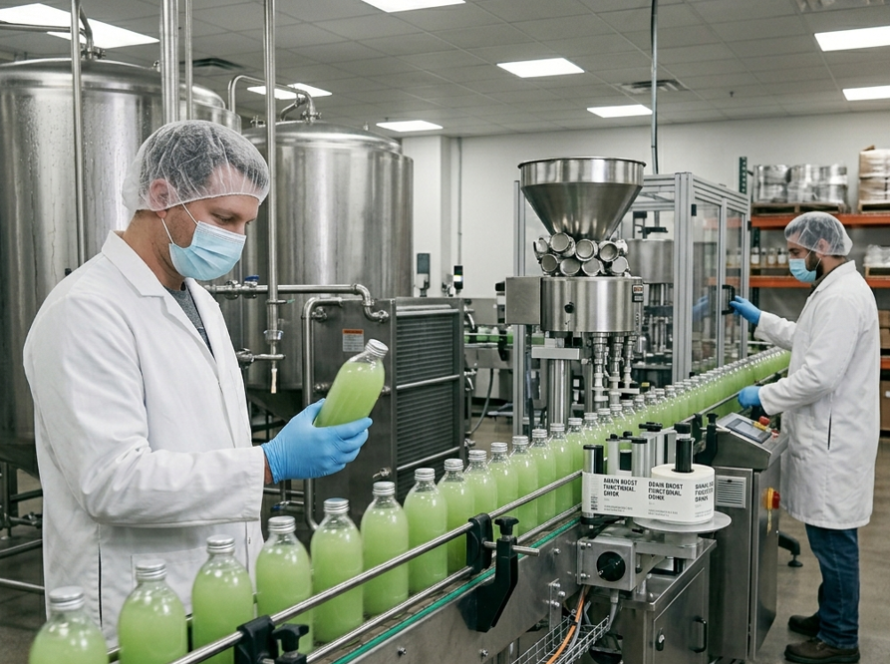
Ready-to-drink products introduce an extra layer of complexity because there is no user adjustment. The product has to perform consistently, every single time, under real-world conditions.
From Ingredients to Real Product Performance
A successful brain-focused product is not defined by how many functional ingredients it contains.
It is defined by how well those ingredients actually work together in a real-world context.
That includes:
• A clear and noticeable effect that matches the product positioning
• A balanced sensory experience that encourages repeat use
• Stability across storage and consumption conditions
• Consistency from one serving to the next
Without this, even the most promising formulation can quietly fail in the market.
The Opportunity Is Still Wide Open
Despite the number of products already available, this category is still far from mature.
In fact, many products continue to rely on the same combinations, the same claims, and the same positioning.
This creates a real opportunity.
Brands that focus on:
Clarity instead of complexity
Real performance instead of overloaded formulations
Consumer experience instead of ingredient lists
are the ones that naturally stand out.
Consumers today are more informed than ever. They don’t just look at labels. They observe how a product actually makes them feel over time.

Conclusion
Brain food and mental wellness are not short-term trends. They reflect a deeper shift in how consumers approach daily performance,
productivity, and overall well-being.
But turning that demand into a successful product takes more than adding trending ingredients. It requires a clear understanding of
how those ingredients interact, how they are perceived, and how they behave in real use conditions.
If you are working on brain food or mental wellness products and facing challenges in formulation, consistency, or real-world
performance, this is where real differentiation starts to happen, contact ProNano.
Because in the end, the products that succeed are not the ones that promise more.
They are the ones that deliver, consistently, in everyday use.
Read more about Matcha Beverages Are More Complex Than You Think: From Café to Industrial Scale.