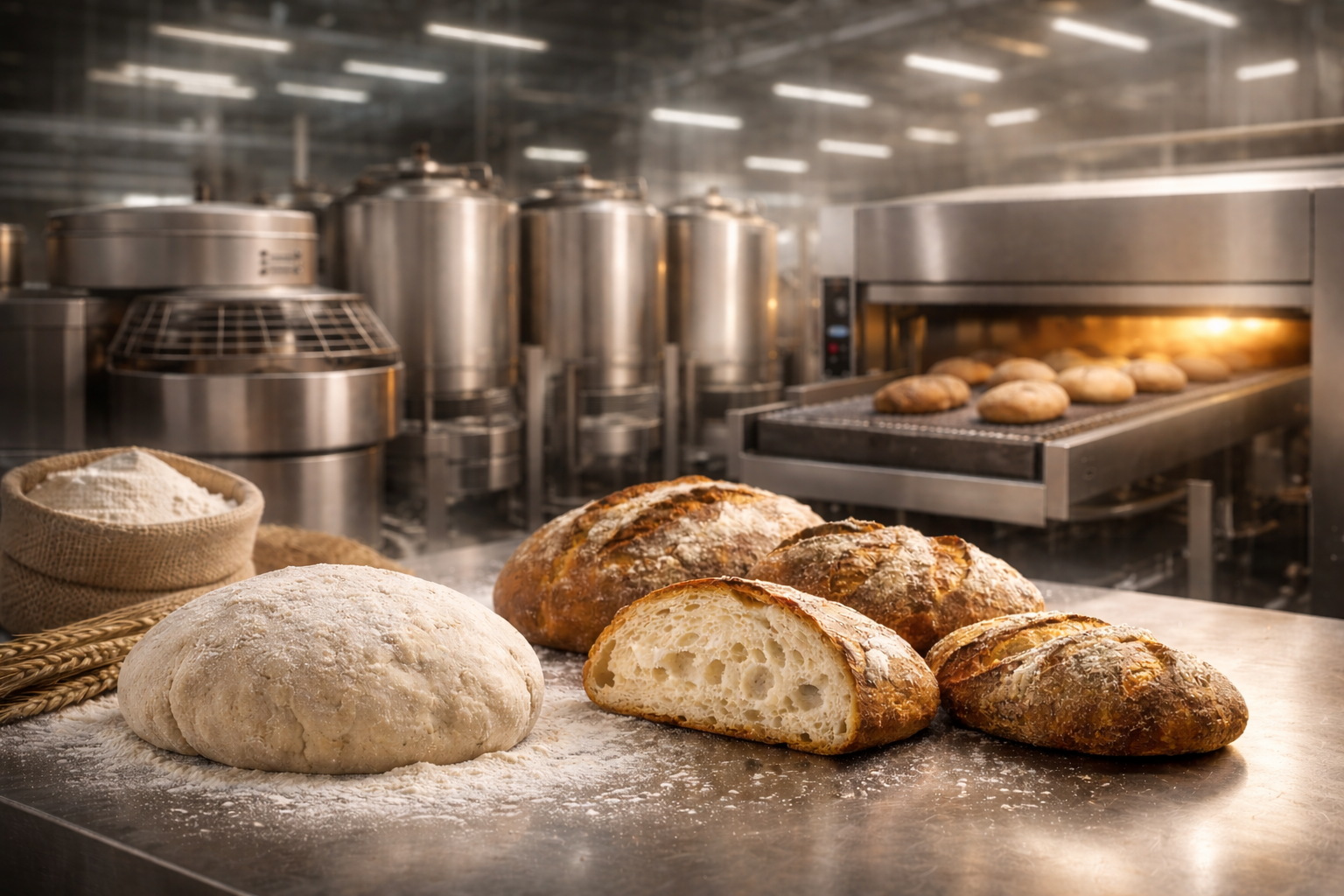
Industrial Sourdough Production is no longer limited to artisan bakeries or traditional home baking. Today, Industrial Sourdough Production has become a controlled fermentation system used in commercial bakeries to enhance flavor complexity, improve dough structure, extend shelf life, and increase product differentiation in competitive markets.
Modern food factories rely on precise fermentation management, flour quality control, hydration optimization, microbial balance, and automated processing systems to ensure consistency and scalability. When properly engineered, Industrial Sourdough Production delivers superior aroma, improved crumb structure, and natural preservation without synthetic additives.
At ProNano, we support industrial bakeries through fermentation audits, starter stabilization systems, flour performance analysis, and production line optimization tailored to large-scale baking operations.
What Is Industrial Sourdough Production?
Industrial Sourdough Production refers to the controlled fermentation of flour and water using naturally occurring lactic acid bacteria
and wild yeast to produce leavened baked goods at commercial scale.
Unlike small-batch artisan methods, Industrial Sourdough Production involves:
• Standardized starter cultures
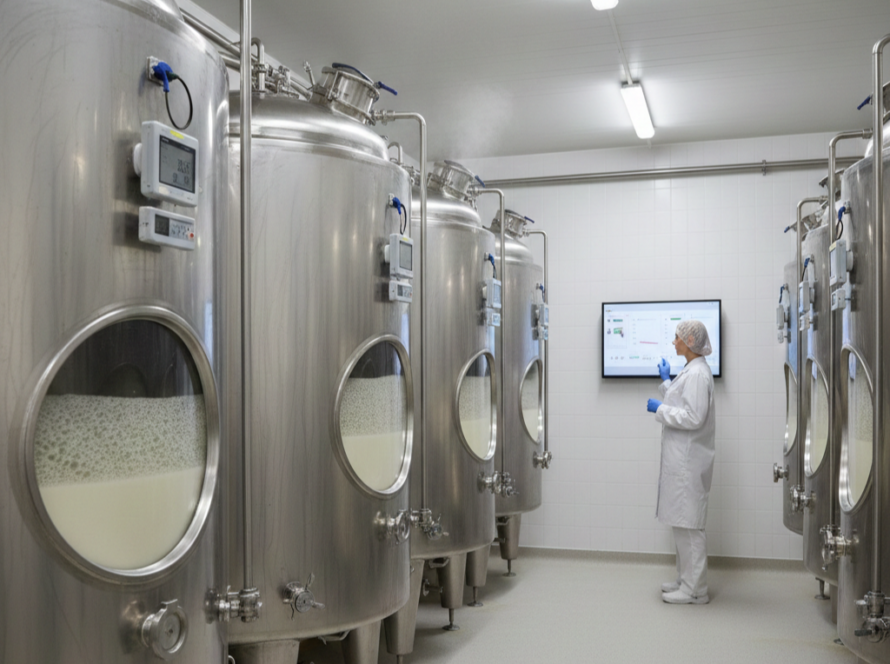
• Controlled fermentation chambers
• Measured hydration ratios
• Monitored acidity levels
• Scalable mixing systems
• Automated dividing and shaping
The objective is to maintain consistent microbial activity, stable pH levels, predictable gas production, and uniform dough rheology across high-volume production cycles.
Industrial Sourdough Production Process
Industrial Sourdough Production follows a structured fermentation sequence to ensure quality and efficiency.
Starter Preparation and Stabilization
• Mix flour and water at defined hydration ratio (typically 100% hydration for liquid starters)
• Maintain fermentation temperature between 24–28°C
• Monitor pH development (target 3.8–4.5)
• Refresh culture at scheduled intervals
• Control bacterial-to-yeast balance
Stable starter cultures are critical for predictable Industrial Sourdough Production performance.
Dough Mixing
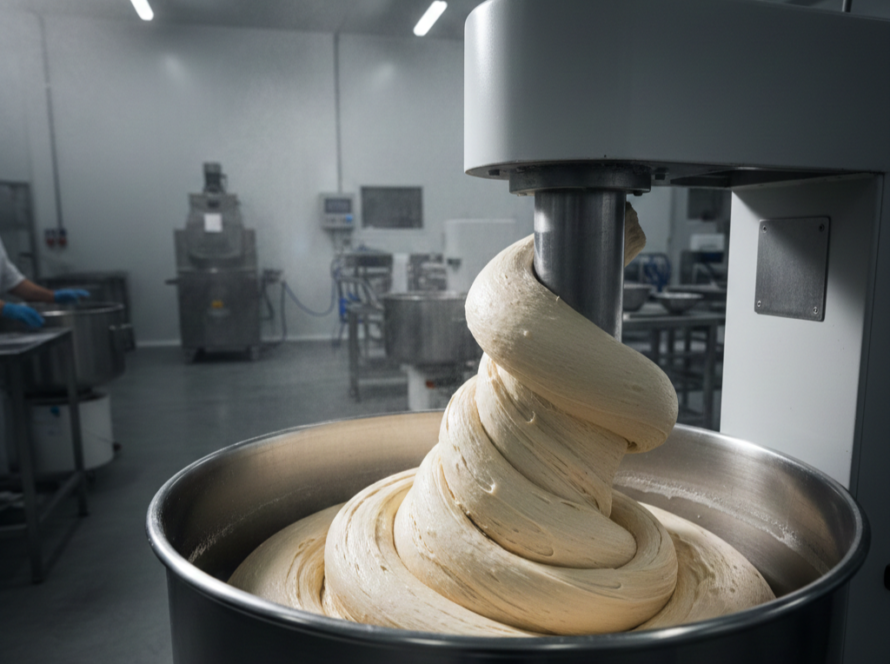
• Combine flour, water, salt, and sourdough starter
• Adjust hydration between 60–75% depending on product type
• Develop gluten network through spiral or planetary mixers
• Control final dough temperature between 23–26°C
Bulk Fermentation
• Rest dough 2–4 hours depending on formula
• Maintain controlled humidity
• Monitor volume increase
• Track acidity development
Dividing and Shaping
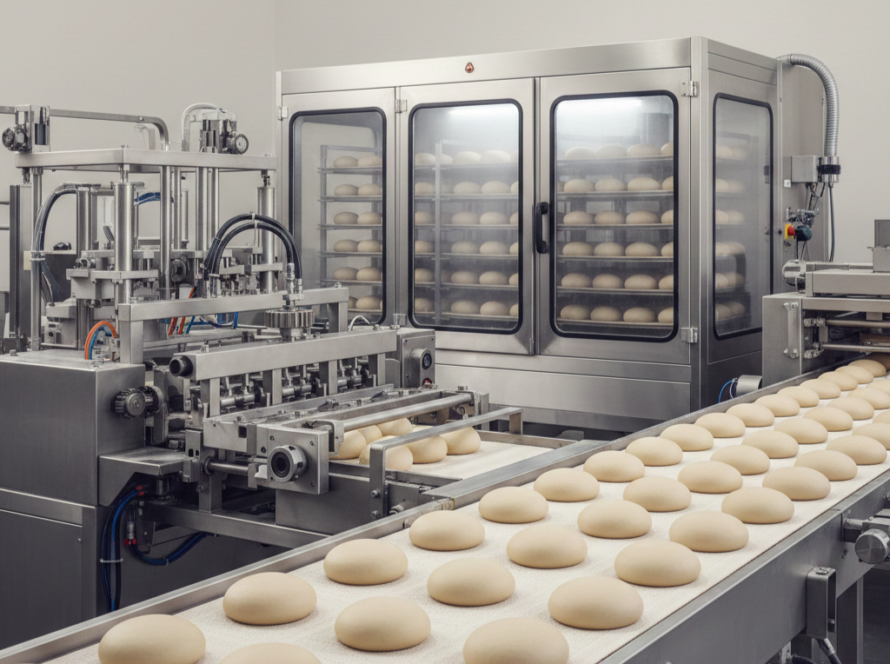
• Use automated dividing machines
• Maintain weight accuracy ±2%
• Reduce degassing during shaping
Final Proofing
• Controlled temperature 30–35°C
• Relative humidity 75–85%
• Proofing time 1–3 hours depending on formula
Baking
• Initial steam injection
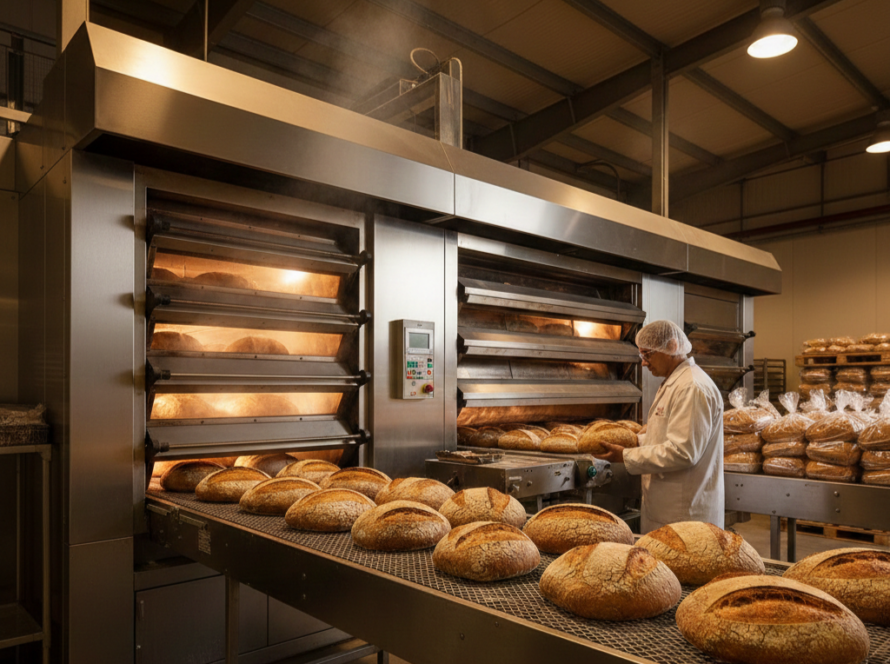
• Deck or tunnel ovens
• Core temperature target 96–98°C
Required Equipment for Industrial Sourdough Production
Industrial Sourdough Production requires specialized fermentation and dough handling systems:
• Stainless steel fermentation tanks
• Temperature-controlled starter vessels
• Spiral mixers (industrial capacity 100–500 kg per batch)
• Automatic dough dividers
• Intermediate proofers
• Tunnel or deck ovens
• Cooling conveyors
• CIP sanitation systems
• pH meters and fermentation monitoring sensors
Production capacity may range from 500 kg/day to over 20 tons/day depending on facility scale.
Technical Parameters and Quality Standards
Industrial Sourdough Production must monitor measurable quality indicators:
• Starter pH: 3.8–4.5
• Total titratable acidity: 6–12 ml NaOH
• Hydration ratio: 60–75%
• Protein content in flour: 11–14%
• Gluten strength (W value): 220–320
• Final bread moisture: 35–45%
Compliance standards include:
• HACCP food safety system
• ISO 22000
• Microbiological monitoring plans
• Allergen control documentation
Impact of Flour Quality in Industrial Sourdough Production
Flour selection directly influences fermentation behavior and final texture.
Strong wheat flour (high protein):
• Develops stronger gluten network
• Improves gas retention
• Suitable for rustic sourdough bread
Soft wheat flour (lower protein):
• Produces softer crumb
• Shorter fermentation tolerance
• Ideal for pastries and light bakery products
Whole grain flour:
• Higher mineral content
• Increased fermentation activity
• Denser structure
• Higher water absorption
Flour milling degree significantly affects Industrial Sourdough Production consistency and water absorption capacity.
Common Industrial Challenges and Solutions
Fermentation Instability
Cause: inconsistent starter feeding
Solution: implement scheduled automated feeding
Excessive Sourness
Cause: high acetic acid formation
Solution: adjust hydration and fermentation temperature
Weak Dough Structure
Cause: low protein flour
Solution: upgrade flour specification or adjust mixing time
Inconsistent Volume
Cause: poor temperature control
Solution: install climate-controlled fermentation rooms
Short Shelf Life
Cause: insufficient acidity
Solution: extend fermentation time strategically
Industrial Case Study – Production Optimization
A commercial bakery producing 8 tons/day of sourdough bread faced volume inconsistency and 5% product waste.
After implementing Industrial Sourdough Production optimization:
• Standardized hydration at 72%
• Installed automated fermentation monitoring
• Upgraded flour protein specification to 12.8%
• Controlled proofing humidity
Results achieved:
• Waste reduced to 1.5%
• Volume consistency improved by 18%
• Shelf life extended by 2 days
• Energy efficiency increased by 10%
Industrial Sourdough vs Commercial Yeast Production
Industrial Sourdough Production offers:
• Enhanced flavor complexity
• Natural preservation effect
• Lower glycemic response
• Extended freshness
• Premium product positioning
Commercial yeast production offers:
• Faster fermentation
• Shorter production cycles
• Lower operational complexity
Many industrial bakeries combine both systems for performance optimization.
Frequently Asked Questions About Industrial Sourdough Production
• What is the ideal pH range?
Between 3.8 and 4.5
• Can sourdough be fully automated?
Yes, with controlled fermentation chambers and monitoring systems
• Why is hydration critical?
It controls gluten development and acid balance
• How does sourdough improve shelf life?
Organic acids naturally inhibit spoilage organisms
• Is sourdough scalable for large factories?
Yes, through stabilized starter systems and process automation
Strategic Conclusion
Industrial Sourdough Production is a fusion of microbiology, fermentation engineering, flour science, and industrial baking technology.
Bakeries that invest in structured Industrial Sourdough Production systems achieve improved consistency, extended shelf life,
stronger brand differentiation, and higher profitability.
Factories seeking competitive advantage should integrate fermentation control, flour optimization, and process automation to fully
unlock the benefits of Industrial Sourdough Production.
Want to elevate your Industrial Sourdough Production performance? Contact ProNano today for expert consulting in industrial bakery engineering and large-scale fermentation optimization.
Read more about The Frozen bakery industry – Your Complete Guide.