

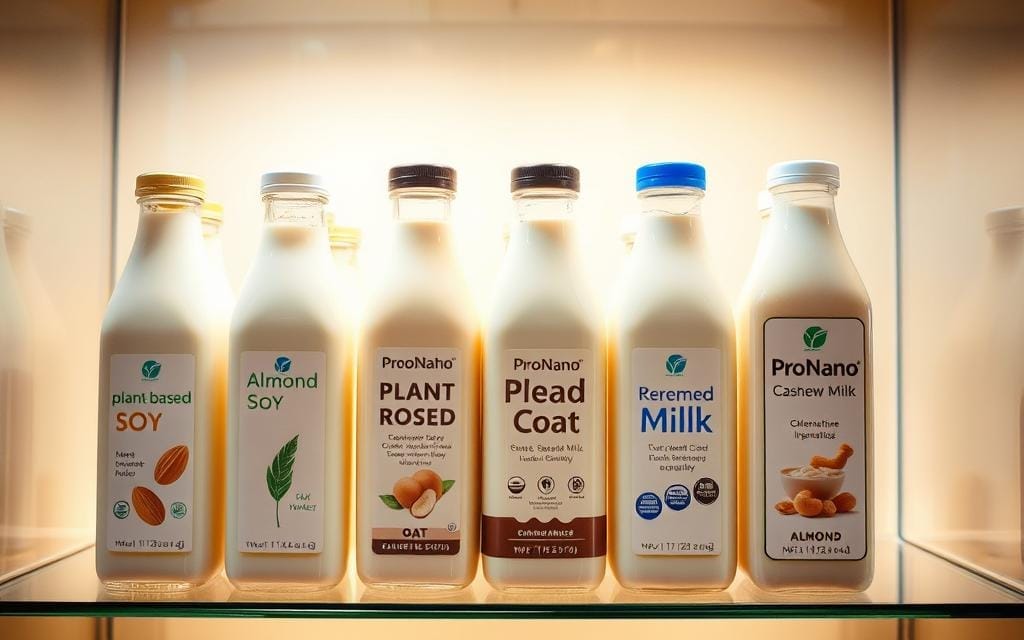
Are nuts, grains, and legumes the future of dairy? More and more people are choosing plant-based options for health and the planet. At ProNano, we help businesses in this fast-changing field by combining food tech and project management expertise.
The need for dairy-free milk alternatives is growing. People worry about health and the environment from animal farming. So, the industry is moving towards plant-based, with nuts, grains, and legumes leading the way.
Key Takeaways
- Innovative uses of nuts, grains, and legumes in dairy alternatives.
- The role of health and environmental concerns in driving demand.
- Expert insights from ProNano on navigating the evolving landscape.
- Breakthroughs in plant-based milk production.
- Collaborative approaches to successful project implementation.
The Plant-Based Milk Revolution: Market Trends and Consumer Adoption
The plant-based milk market is growing fast. This is because more people want dairy-free options. They might have lactose intolerance, milk allergies, or just care about the environment.
Explosive Growth in the Alternative Milk Sector
The global plant-based milk market is expected to hit $38 billion by 2024. It’s growing at a 14% CAGR. This is thanks to more people choosing plant-based diets and liking new dairy-free drinks.
We see the big chance in this trend. We’re ready to help businesses make the most of the growing demand for plant-based milk.
Shifting Consumer Preferences and Dietary Choices
More people are choosing plant-based diets for health, environmental, and animal reasons. This is making them want better plant-based milk options. Our knowledge in food tech and project management helps businesses create new products that fit these changing tastes.
Market Segment | 2024 Projection | CAGR |
|---|---|---|
| Almond Milk | $12 billion | 10% |
| Oat Milk | $8 billion | 15% |
| Soy Milk | $6 billion | 8% |
Whether you’re starting a food factory or growing an existing one, we’re here to help. Our team works together to make sure your plant-based milk projects succeed.
Breakthrough #1: Advanced Extraction and Processing Technologies
Advanced extraction and processing technologies are changing non-dairy beverages. These new methods are key to making plant-based milk as good as dairy.
High-Pressure Homogenization Techniques
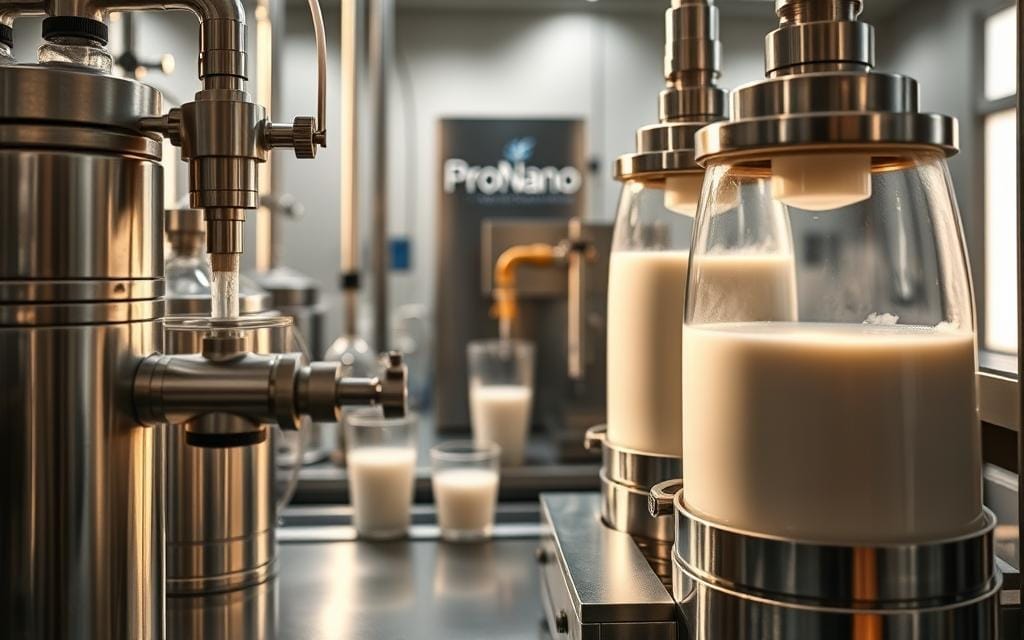
High-pressure homogenization is important for making grain milk smooth. It forces the milk through a small valve under high pressure. This makes the milk’s particles the same size.
Ultrasonic and Enzymatic Processing Methods
Ultrasonic processing uses sound waves to break down particles. This improves the extraction of nutrients. Enzymatic processing uses enzymes to break down complex molecules. It makes the milk’s nutritional profile and texture better.
Cold-Pressed Technology for Enhanced Nutrient Retention
Cold-pressing is a gentle way to keep nutrients in grains and nuts. It’s great for making premium grain milk alternatives. These milks are full of nutrients and taste amazing.
Breakthrough #2: Protein Stabilization and Suspension Systems
Protein stabilization is key in making plant-based dairy alternatives. It drives innovation in suspension systems. Stable and consistent products are vital for consumer happiness and success.
Novel Hydrocolloid Combinations for Preventing Separation
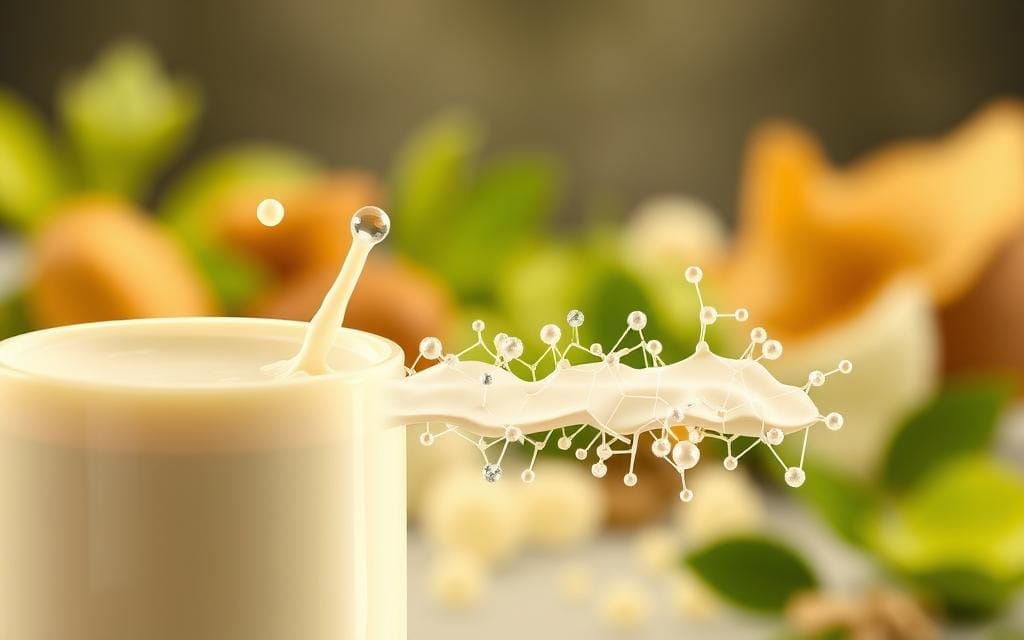
Novel hydrocolloid combinations are a big step forward in protein stabilization. They help prevent separation and improve texture in plant-based milk. By mixing different hydrocolloids, makers can create a more stable emulsion. This boosts the product’s shelf life and appeal to consumers.
Heat-Stable Protein Formulations for Barista Applications
Heat-stable protein formulations are essential for barista applications. They make sure plant-based milk can handle high temperatures without losing texture or stability. This is key for coffee shops and cafes wanting to offer top-notch plant-based options.
Nanotechnology in Particle Suspension
Nanotechnology is becoming more important in suspending particles in plant-based dairy alternatives. It allows for better texture and stability by controlling particle size at the nanoscale. This tech could change the game by making products more consistent and appealing.
By using these advancements in protein stabilization and suspension, makers of cutting-edge milk substitutes can create products that rival traditional dairy milk. This meets the growing demand for high-quality plant-based dairy alternatives.
Breakthrough #3: Nutritional Parity with Dairy Milk
The latest in plant-based milk is about matching dairy milk’s nutrition. Now, we can make non-dairy drinks that are just as good, and sometimes better, than dairy milk.
Bioavailable Calcium and Vitamin D Fortification
One big step is adding bioavailable calcium and vitamin D to plant-based milks. This makes sure people get the same nutrients as in dairy milk. Enhanced bioavailability means the body can use these nutrients better.
Protein Content and Quality Enhancement
Improving protein in plant-based milks is key. We’re working on making these milks not just healthy but also filling. We use protein blending and nanotechnology to boost protein quality.
Essential Micronutrient Optimization
It’s important to add all the essential nutrients to plant-based milks. Our team focuses on adding these nutrients to meet consumer needs.
Nutrient | Dairy Milk | Plant-Based Milk |
|---|---|---|
| Calcium | 300 mg | 300 mg (fortified) |
| Vitamin D | 25% DV | 25% DV (fortified) |
| Protein | 8g | 8g (enhanced) |
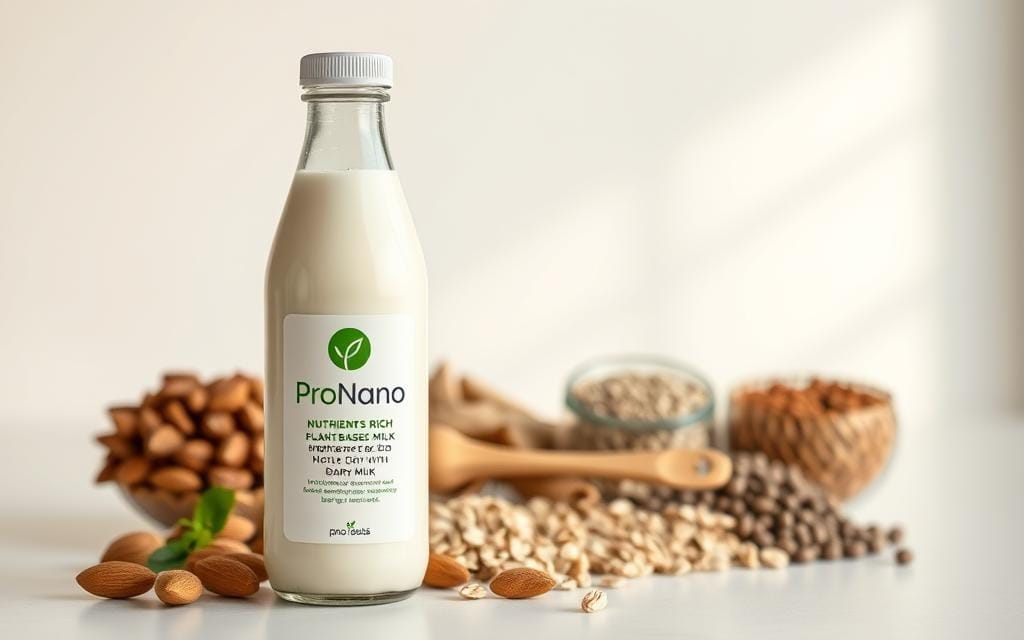
By matching dairy milk’s nutrition, we’re making trendsetting non-dairy drinks. This is a big step towards more people choosing plant-based milk.
Breakthrough #4: Texture and Mouthfeel Engineering
The need for plant-based milk is rising fast. Texture and mouthfeel are now key areas for innovation. These aspects are vital for people to like dairy-free milk alternatives.

Plant-Based Fat Mimetics for Creaminess
Creating a creamy texture in dairy-free milk is a big challenge. Plant-based fat mimetics are being made to solve this. Ingredients like coconut oil and almond oil are used to make the milk rich and creamy.
Molecular Gastronomy Techniques in Production
Molecular gastronomy is helping improve the texture of dairy-free milk. Nanotechnology and microencapsulation are used to make the milk stable and better tasting.
Sensory Mapping and Consumer Preference Alignment
Companies are using sensory mapping to understand what consumers want. They create detailed profiles of their products. Then, they compare these to what people like.
“The secret to success in dairy-free milk is making products that taste great and feel good in your mouth,” says an expert. We aim to help businesses make innovative dairy-free drinks that meet these standards.
Breakthrough #5: Flavor Profile Masking and Enhancement
Creating tasty plant-based milk products is key. More people are choosing plant-based diets. They want products that taste good and are healthy.
Enzymatic Reduction of Beany and Cereal Off-Notes
Plant-based milks often have unwanted flavors like beany or cereal tastes. Enzymatic treatment helps fix this. It breaks down these bad tastes.
By using special enzymes, makers can make these tastes go away. This leaves the milk tasting cleaner and more like regular milk.
Natural Flavor Systems for Dairy-Like Profiles
Companies are using natural flavor systems to make plant-based milks taste like dairy. They use flavors from natural sources. This makes the milk taste like the real thing.
By mixing these flavors right, they can make plant-based milks that taste just like dairy.
Fermentation for Flavor Development
Fermentation is also a big help in making plant-based milks taste better. It uses tiny living things to make new flavors. This makes the milk taste better and can even make it healthier.
By using these new ways, we can make next-generation non-dairy beverages. They will be tasty and good for you, making people happy and loyal to the brand.
Breakthrough #6: Grain-Based Milk Analogs: Next-Gen Dairy-Free Beverages
Grain-based milk analogs are changing the dairy-free market. They offer great nutrition and are good for the planet. As more people look for plant-based options, these grain milks are becoming key players.
Oat Milk’s Revolutionary Enzyme Technology
Oat milk is loved for its creamy feel and green production. Advanced enzyme technology has made it taste better and be more nutritious. This tech breaks down oat starches into simple sugars, boosting the milk’s quality.
Ancient Grain Formulations
Ancient grains like quinoa, amaranth, and millet are used in milk analogs. They offer a nutrient-rich alternative to regular dairy milk. These grains have all the amino acids and are full of vitamins and minerals, appealing to health-focused buyers.
Hybrid Grain-Seed Blends
Hybrid grain-seed blends are a new way to make dairy-free drinks. By mixing grains with seeds like chia or flax, makers can create drinks with optimal nutritional benefits. These blends have more protein, omega-3s, and fiber, meeting the needs of today’s consumers.
As grain milk alternatives become more popular, we’re here to help. We use our food tech knowledge to support the creation of cutting-edge milk substitutes. We aim to make products that are tasty, nutritious, and eco-friendly.
Breakthrough #7: Legume-Based Milk Innovations
Legume-based milks are changing the game in dairy alternatives. They offer a sustainable and nutritious choice. Milks made from soy and peas are popular because they’re high in protein and good for you.
Next-Generation Soy Processing for Improved Flavor
New soy processing methods are making soy milk taste better. Enzymatic treatment and microfiltration cut down on the beany taste. This makes soy milk more enjoyable to drink.
Pea Protein Isolation and Functionality Enhancements
Pea protein is now easier to isolate, leading to high-protein, low-fat milks. These milks also have better solubility and emulsification. This opens up more uses in food products.
Emerging Legume Sources: Lupini, Chickpea, and Fava
Lupini, chickpea, and fava are new players in plant-based milks. They bring unique nutrients and tastes. This adds variety to the dairy alternatives market.
Legume Source | Protein Content (%) | Nutritional Benefits |
|---|---|---|
| Soy | 35-40 | High in isoflavones, supports heart health |
| Pea | 20-25 | Rich in essential amino acids, supports muscle health |
| Lupini | 30-40 | High in fiber, supports digestive health |
Breakthrough #8: Nut Milk Processing Efficiency and Sustainability
Nut milk processing is getting better and greener. More people want eco-friendly products. So, makers are using new tech to be kinder to the planet.
Water-Efficient Almond Milk Production
Almond milk making is now using less water. Technologies that cut down water use save money and help the planet.
Upcycling Nut Pulp By-Products
Turning nut pulp into useful products is a big step. It cuts down on waste and brings in extra cash. Nut pulp can be turned into things like baked goods, snacks, or health supplements.
Novel Nut Sources: Pistachios, Hazelnuts, and Tiger Nuts
New nuts like pistachios, hazelnuts, and tiger nuts are being used. They add variety and health benefits to nut milks. This meets the demand for more choices in dairy-free drinks.
| Nut Source | Water Usage | Nutritional Benefits |
|---|---|---|
| Almonds | Low | Rich in Vitamin E |
| Pistachios | Moderate | High in Protein |
| Hazelnuts | Low | Rich in Copper |
These advances help companies make more money and help the environment. As more people choose dairy-free options, making them better and greener is key.
Breakthrough #9: Functional Additives and Health Benefits
Innovative dairy-free drinks now come with added health benefits. The plant-based milk substitutes market is changing fast. This is thanks to advanced functional ingredients.
Prebiotic Fiber Integration
Prebiotic fibers are now in plant-based milks. They help with digestion and boost the immune system. This is great for gut health.
Adaptogenic and Functional Ingredients
Ingredients like ashwagandha and maca are in dairy-free drinks. They help with stress and give more energy. This meets the need for healthy drinks.
Reduced Sugar Formulations with Natural Sweeteners
Manufacturers are cutting down on sugar in plant-based milks. They use natural sweeteners like stevia and monk fruit. This keeps the taste good while making it healthier.
These breakthroughs help us make innovative dairy-free drinks. They taste great and are good for you. This meets the demand for healthier choices.
Conclusion: The Future of Plant-Based Milk and Industry Support
The plant-based milk industry is growing fast. New technologies and better ingredients are leading the way. Breakthroughs in extraction, protein stabilization, and flavor enhancement are changing the game.
We’re here to help businesses in this field. Our team offers expert advice and works together with companies. This way, they can meet the growing demand for plant-based drinks and succeed in the market.
We see a bright future for plant-based milk. Our team is ready to help businesses grow and reach their goals. We provide personalized guidance and support every step of the way.
FAQ
What are the main drivers behind the growth of the plant-based milk market?
The growth of the plant-based milk market is driven by several factors. These include awareness of lactose intolerance and milk allergies. Environmental concerns and the rise of plant-based diets also play a big role.
What role do advanced extraction and processing technologies play in plant-based milk production?
Advanced technologies like high-pressure homogenization and ultrasonic processing are key. They improve the nutritional value and texture of plant-based milks. This makes them more appealing to consumers.
How can businesses achieve nutritional parity with dairy milk in plant-based milk alternatives?
To match dairy milk’s nutrition, businesses can fortify plant-based milks with calcium and vitamin D. They can also boost protein and add essential nutrients.
What is the significance of texture and mouthfeel engineering in plant-based milk production?
Texture and mouthfeel engineering are vital. They help create plant-based milks that feel and taste like dairy. Techniques like using plant-based fats and sensory mapping are used to achieve this.
How can businesses improve the flavor profile of plant-based milk substitutes?
To enhance flavor, businesses can use enzymatic reduction and natural flavor systems. Fermentation is also a method for developing unique tastes.
What are some emerging trends in grain-based milk analogs and legume-based milk innovations?
New trends include oat milk’s enzyme technology and ancient grain formulations. There’s also interest in using lupini, chickpea, and fava in milk alternatives.
How can businesses improve the sustainability of nut milk processing?
To make nut milk processing more sustainable, businesses can use water efficiently. They can also upcycle nut pulp and explore new nut sources.
What role do functional additives play in enriching the nutritional profile of plant-based milk substitutes?
Functional additives like prebiotic fiber and adaptogens enhance plant-based milks. They improve nutrition and health benefits.