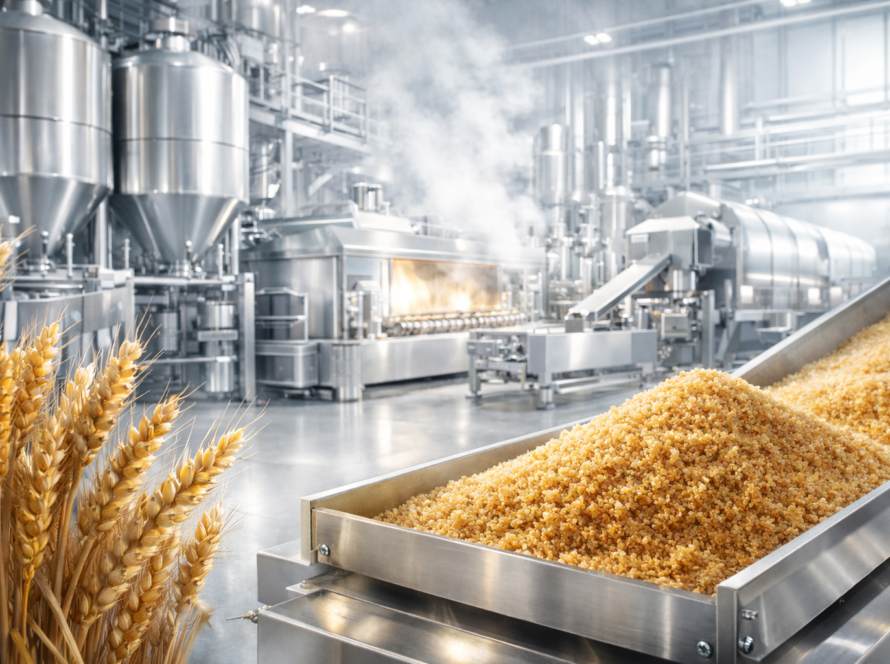
Industrial noodle production has evolved into a highly specialized sector within the global food manufacturing industry. As consumer demand for convenient, affordable, and diverse food options continues to grow, noodle manufacturers must develop production systems capable of delivering high volumes while maintaining consistent quality.
Modern noodle factories are no longer simple food preparation facilities. They operate as advanced manufacturing environments where food science, engineering precision, and strict hygiene standards work together to produce reliable products at scale.
Understanding the Industrial Noodle Manufacturing Process
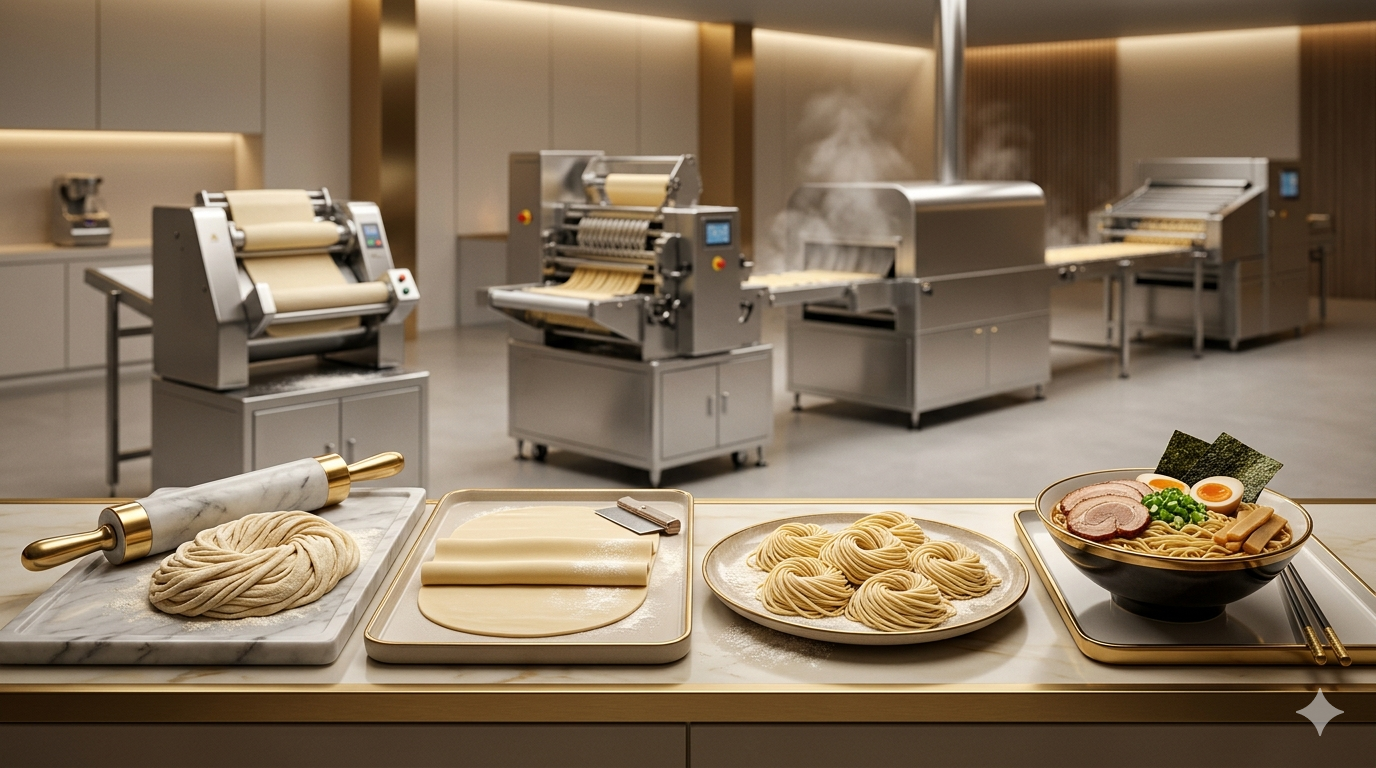
Producing noodles on an industrial scale involves several carefully controlled stages. Each step in the manufacturing process directly influences the final product’s texture, cooking performance, and shelf life.
A well-structured noodle production line typically includes the following stages:
• raw material preparation and ingredient handling
• dough mixing and hydration control
• dough resting and gluten development
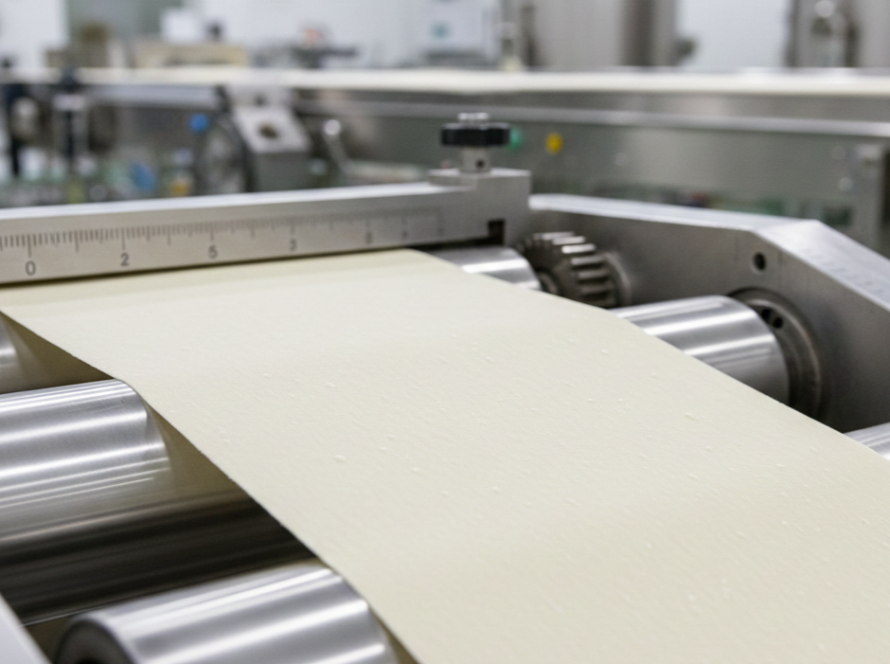
• dough rolling and sheet formation
• precision cutting or shaping of noodles
• thermal processing such as steaming or frying
• drying or stabilization depending on product type
• final packaging and quality verification
Each of these stages must operate within specific technical parameters to ensure product uniformity across large production volumes.
Even small deviations in moisture levels, dough elasticity, or processing temperature can significantly affect noodle structure and cooking behavior.
Raw Materials and Ingredient Management
The quality of raw materials plays a critical role in the success of industrial noodle production. Flour selection, water quality, and ingredient balance determine the structural integrity and taste of the final product.
Key raw materials used in noodle manufacturing include:
• wheat flour with controlled protein content
• water with stable mineral composition
• salt or alkaline solutions for texture development
• functional ingredients depending on noodle type
• stabilizers or natural additives when required
Industrial manufacturers must implement strict ingredient management systems to ensure consistency between batches.
Important practices include:
• controlled storage conditions for flour and dry ingredients
• automated dosing systems for precise ingredient measurement
• traceability systems for raw material tracking
• quality testing before ingredients enter production
Reliable ingredient management ensures that every batch of noodles begins with a stable foundation.
Automation in Modern Noodle Production Lines
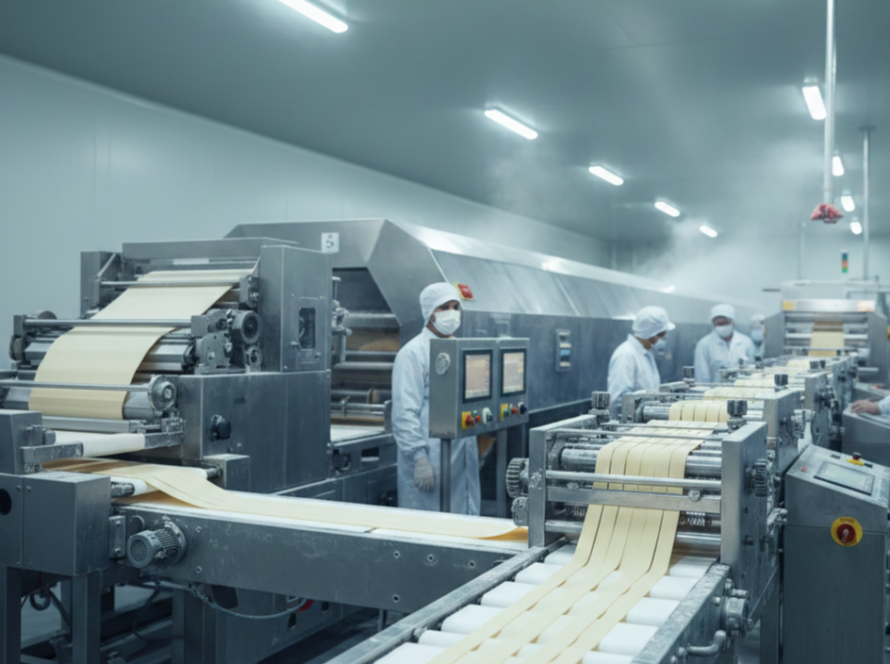
Automation has become a central component of modern industrial noodle manufacturing. Automated systems improve production speed, reduce human error, and enhance overall operational efficiency.
Advanced noodle production lines typically integrate several automated technologies:
• automated dough mixing systems for precise ingredient integration
• continuous dough sheeting and rolling equipment
• high-precision cutting machines for consistent noodle dimensions
• automated steaming or frying tunnels
• high-capacity drying systems for shelf-stable products
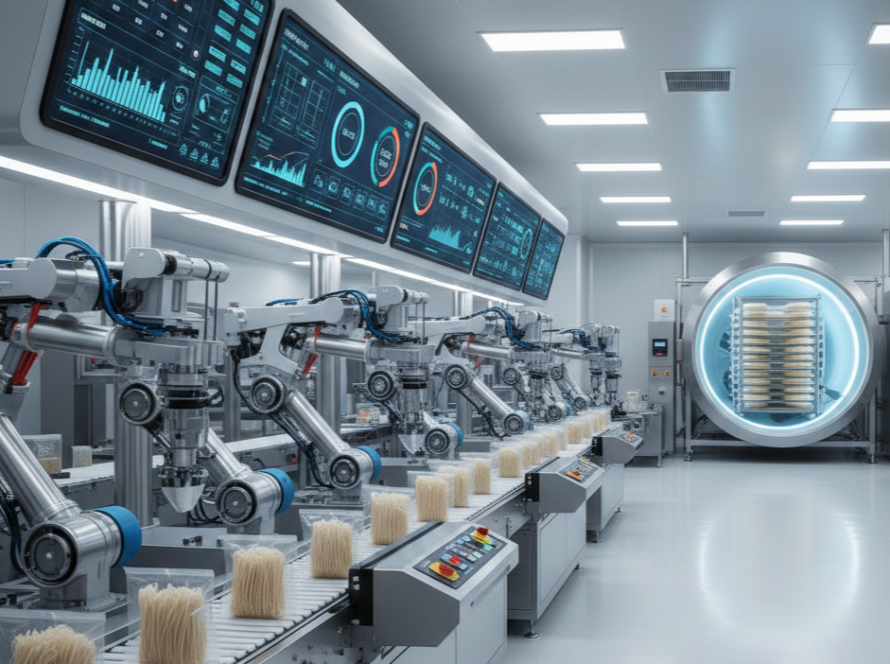
• robotic packaging and sealing equipment
Automation allows manufacturers to maintain continuous production cycles while minimizing variability between batches.
By reducing manual handling, factories can also improve hygiene conditions and ensure compliance with strict food safety standards.
Quality Control and Food Safety Systems
Maintaining consistent product quality is essential for any industrial noodle manufacturer. Consumers expect noodles to deliver predictable cooking performance, texture, and taste every time they prepare them.
To achieve this consistency, factories rely on structured quality control programs.
Important quality control practices include:
• monitoring dough moisture and elasticity during mixing
• verifying thickness uniformity during rolling and sheeting
• controlling steaming or frying temperatures precisely
• measuring final product moisture content after drying
• inspecting packaging integrity and labeling accuracy
Food safety systems are also a critical part of noodle manufacturing operations.
Professional factories implement internationally recognized food safety frameworks such as:
• hazard analysis and critical control points (HACCP)
• hygienic facility design and sanitation protocols
• microbial testing and environmental monitoring
• traceability systems for full production transparency
These systems help protect consumers while strengthening brand credibility in competitive markets.
Energy Efficiency and Sustainable Production
As food manufacturers face increasing pressure to reduce environmental impact, energy efficiency has become a key focus in industrial noodle production.
Energy intensive processes such as steaming, frying, and drying require careful management to minimize operational costs.
Modern noodle factories are adopting several strategies to improve sustainability:
• energy-efficient drying technologies
• heat recovery systems in thermal processing equipment
• optimized production scheduling to reduce downtime
• water recycling systems for cleaning operations
• intelligent monitoring systems for energy consumption
These improvements allow manufacturers to maintain high production output while lowering operational expenses and environmental impact.
Designing Scalable Noodle Production Facilities
Scalability is one of the most important considerations when designing a modern noodle manufacturing facility. Production systems must be capable of adapting to increasing demand without compromising product quality.
Successful factory design focuses on:
• efficient production line layout for smooth material flow
• modular equipment that allows production expansion
• automated quality monitoring systems
• flexible product configurations for different noodle types
• integrated packaging and labeling operations
By designing scalable manufacturing environments, companies can grow their production capacity while maintaining stable and reliable operations.
The Future of Industrial Noodle Manufacturing
The global noodle market continues to expand as consumers seek convenient and affordable meal solutions. This growth is pushing manufacturers to innovate and optimize their production technologies.
Future developments in noodle manufacturing may include:
• smart factories using digital production monitoring
• artificial intelligence for process optimization
• advanced ingredient technologies for improved nutrition
• environmentally sustainable packaging solutions
• highly automated production lines with minimal manual intervention
Companies that invest in modern technologies and structured production systems will be best positioned to lead the next generation of food manufacturing.
Conclusion
Industrial noodle production represents a complex combination of food science, engineering precision, and manufacturing discipline. Building a successful noodle production operation requires careful attention to ingredient quality, process control, automation, and food safety.
Manufacturers who implement advanced production technologies and structured quality systems can achieve consistent product performance while scaling their operations to meet growing global demand.
With the right technical approach, industrial noodle production can become a highly efficient and competitive segment of modern food manufacturing.
Start today with a comprehensive technical evaluation of your production line. Contact ProNano and transform your industrial noodle production into a disciplined, stable, and scalable manufacturing system.
Read more about New trends in pasta.