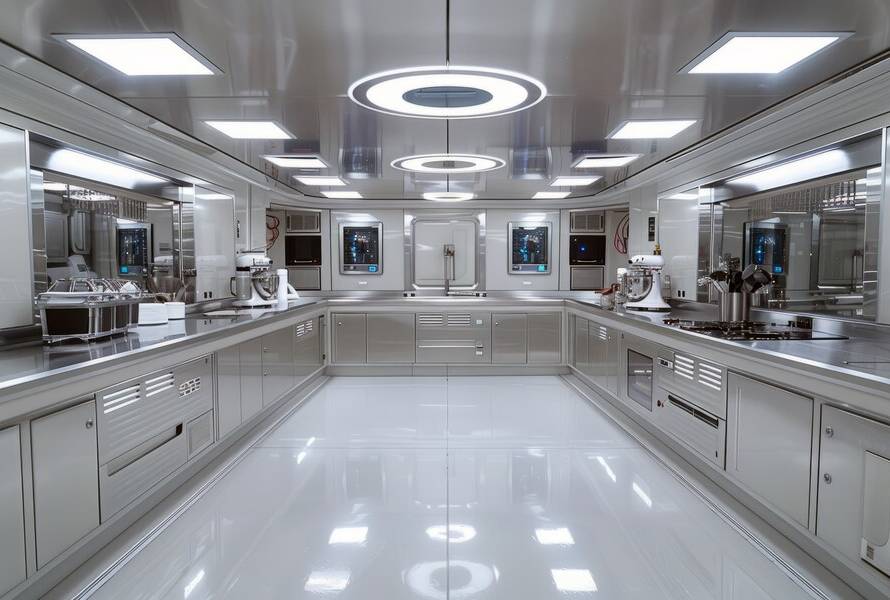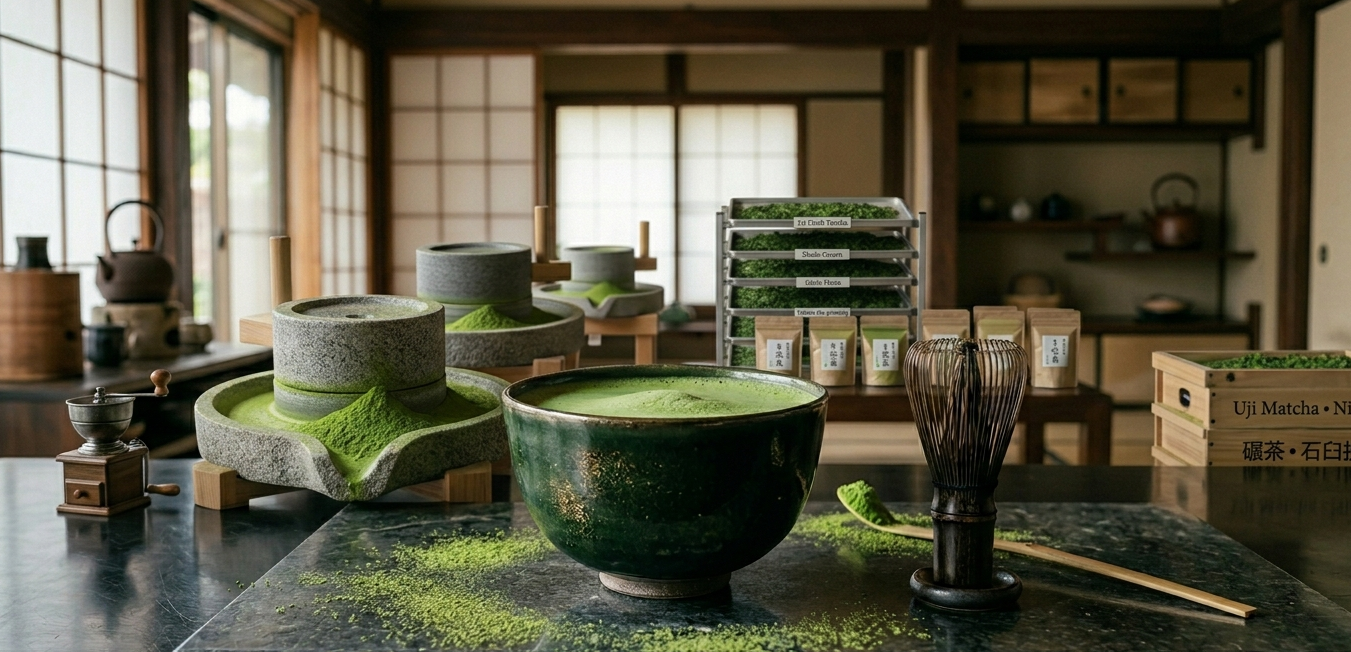
Matcha beverages have moved far beyond a café trend. What began as a handcrafted drink in specialty coffee shops has expanded into ready-to-drink products and large-scale functional beverage formulations, a development aligned with broader food science and beverage innovation discussions, including applications such as matcha, as reflected in content from the Institute of Food Technologists. Today, matcha operates across three systems: café preparation, semi-industrial batching, and industrial RTD production, each with different conditions and requirements. This is where the real complexity begins. Matcha is not just a flavor ingredient but a sensitive, particulate, bioactive-rich system whose behavior changes with preparation, processing, and stabilization.
Why Matcha Beverages Cannot Be Treated as a Single Category
The biggest misconception in product development is treating matcha beverages as one uniform category.
In reality:
• A café matcha latte is a fresh dispersion system
• A chain café mix is a semi-controlled formulation system
• An RTD matcha beverage is a fully engineered stability system
Each one requires different thinking in terms of formulation, processing, and consistency.
When this is not recognized early, instability appears at scale.
1. Dispersion inconsistency across preparation systems
In cafés, matcha is often whisked or shaken manually, which leads to variability between servings. In industrial systems, dispersion
depends on equipment, shear, and stabilization strategy.
What usually goes wrong is simple but critical: the same product tastes different depending on who prepares it or how it is processed.
How to address it:
Standardize dispersion behavior using controlled particle engineering and consistent mixing systems.
2. Flavor variation and perception gaps
Matcha flavor is highly sensitive. Small differences in concentration, water quality, or processing conditions can shift the profile significantly.
What usually goes wrong: a product tastes balanced in development but becomes bitter or flat in real service conditions.
How to address it:
Design flavor systems that are stable across temperature, dilution, and preparation methods.
3. Sedimentation and visual instability
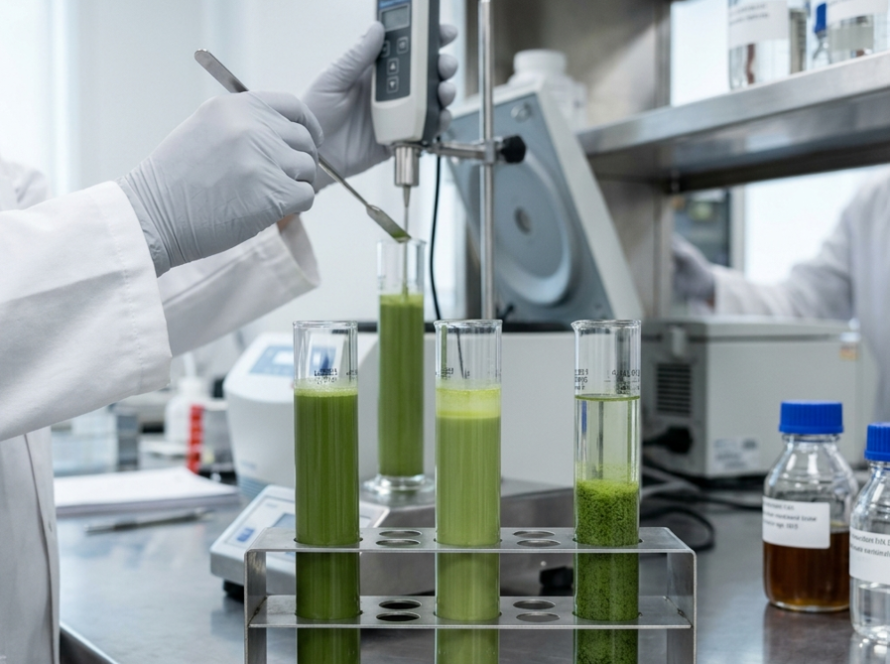
Matcha does not dissolve. It remains suspended, which creates a natural tendency for separation in both café drinks and RTD products.
What usually goes wrong: consumers perceive instability as poor quality, even if the product is technically safe and functional.
How to address it:
Develop suspension systems that maintain uniformity over the expected consumption time.
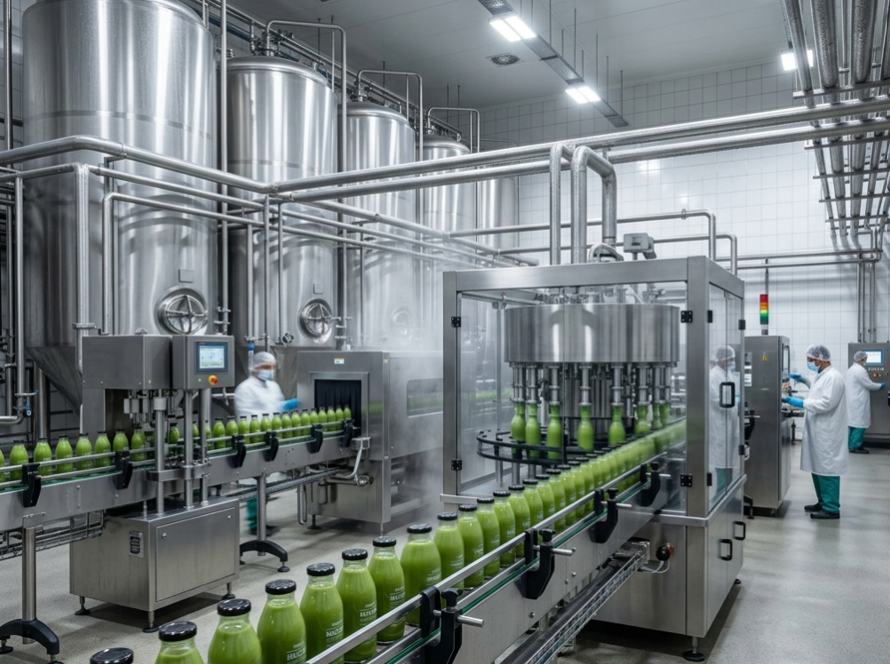
4. Process sensitivity in industrial scaling
At industrial level, matcha behaves differently under heat, shear, and flow conditions.
What usually goes wrong: a formulation that works in small batches fails when scaled due to uncontrolled process variables.
How to address it:
Design formulations with processing behavior in mind, not just ingredient composition.
5. Thermal and oxidative degradation
Heat and oxygen exposure directly affect color, flavor, and bioactive compounds in matcha.
What usually goes wrong is visible: loss of green color and functional perception during processing or shelf life.
How to address it:
Control oxygen exposure and optimize thermal treatment based on stability requirements.

6. Equipment dependency in cafés vs factories
In cafés, the outcome depends heavily on preparation tools and operator technique. In factories, it depends on process design and equipment configuration.
What usually goes wrong: inconsistent product experience across different locations or production lines.
How to address it:
Bridge café-level variability with standardized base systems or pre-dispersed formulations.
7. Shelf life expectations vs reality
RTD matcha beverages require long-term stability, while café drinks are consumed immediately. This creates fundamentally different formulation goals.
What usually goes wrong: formulations designed for fresh consumption fail under storage conditions.
How to address it:
Define shelf life requirements early and design the system accordingly.
8. Consumer expectation alignment
Consumers expect matcha beverages to deliver the same visual, sensory, and functional experience regardless of format.
What usually goes wrong: RTD products fail to replicate the café experience convincingly.
How to address it:
Align sensory targets across all systems, not just technical specifications.
9. System integration across formats
The biggest challenge is not individual systems, but the lack of alignment between them.
What usually goes wrong: a matcha product developed for cafés is later converted into RTD without rethinking formulation.
How to address it:
Treat matcha beverages as a unified product ecosystem, not separate categories.
Where Most Matcha Beverage Projects Fail
Failure rarely comes from a single issue. It comes from treating matcha as a simple ingredient rather than a multi-system material.
Common gaps include:
• Ignoring preparation differences
• Separating café and industrial development
• Testing only at lab scale
• Overlooking dispersion stability
These gaps become critical when scaling or expanding across markets.
What Defines a Scalable Matcha Beverage System
A scalable system is not defined by formulation alone. It is defined by consistency across all consumption formats.
This includes:
• Stable sensory profile across preparation methods
• Controlled dispersion behavior
• Process compatibility at industrial scale
• Consistent visual and functional performance
Without these, scaling only amplifies variability.
Conclusion
Matcha beverages are no longer a niche café trend or a simple functional ingredient. They are a multi-system category that spans handcrafted preparation and industrial production.
Success in this space requires a shift in thinking. Instead of optimizing for a single format, manufacturers and developers need to design matcha beverages as integrated systems that perform consistently across all environments.
If you are developing matcha beverages across café or industrial systems and facing challenges in stability, consistency, or scalability, contact ProNano to evaluate your formulation and optimize it for real production conditions.
Read more about Zero and Low Sugar Products Are Driving Reformulation, Not Just Sugar Reduction.