



Tea manufacturing extends far beyond global consumption trends and the diversity of tea varieties. The processing of Camellia sinensis leaves has evolved into an integrated science that combines agriculture, advanced technology, and biochemistry. As the tea industry continues to expand, manufacturers increasingly require advanced processing facilities capable of delivering high-quality, consistent, and safe products.
This is where Pronano Food Consulting plays a vital role by optimizing production lines, enhancing processing quality, and providing specialized technical and advisory solutions for tea manufacturing plants.
 Types of Tea and Their Relationship to Processing Methods
Although all tea originates from the same plant, the final product is determined by the processing methods applied after harvesting:
1 ) Black Tea:
Produced through withering, rolling, full oxidation, and drying. Complete oxidation gives black tea its dark color and strong, distinctive flavor.
2 ) Green Tea:
Oxidation is prevented by applying heat immediately after harvesting—either by steaming or roasting—preserving its green color and fresh, grassy taste.
3 ) White Tea:
The least processed tea variety. Leaves undergo gentle withering and drying without rolling or oxidation.
4 ) Oolong Tea:
A semi-oxidized tea positioned between green and black tea, offering complex aroma profiles and balanced flavors.
Each tea type requires precise control of temperature, humidity, processing time, and equipment selection to achieve optimal quality.
Core Industrial Tea Manufacturing Processes
Before reaching the consumer, tea leaves undergo several essential industrial stages:
Withering:
The moisture content of fresh tea leaves is reduced by approximately 30–40% using controlled airflow systems in specialized chambers. Accurate temperature and humidity regulation is critical at this stage.
Rolling:
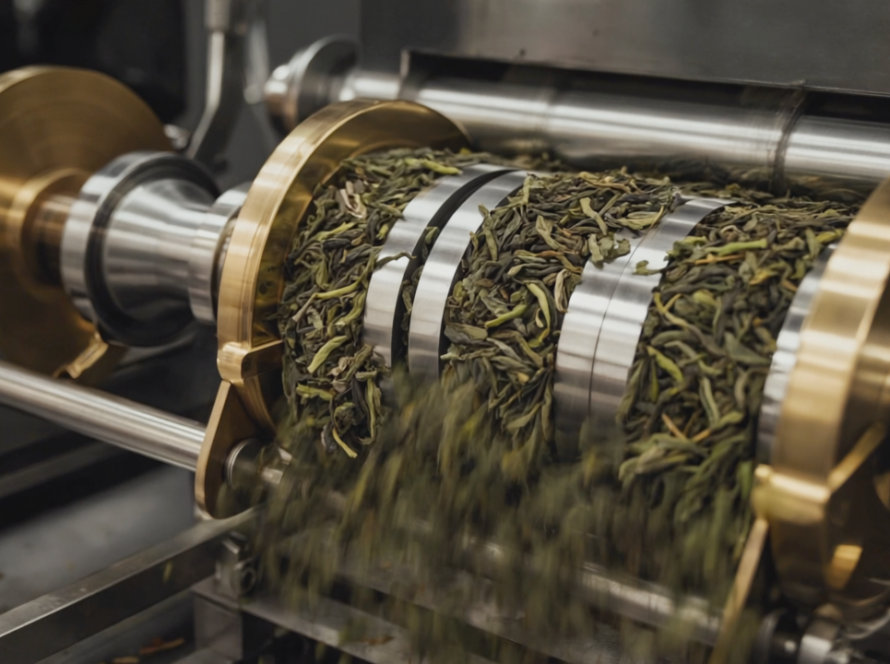
Mechanical rolling equipment is used to break down leaf cell structures and release enzymes that initiate biochemical reactions during oxidation.
Oxidation (Enzymatic Fermentation):
This process is carefully monitored using automated control systems to regulate oxygen exposure and polyphenol interaction, directly influencing tea color, aroma, and flavor.
Drying:
Hot-air or infrared drying systems stabilize the tea and reduce moisture content to below 3%, ensuring product stability and shelf life.
Sorting and Packaging:
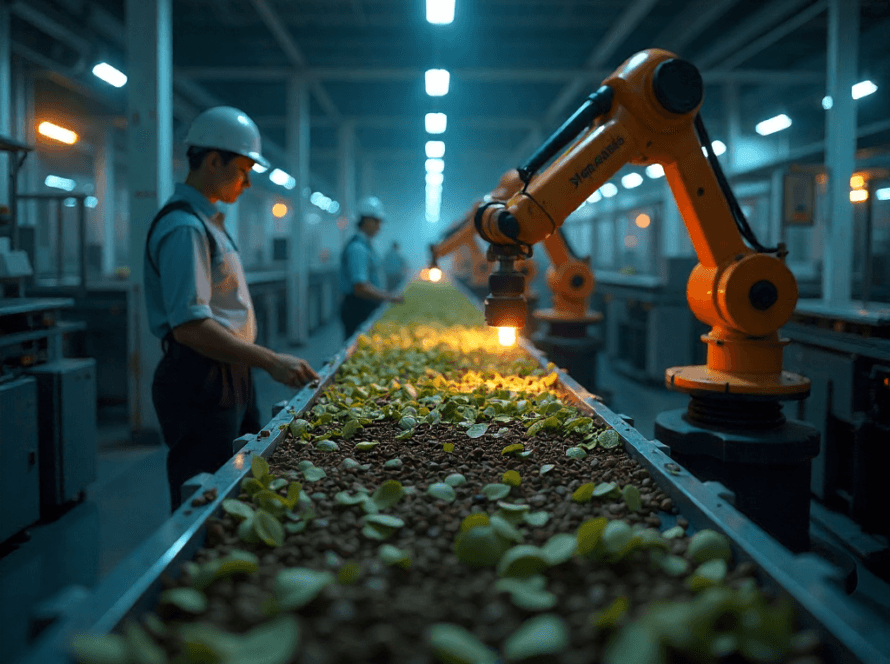
Tea leaves are graded by size and quality using vibrating screens and then automatically packaged into suitable containers.
Equipment and Machinery Used in Tea Manufacturing
The success of tea manufacturing depends largely on selecting appropriate equipment and keeping it technologically up to date. Key equipment includes:
1) Smart withering systems that ensure uniform airflow and moisture balance
2) Multi-speed rolling machines adaptable to different tea varieties
3) Automated oxidation units equipped with real-time monitoring sensors
4) Multi-stage drying systems for gradual and uniform moisture reduction
5) Real-time quality analysis devices such as FTIR and NIR for consistent flavor and aroma control
The Role of Pronano Food Consulting in Factory Development
Pronano Food Consulting provides specialized engineering and consulting services to enhance the performance of tea manufacturing facilities. We work closely with factories to achieve:
1) Improved production line efficiency and reduced material waste
2) Accurate selection and technical evaluation of processing equipment
3) Design and implementation of automated real-time quality control systems
4) Technical training programs for production and quality teams
5) Full compliance with ISO and HACCP standards across all processing stages
Our consulting approach focuses on improving final product quality while reducing operational costs and strengthening competitiveness in the global market.
Equipment Optimization and Factory Improvement Consulting
Pronano offers comprehensive factory development services, including performance analysis of existing equipment, upgrade recommendations, process optimization, and the design or expansion of production facilities in accordance with international standards. We also develop standardized operating procedures to ensure consistent quality, safety, and efficiency.
Partner with Pronano for Sustainable Growth

In an increasingly competitive food and beverage industry, continuous improvement in manufacturing processes is essential to maintaining leadership. Pronano Food Consulting combines technical expertise with industry insight to deliver solutions that enhance efficiency, increase productivity, and uphold the highest quality standards.
For inquiries or to request a consultation, contact the Pronano team. We are ready to support you at every stage of your success.
For more information, read about Tips for Starting a Lactose-Free Food Business.