Electrolyte beverages have moved well beyond their original positioning in sports hydration. They are now part of everyday consumption, often associated with functional hydration, sustained performance, and even cognitive support. But once you step outside the marketing layer and into the production floor, a different question starts to matter: Are electrolyte beverages actually delivering controlled and repeatable functional performance, or are they still being treated as simplified mixtures of salts and sugar? From an industrial standpoint, the answer is rarely straightforward.

Why Electrolyte Beverages Are More Complex Than They Appear
On paper, the formulation looks simple. Most systems are built around a familiar set of components:
• Sodium for fluid retention
• Potassium for intracellular balance
• Magnesium for neuromuscular function
• Calcium for signaling and muscle support
• Carbohydrates to support absorption
Individually, none of these ingredients are difficult to work with.
The complexity starts when they are combined into a single system.
At that point, formulation becomes less about ingredients and more about interactions.
Small shifts in mineral ratios can change absorption behavior. Osmolality starts to dictate how fluids move across biological systems. At the same time, even minor increases in mineral concentration can push the taste profile from acceptable to difficult.
This is where many formulations begin to drift.
What looks like a simple hydration product is, in reality, a tightly balanced functional system that needs to hold together across taste, performance, and stability.
Processing Reality: Where Formulations Start to Break
Most formulation challenges don’t appear on paper. They show up during processing.
In electrolyte beverage production, a few practical issues tend to repeat:
• The order of ingredient addition affects dissolution speed and clarity
• High mineral loads can slow down solubility, especially with magnesium salts
• Calcium systems can interact with other components, leading to haze or light precipitation over time
• Mixing intensity (shear) influences how quickly the system stabilizes
• Temperature during processing can shift solubility and impact final clarity
These are not extreme conditions. They happen in standard production environments.
In ready-to-drink systems especially, once the product is filled, there is no second chance to correct imbalance. What leaves the line must remain stable throughout shelf life.
This is where formulation decisions and processing conditions become tightly linked.
Rapid Hydration vs Controlled Hydration
One of the most common gaps in electrolyte beverage development is the lack of clear functional positioning.
There are two very different performance directions:
Rapid hydration systems
Designed for quick absorption and immediate electrolyte replenishment
Controlled hydration systems
Designed for gradual fluid balance, stability, and sustained performance
In practice, many products sit somewhere in between without fully committing to either.
The result is predictable:
• Absorption is not fast enough for immediate effect
• Stability is not strong enough for sustained performance
From a development standpoint, this usually traces back to formulation ambiguity rather than ingredient limitation. 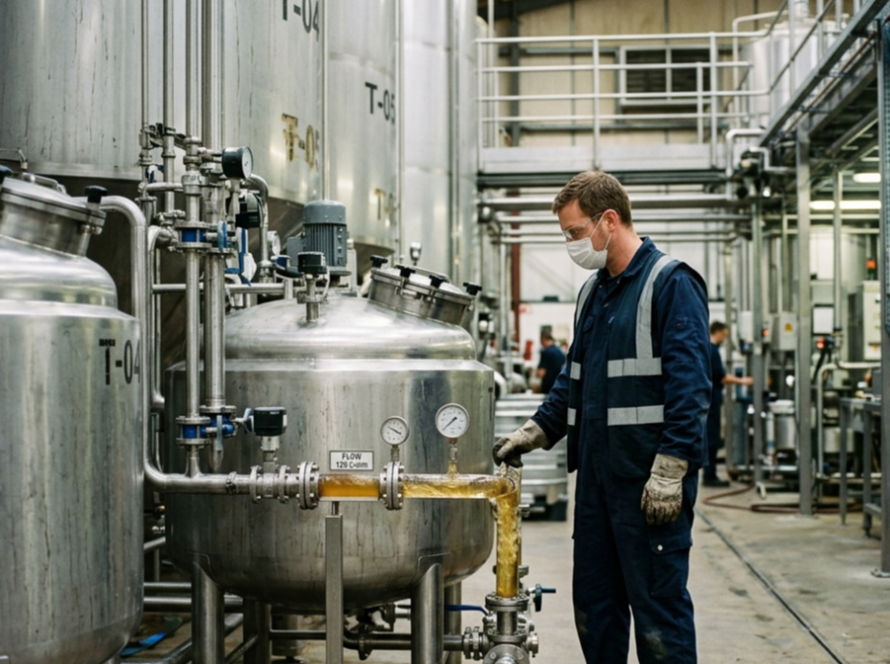
Stability Is Not a Single Parameter
In electrolyte beverages, stability is often discussed in general terms. In reality, it has multiple dimensions:
• Physical stability: haze formation, sedimentation, clarity loss
• Chemical stability: mineral interactions over time
• Sensory stability: gradual taste drift or increased harshness
• Shelf life consistency: performance at week 1 vs month 6
For example, formulations containing higher levels of calcium or magnesium may look perfectly clear at production, but develop slight turbidity after a few weeks.
This is often not a failure of ingredients, but a result of how the system was balanced, pH, ionic strength, and interaction with other components.
Without addressing these factors early, stability issues tend to appear later, when correction is no longer simple.
The Gap Between Functional Claims and Real Performance
Electrolyte beverages are strongly driven by consumer expectations:
• Fast hydration
• Sustained energy
• Reduced fatigue
But in real-world conditions, performance is often inconsistent:
• Taste becomes too salty or slightly metallic over time
• Sugar is increased to mask mineral harshness rather than support function
• Functional effect is mild or not clearly noticeable
• Performance varies depending on usage context
This gap is rarely caused by a single flaw.
It is usually the accumulation of small formulation and processing compromises.
Where Most Products Fall Short
When looking at underperforming electrolyte beverages, the same patterns tend to appear:
• Sodium-heavy systems without full electrolyte balance
• Sugars used primarily for taste correction
• Limited control over osmolality
• Underestimation of sensory impact from minerals
• Formulations designed around claims rather than measurable performance
Individually, these decisions may seem minor.
Together, they shape the overall product behavior.
Quality Control: What Actually Needs to Be Measured
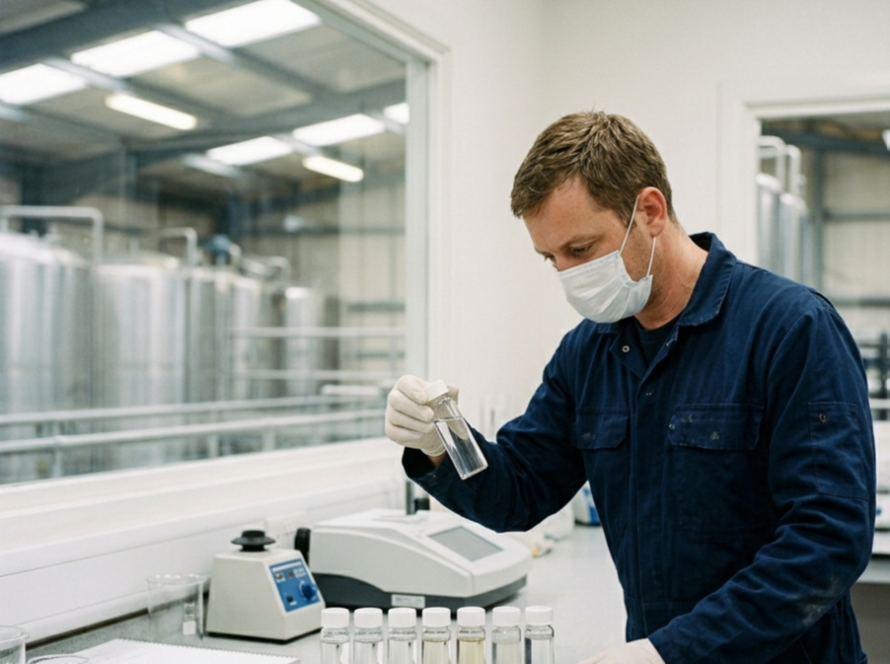
One of the less discussed aspects of electrolyte beverages is how performance is monitored at the production level.
Beyond standard QC, a few parameters become critical:
• Osmolality as a direct indicator of hydration behavior
• Conductivity as a quick proxy for mineral consistency
• pH stability over time
• Sensory evaluation across shelf life
• Batch-to-batch mineral uniformity
Without these measurements, it becomes difficult to understand whether a formulation is truly stable, or just appears stable at the time of production.
Format Matters More Than Expected
The same formulation behaves differently depending on delivery format.
Powders and effervescent tablets allow some flexibility. The end user controls dilution, which can mask minor formulation inconsistencies.
Ready-to-drink beverages are less forgiving.
• No dilution adjustment
• Full exposure of mineral taste
• Stability must hold from production to consumption
• Shelf life becomes part of the functional performance
This is why many formulations that work well in powder form struggle when converted into RTD products.
From Formulation to Industrial Performance
A successful electrolyte beverage is not defined by the number of electrolytes listed on the label.
It is defined by how well the system performs under real conditions.
That includes:
• A clearly defined functional direction (rapid vs controlled)
• Balanced mineral profile aligned with that direction
• Controlled osmolality for effective absorption
• Stable sensory profile over time
• Consistent behavior across production batches
Without this alignment, even technically correct formulations can fail once they reach the market.
Market Opportunity: Still Underdeveloped
Despite the growth of electrolyte beverages, the category is still relatively immature from an industrial perspective.
Many products rely on similar structures, similar claims, and similar formulation logic.
This creates a gap.
Manufacturers who approach electrolyte beverages as controlled functional systems, rather than simple hydration products, tend to build more stable and consistent products over time.
The shift is subtle, but it changes how decisions are made during development.
Conclusion
Electrolyte beverages are no longer simple formulations built around salts and sugar.
They are multi-variable systems where formulation, processing, and stability all interact.
The real challenge is not adding more ingredients, but understanding how those ingredients behave together under real production and shelf-life conditions.
This is where meaningful product differentiation starts to emerge.
If you are currently developing or optimizing electrolyte beverages and facing challenges in formulation, stability, or processing consistency:
Contact ProNano to evaluate your formulations and identify practical ways to improve industrial performance and product reliability.
Read more about GLP-1 Foods: Redesigning Food Manufacturing for Reduced Appetite Consumers.