

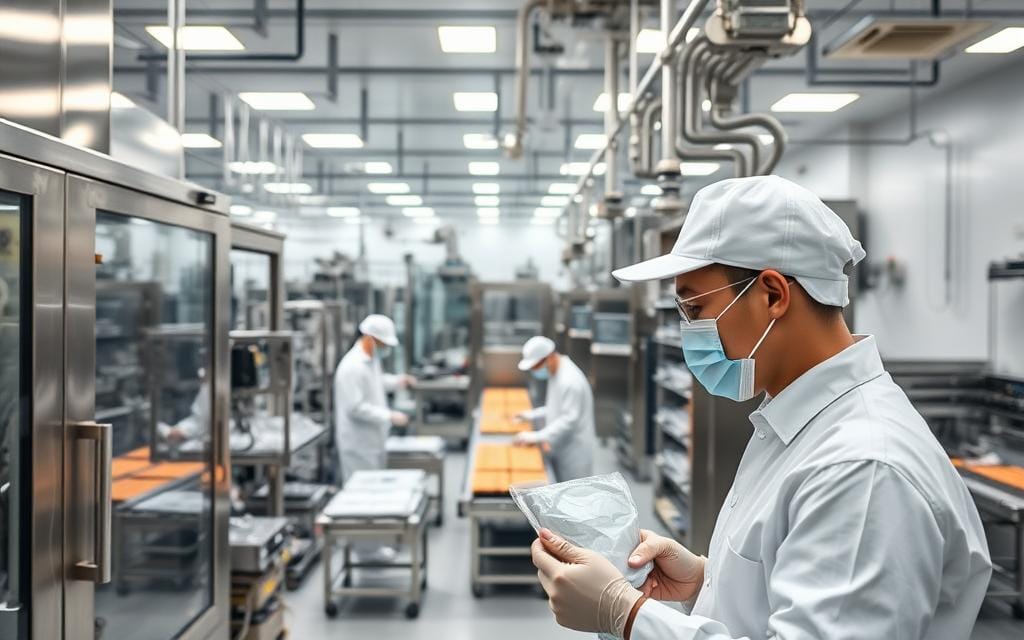
Can your food factory withstand contamination risks? Cross-contamination is a big threat to food safety. It’s key to have good training to stop contamination. At ProNano, we know how vital it is to keep your factory safe from contamination. Our contamination control training program teaches your staff how to keep the place clean and safe. We have a team of experts in food technology, industrial design, and project management. They help make sure your factory or kitchen is safe and clean. With our custom training, your staff will be ready to face any challenge.
Key Takeaways
- Effective contamination control training is key for food safety.
- Our training program gives staff the knowledge and skills they need.
- We offer tailored training that fits your factory or kitchen’s needs.
- Our team includes experts in food technology and project management.
- Keeping your production environment clean and safe is our main goal.
Controlling contamination is key to keeping consumers safe and preventing foodborne illnesses. In the food industry, contamination risks are always there. Even small mistakes can cause big problems.
We know how vital it is to tackle contamination risks in food factories. Our team helps you make sure your place is safe and follows the rules.
Common Contamination Risks in Food Factories:
The Critical Importance of Contamination Control in Food Production
Food factories face many contamination risks. These can be split into microbiological hazards and foreign material risks.
Microbiological Hazards
Microbiological hazards, like bacteria and viruses, are a big worry in food production. They can make people sick and harm your brand. It’s important to follow food industry hygiene best practices to fight these risks.
Foreign Material Risks
Foreign material risks include things like metal, glass, or plastic. These can contaminate food and affect its quality and safety.
To show the dangers of contamination risks, here’s a table:
| Contamination Risk | Description | Potential Impact |
|---|---|---|
| Microbiological Hazards | Bacteria, viruses, and other microorganisms | Foodborne illnesses, consumer harm |
| Foreign Material Risks | Physical contaminants like metal, glass, or plastic | Physical contamination, product recalls |
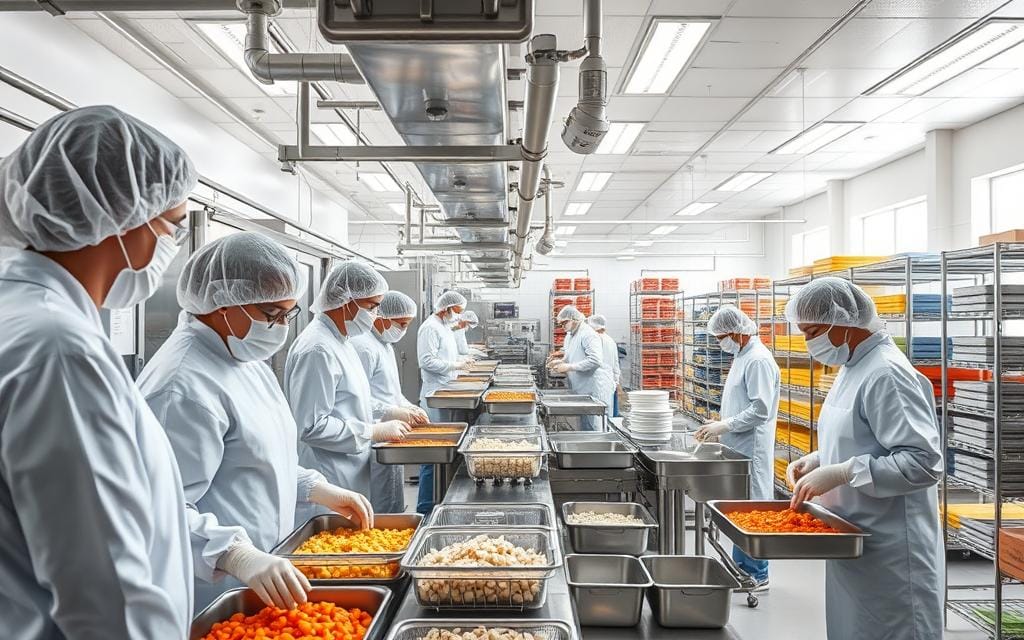
By knowing these risks and taking steps to control them, food factories can lower the chance of contamination. This ensures a safe place to make food.
Understanding Contamination in Food Factories: Types and Sources
To control contamination in food factories, we must know the types and sources. Contamination can come from many places. Knowing these sources helps us take the right steps to prevent it.
Biological Contaminants
Biological contaminants are a big risk in food production. They include bacteria, viruses, and parasites. These can make people sick.
Bacteria, Viruses, and Parasites
Bacteria like Salmonella and E. coli are common in food factories. Viruses, like norovirus, can also get into food. Parasites, such as Toxoplasma gondii, can come from contaminated raw materials.
Mold and Yeast Concerns
Mold and yeast are biological contaminants that can harm food quality and safety. Mold can make mycotoxins, which are bad for health. Yeast can spoil food, causing big economic losses.
Chemical Contaminants
Chemical contaminants are also a big problem in food factories. They include cleaning agents, sanitizers, pesticides, and industrial chemicals.
Cleaning Agents and Sanitizers
Cleaning agents and sanitizers keep food factories clean. But, if not rinsed off well, they can leave residues. These residues can contaminate food.
Pesticides and Industrial Chemicals
Pesticides and industrial chemicals can get into food through contaminated raw materials or equipment. These chemicals can be very harmful to people who eat them.
The table below shows the types and sources of contaminants in food factories:
| Type of Contaminant | Examples | Common Sources |
|---|---|---|
| Biological | Bacteria, Viruses, Parasites, Mold, Yeast | Personnel, Equipment, Raw Materials |
| Chemical | Cleaning Agents, Sanitizers, Pesticides, Industrial Chemicals | Cleaning Practices, Contaminated Raw Materials, Equipment |
Knowing about these contaminants and where they come from is key. Food factories can then take steps to prevent contamination. This ensures safe and high-quality food for everyone.
10 Essential Components of Effective Contamination Control Training
To keep food safe, our training focuses on key parts of controlling contamination. It’s important for keeping food factories clean and safe.
Our program teaches your staff how to keep the production area clean and safe. It covers 10 critical areas:
- Foundational Food Safety Knowledge: Learning the basics of food safety and why controlling contamination is important.
- Personal Hygiene Protocols: Teaching how to stay clean to avoid contamination.
- Cleaning and Sanitation Procedures: Showing how to clean and sanitize equipment and areas well.
- Allergen Management Controls: Teaching how to handle allergens and stop cross-contamination.
- Foreign Material Prevention: Showing ways to keep foreign materials out of the production area.
- Documentation Requirements: Teaching the importance of keeping accurate records for compliance and tracking.
- Corrective Action Procedures: Showing how to deal with contamination incidents.
- Environmental Monitoring Techniques: Teaching how to check the production area for contaminants.
- Pest Control Awareness: Emphasizing the need for pest control and how to do it effectively.
- Emergency Response Protocols: Preparing for how to handle contamination emergencies.
Experts say, “Proper training is key to preventing contamination and ensuring food safety.” Our program is designed to give your staff the skills to keep the production area safe.
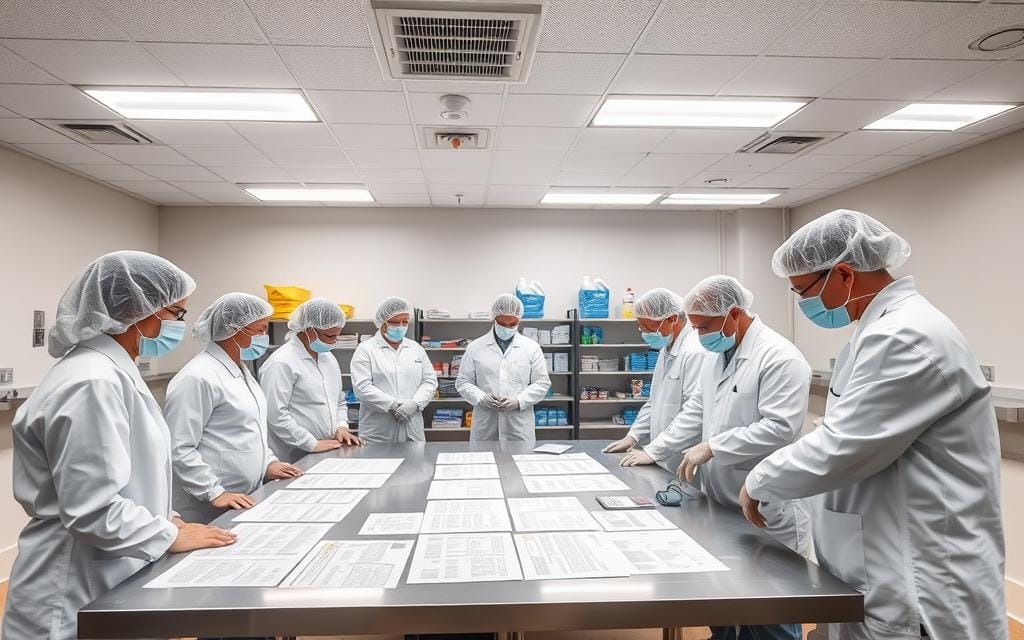
Our training includes 10 key areas to cover food safety practices. This helps prevent contamination and meets regulatory standards.
For food production businesses, investing in good contamination control training is essential. It protects consumers, keeps the brand safe, and saves money.
Establishing a Culture of Food Safety Excellence
We help organizations build a strong culture of food safety. This culture is key to keeping food production facilities safe and of high quality.
Leadership commitment is vital for a food safety culture. It shows everyone in the organization that food safety is a top priority.
Leadership’s Role in Safety Culture
Good leadership is key to a food safety culture. Leaders must show they care about food safety and give the needed support.
Management Commitment Demonstrations
Management can show they care about food safety in many ways. For example:
- Regularly reviewing and updating food safety policies
- Providing ongoing training and education for employees
- Conducting regular audits and inspections to ensure compliance
- Recognizing and rewarding employees who contribute to a culture of food safety
By showing a strong commitment to food safety, leaders create a culture that values it. This makes the food production process safer and helps the organization succeed.
Contamination in Food Factories: Food Industry Hygiene Best Practice Training
Training staff on contamination control is key in food factories. It helps them follow the best hygiene and cleanliness practices. This training boosts product safety, meets regulations, and protects the brand’s reputation.
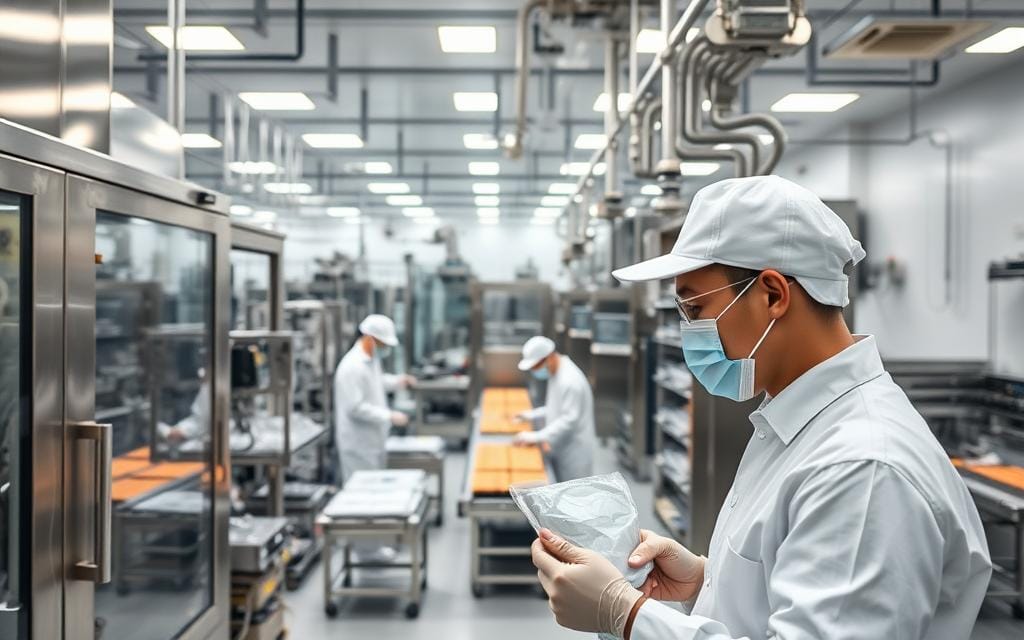
Industry-Specific Hygiene Standards
Different parts of the food industry need their own hygiene rules. For example, dairy places must fight off bacteria. Meat and poultry plants focus on avoiding pathogen spread.
Dairy Processing Requirements
Dairy work involves handling raw milk, a source of bacteria. So, dairy places must clean and sanitize everything well. This includes:
- Regular cleaning and sanitizing of equipment
- Strict temperature control during processing and storage
- Personnel hygiene practices, including handwashing and proper attire
Meat and Poultry Processing Protocols
Meat and poultry need careful handling to avoid contamination. Important steps include:
- Segregation of raw materials from finished products
- Use of dedicated equipment and utensils for different products
- Enhanced cleaning and sanitizing procedures, specially in raw product areas
Zoning and Hygienic Design Principles
Good zoning and design are vital for a clean factory. They help keep the environment clean by reducing contamination risks.
Traffic Flow Management
Managing factory traffic flow is key to stop contamination. Ways to do this include:
- Segregating areas for raw materials, processing, and finished goods
- Implementing one-way traffic flow where possible
- Using color-coding or signage to differentiate between zones
Equipment Design for Cleanability
Food processing equipment should be easy to clean. It should have:
- Smooth, non-porous surfaces
- Easy disassembly for cleaning
- Minimization of crevices and corners where contaminants can accumulate
Experts say, “Hygiene is not just about cleaning; it’s about designing a system that prevents contamination.” Following these principles makes food safer and operations more efficient.
7 Innovative Training Methods for Maximum Retention
We use 7 new training methods in our program to help employees remember more and stay engaged. Our methods meet different learning needs. This way, all employees get the knowledge and skills needed for good contamination control.
The 7 methods include interactive and hands-on learning approaches. This lets employees really get involved with the training. We also use technology-enhanced training solutions. This makes learning fun and modern.
- Multilingual training considerations to ensure inclusivity across diverse teams.
- Gamification elements to boost engagement and motivation.
- Visual learning tools to help employees understand and remember better.
- Scenario-based problem-solving to get ready for real-world problems.
- Microlearning and reinforcement techniques to support ongoing learning and development.
By using these new methods, we improve effective cleaning practices for food industry workers. They learn the latest in hygiene standards and practices. Our training is fun, informative, and directly useful at work. It supports employee hygiene training and food safety.
Our focus on innovative training methods shows our commitment to top-notch food safety training. These advanced methods help food industry workers keep high hygiene and safety standards.
Implementing a Comprehensive Training Program
A well-structured training program is key to keeping food production facilities safe. We’ll help you create a program that fits your needs.
Needs Assessment and Gap Analysis
First, we do a needs assessment and gap analysis. This helps us find out what training you need. We look at your current programs and see what’s missing.
Customizing for Facility-Specific Risks
We tailor the training to fit your facility’s risks. We check your unique hazards and make training that targets them.
Developing Tailored Training Materials
Creating training materials that fit your needs is important. Our team will help make content that’s right for your staff.
Role-Specific Content Development
We make sure each employee gets training that’s right for their job. This helps them learn better and keeps food safe.
| Training Component | Description | Benefits |
|---|---|---|
| Needs Assessment | Evaluating current training programs and identifying gaps | Identifies areas for improvement |
| Customized Training | Developing targeted training content for facility-specific risks | Enhances relevance and effectiveness |
| Role-Specific Content | Creating training content tailored to job responsibilities | Improves knowledge retention and job performance |
With a good training program, your staff can keep food production safe. Our team is here to help you achieve that goal.
“The key to a successful food safety training program is to make it relevant and engaging for employees. By tailoring the training to their specific needs and roles, you can improve knowledge retention and overall food safety.”
Measuring Training Effectiveness and Continuous Improvement
Evaluating training effectiveness is key to a strong contamination control strategy. We need a detailed evaluation framework to check if our training meets its goals.
Key Performance Indicators for Training Success
Key performance indicators (KPIs) are essential for judging training success. By monitoring certain metrics, we see if our training is working as planned.
Behavioral Observation Metrics
Behavioral observation metrics are a critical KPI. Watching how employees follow contamination control rules helps us see if training is effective. Observing employee behavior shows if they’re using what they learned in training.
Contamination Incident Reduction
Another key KPI is reducing contamination incidents. By comparing incident numbers before and after training, we see how well our programs work. Less contamination means our training is doing its job.
We use many methods, like regular feedback and training updates, to keep improving.
By using these KPIs and always checking our training, we find ways to get better. This helps us make smart choices to keep our contamination control strong.
ProNano’s Expert Approach to Food Factory Protection
At ProNano, we’re proud of our expert way to keep food factories safe from contamination. Our team knows a lot about setting up food factories. We help you protect your factory, using our knowledge in contamination control and food safety.
Proven Experience in Food Factory Setup
Our team has set up many food factories before. We make sure every part of keeping things clean is covered. We work with our clients to find the best solutions for their needs.
Support from Concept to Operation
We help you from the very start to when your factory is running. Our skills include:
- Contamination control training
- Food safety protocols
- Hygiene best practices
- Zoning and hygienic design principles
We aim to keep your food factory safe from contamination. This way, you can keep food safety at its highest level.
| Service | Description | Benefits |
|---|---|---|
| Contamination Control Training | Comprehensive training on contamination control measures | Reduced risk of contamination |
| Food Safety Protocols | Development of customized food safety protocols | Enhanced food safety standards |
| Hygiene Best Practices | Implementation of industry-specific hygiene best practices | Improved cleanliness and reduced contamination risk |
Choosing ProNano means your food factory is in safe hands. Our expert approach to protecting food factories gives you the support you need. This ensures your operation stays safe and follows all rules.
Conclusion: Building a Safer Food Production Future
Effective contamination control training is key to a safer food future. At ProNano, we help you reach this goal with our detailed training and expert advice.
By teaming up, we can make food production safer and more sustainable. Our team is ready to give you the knowledge and tools for top food safety and strong contamination control.
Together, we aim for a future where safer food production is a reality. This will protect consumers and boost your business’s reputation. With our help, you can handle food safety challenges and stay ahead in the market.
FAQ
What is the importance of contamination control training in food production?
Contamination control training is key in food production. It helps prevent foodborne illnesses and keeps consumers trusting in food safety. Our program tackles common risks like microbiological and foreign material hazards.
What types of contaminants are covered in ProNano’s training program?
Our program focuses on biological contaminants like bacteria, viruses, and parasites. It also covers chemical contaminants, such as cleaning agents and sanitizers.
What are the essential components of effective contamination control training?
Our training includes foundational food safety knowledge and personal hygiene. It also covers cleaning and sanitation, allergen management, and foreign material prevention. We teach documentation, corrective actions, and environmental monitoring. Awareness of pests and emergency response is also included.
How can leadership demonstrate commitment to food safety?
Leadership shows commitment by prioritizing food safety and providing resources. Our program highlights the role of leadership in food safety. It offers guidance on showing management’s dedication to food safety.
What industry-specific hygiene standards are covered in ProNano’s training program?
We cover specific hygiene standards for different industries. This includes dairy, meat, and poultry processing. We also teach zoning and hygienic design principles.
How can training effectiveness be measured?
Measuring training success is vital for improvement. Our program uses metrics like behavioral observations and contamination reduction. These help gauge the training’s effectiveness.
What innovative training methods are used in ProNano’s training program?
Our program uses interactive and hands-on methods. It includes technology-enhanced training and multilingual options. We also use gamification, visual tools, and scenario-based learning. Microlearning and reinforcement are part of our approach.
How is a complete training program implemented?
Implementing a program starts with a needs assessment and gap analysis. Our team customizes the program for your facility’s risks. We develop content specific to different roles.
What is ProNano’s approach to food factory protection?
At ProNano, we offer expertise in setting up food factories. Our team supports you from concept to operation. We use our knowledge in contamination control and food safety to protect your factory.