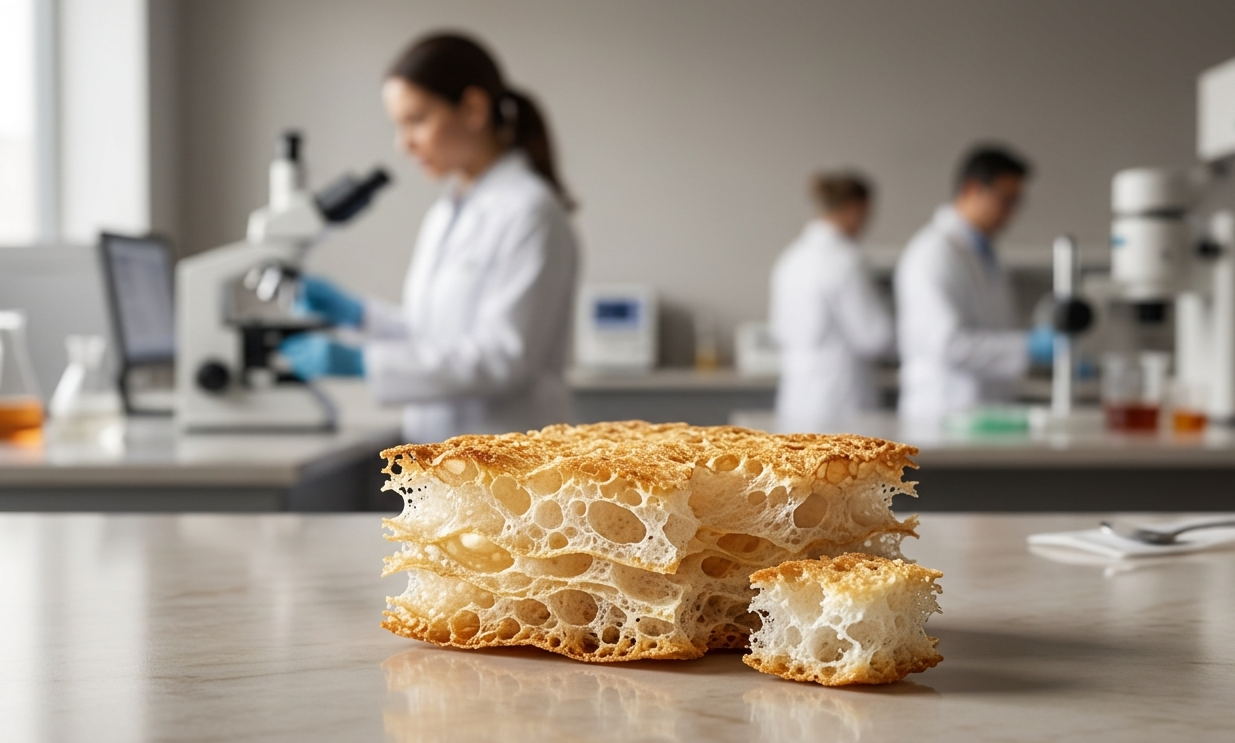
Edible Satiety Aerogel Foams are emerging in food development as a structural approach to satiety engineering rather than a compositional one. In industrial food systems, satiety is often assumed to depend on calories, stability, and taste. In reality, fullness is not that simple. Similar nutritional products can produce different satiety responses depending on their internal structure during consumption and digestion, where texture, air distribution, and moisture behavior all play a role. This is why aerogel foams matter, not as ingredients, but as structural systems that allow satiety to be engineered through food architecture.
Why Structural Satiety Is Becoming More Relevant
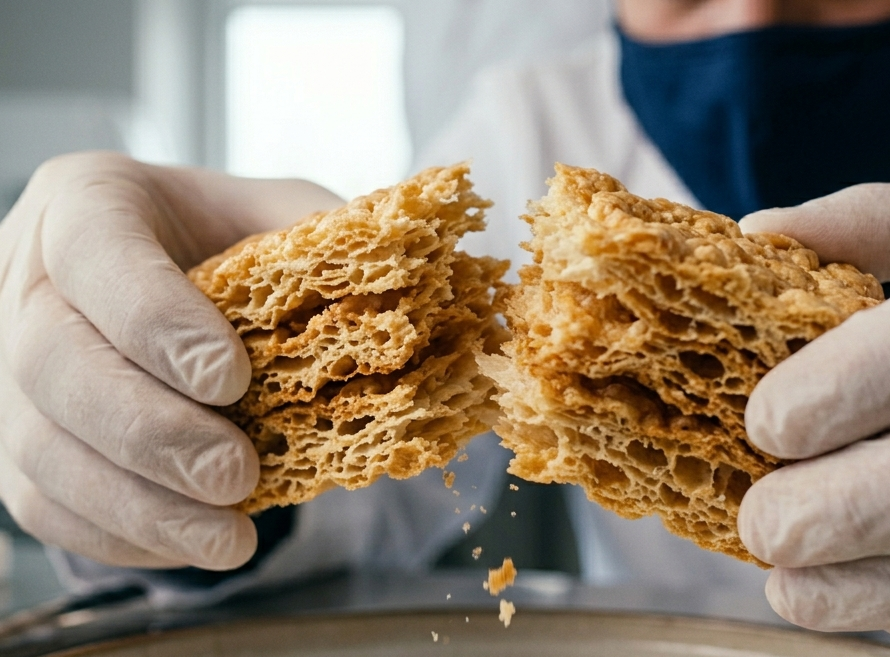
Many conventional satiety systems still depend heavily on density. Protein enrichment. Fiber loading. Hydrocolloid thickening. While these approaches can work, they also create limitations. Higher density often changes mouthfeel. Excessive viscosity can reduce sensory acceptance. High fiber systems may introduce processing instability or digestive discomfort if not balanced carefully. What becomes difficult is maintaining functional performance without making the product feel heavy, artificial, or nutritionally overloaded. Structural satiety approaches attempt to solve this differently. Instead of increasing mass, they manipulate internal volume, porosity, and collapse behavior to influence how the product behaves mechanically and physiologically after consumption. This shifts the focus from composition to structural efficiency.
When Air Starts Acting Like a Functional Component
Aerogel foam systems are fundamentally different from traditional expanded snacks. In many expanded products, incorporated air mainly serves texture and bulk reduction purposes. In aerogel based systems, internal air distribution becomes part of the functional design itself. Porosity begins influencing hydration kinetics. Internal surface area affects saliva interaction. Structural resistance changes oral processing behavior. In some cases, gastric expansion dynamics may also be affected. Air is no longer just empty space. It becomes part of the performance system. This introduces a new layer of formulation complexity that is often underestimated in early development stages.
The Industrial Challenge Behind Edible Aerogel Systems
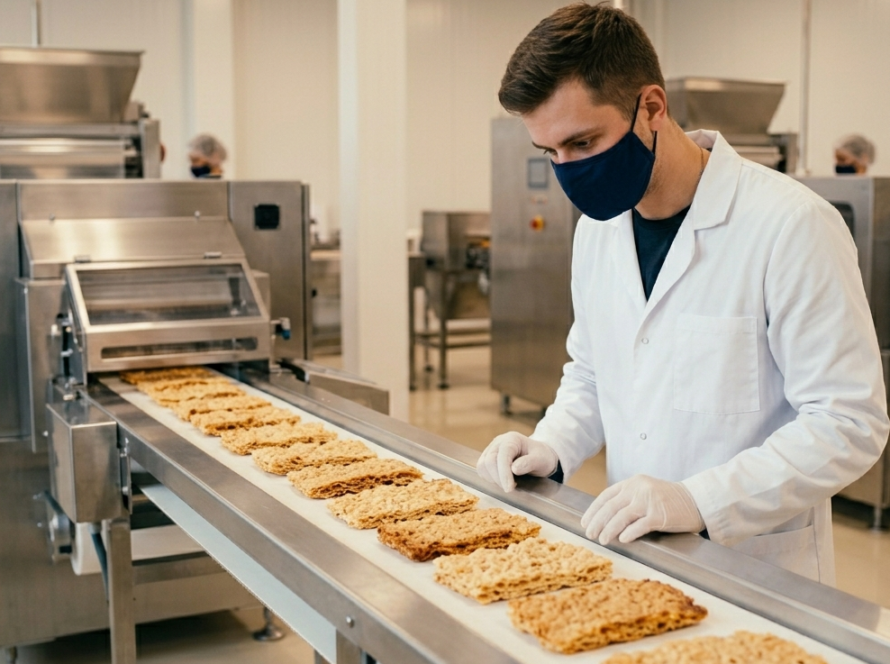
From an industrial perspective, aerogel foams are far from simple. Maintaining structural integrity while controlling collapse behavior is difficult. Products that are too fragile may fail during handling or transport. Structures that are too stable may not trigger the intended satiety response. Moisture becomes a critical variable. Even small changes in water activity can shift texture, porosity, and structural behavior over time. In some cases, environmental humidity slowly alters performance before any visible degradation appears. Processing adds another level of sensitivity. Drying methods determine pore architecture. Thermal exposure affects matrix rigidity. Expansion behavior depends heavily on ingredient interaction and process control. Small variations often lead to large functional differences.
Sensory Perception Still Defines Commercial Viability
No matter how advanced the system is, sensory acceptance remains the final gate. If the product feels unnatural, overly dry, too fragile, or mechanically unfamiliar, repeat consumption becomes difficult. Satiety systems do not succeed in isolation from sensory experience. This creates a constant tension between functional performance and consumer familiarity. Aerogel structures may improve fullness perception, but they can also introduce unfamiliar mouthfeel dynamics. Chewing resistance, breakdown speed, and moisture absorption all influence acceptance. Industrial scaling makes this even more complex, as small structural inconsistencies become more noticeable at production scale.
The Shift From Nutritional Density to Structural Efficiency
A major shift is happening in functional food development. Instead of continuously increasing nutritional load, newer systems focus on structural efficiency. Satiety is not only driven by nutrients but also by physical behavior during consumption. Oral processing time, structural collapse, hydration interaction, and gastric mechanics all contribute to perception of fullness. This creates a different design logic. Food is no longer just a carrier of nutrients. It becomes a system that controls how those nutrients are experienced.
Where These Systems May Become Relevant
Edible satiety aerogel foams are not intended to replace conventional snack systems across all categories. Their relevance becomes more apparent in targeted applications. Weight management systems. Performance nutrition. Medical nutrition. Controlled calorie intake. Long duration satiety formats. Specialized functional snacks. In these areas, structural efficiency can be more important than density alone. The value lies in controlling how the body experiences food, not just what it receives.

Conclusion: Satiety as a Structural Engineering Problem
Satiety is increasingly understood as a structural phenomenon rather than a purely nutritional one. Food architecture directly influences hydration behavior, oral processing, gastric response, and perceived fullness. Edible satiety aerogel foams represent a shift toward this structural understanding. Their importance is not only in novelty, but in the possibility of designing functional foods through controlled architecture, porosity, and mechanical behavior. This reframes food development. Not as formulation of ingredients, but as engineering of physiological interaction.
Contact ProNano to explore how structurally engineered food systems and advanced aerogel based formulations can support next generation functional snack development, sensory optimization, and industrial performance stability.
Read more about Osmotically Optimized Snacks: Engineering Energy Delivery Through Osmolality Control.