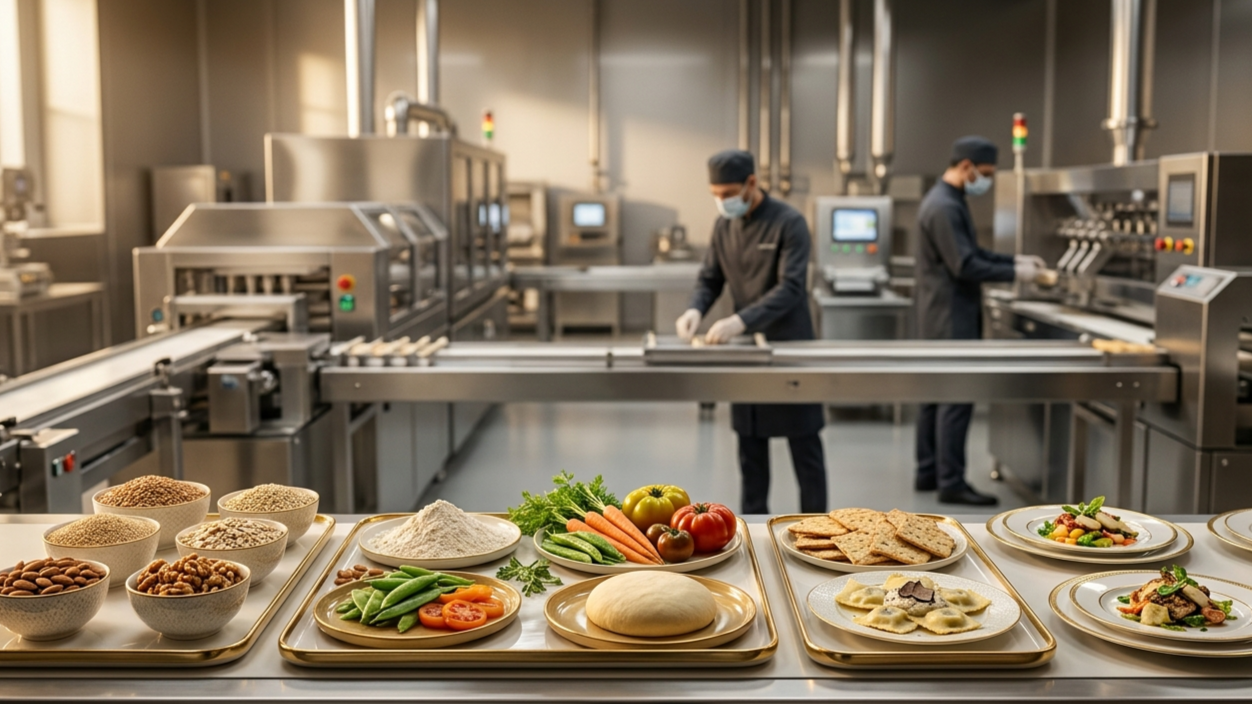
Food waste has become one of the most critical challenges in modern food manufacturing. With increasing production volumes and growing consumer demand, inefficient handling of ingredients, inconsistent processes, and poor inventory management can result in significant losses. Food Waste Reduction is not only an operational necessity but also a strategic advantage. By implementing structured approaches, manufacturers can minimize losses, improve efficiency, enhance profitability, and demonstrate sustainable practices that appeal to consumers.
Why Food Waste Reduction Matters
Reducing food waste impacts every aspect of industrial operations:
• Financial efficiency: Wasted ingredients, energy, and labor directly reduce profitability.
• Operational consistency: High waste indicates inefficiencies in production lines.
• Sustainability: Lower waste conserves resources and reduces environmental impact.
• Regulatory compliance: Many regions have strict food disposal regulations.
• Consumer expectations: Modern customers prefer brands that actively minimize waste.
Effective Food Waste Reduction strategies allow manufacturers to achieve measurable improvements in cost control and operational performance.
Common Causes of Food Waste
Food waste can occur at multiple stages of production due to operational or technical challenges:
• Raw material variability: Differences in quality, moisture content, or freshness can lead to batch rejection.
• Overproduction: Producing more than demand generates excess stock that may expire.
• Processing inefficiencies: Incorrect mixing, under- or over-cooking, and uneven portioning affect product quality.
• Equipment malfunctions: Faulty or poorly calibrated machines can damage products.
• Packaging errors: Misaligned or damaged packages often result in discard.
• Storage mismanagement: Poor rotation, temperature fluctuations, or extended shelf life accelerate spoilage.
Understanding these root causes is essential for implementing successful Food Waste Reduction initiatives.
Implementing Efficient Production Processes
Efficiency in production is a key factor in minimizing waste while maintaining product quality. Strategies include:
• Standardized formulations to ensure consistent ingredient ratios.
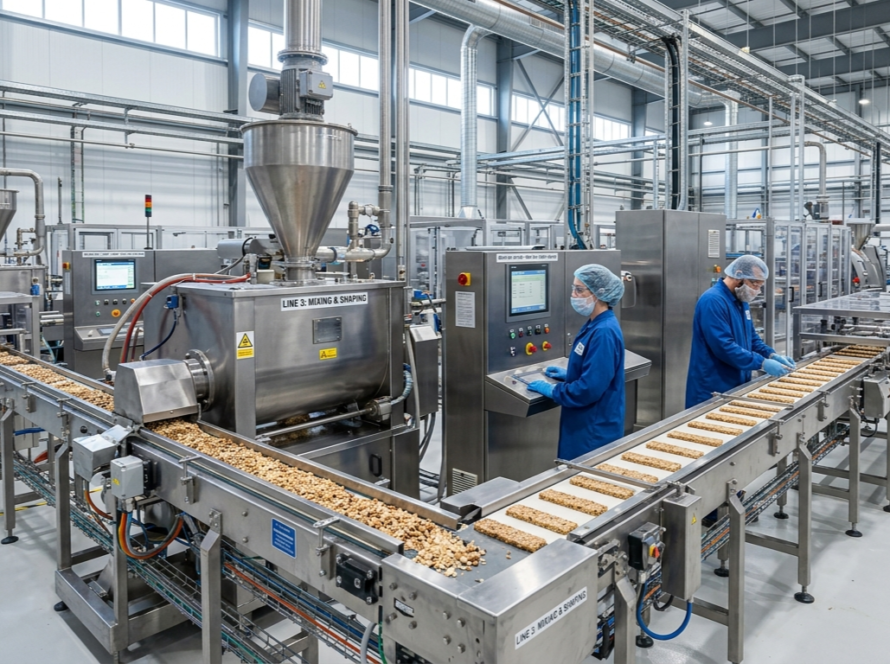
• Automated portioning and mixing to reduce human error.
• Optimized processing conditions, including precise temperature and timing.
• Continuous monitoring of production parameters to detect deviations early.
• Process simulations to prevent errors before scaling production.

Ingredient Control and Batch Management
Proper management of raw materials ensures minimal waste:
• Consistent ingredient specifications to reduce variability.
• Accurate weighing and mixing through automated batching systems.
• Tracking leftover ingredients to improve process efficiency.
• Adjusting formulations to maximize ingredient utilization.
These steps are critical to achieving industrial consistency and effective Food Waste Reduction.
Optimizing Storage, Inventory, and Shelf-Life
Pre-production waste can be minimized through proper storage and inventory practices:
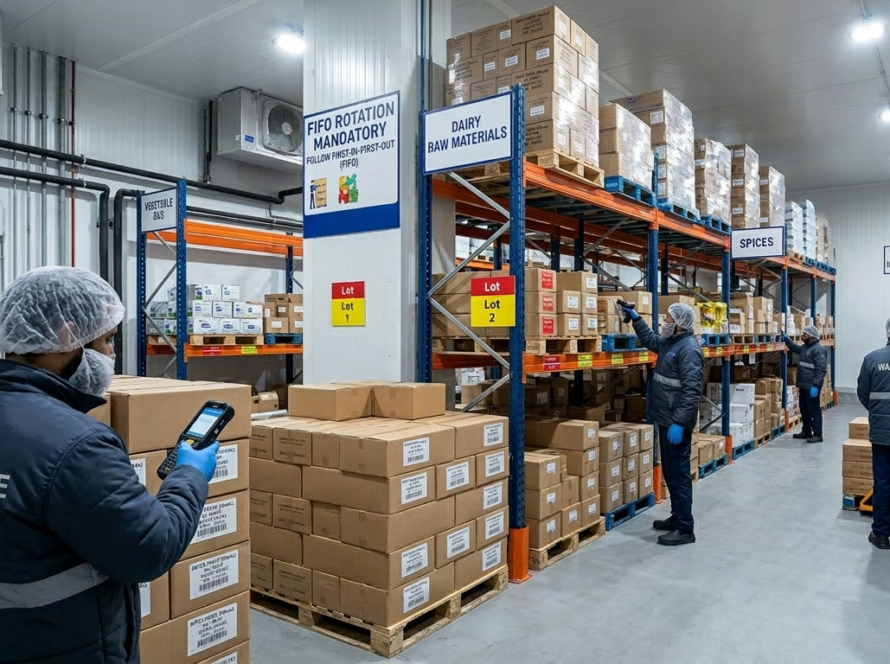
• Maintain temperature-controlled environments for perishable ingredients.
• Follow FIFO (First-In, First-Out) rotation to prevent expiry.
• Use automated inventory monitoring for real-time stock management.
• Avoid overstocking while balancing production flexibility.
Leveraging Technology and Automation
Automation supports Food Waste Reduction by improving precision and reducing human error:
• Precise portioning and dosing to prevent overuse of ingredients.
• Real-time monitoring of moisture, weight, and temperature.
• Predictive analytics for production planning to avoid overproduction.
• Conveyor and packaging automation to reduce handling errors and damaged products.
Staff Training and Operational Discipline
Human factors are essential in controlling waste:
• Train staff to follow standardized operating procedures.
• Encourage early detection and correction of errors.
• Optimize machine usage and minimize idle time.
• Maintain hygiene and proper handling to prevent contamination.
Regular training ensures discipline, reduces waste, and maintains consistent product quality.
Measuring and Monitoring Food Waste
Tracking waste quantitatively enables continuous improvement:
• Measure waste at each production stage.
• Analyze patterns and identify recurring issues.
• Set KPIs and reduction targets for measurable results.
• Apply data-driven strategies to refine production processes.
Monitoring allows manufacturers to implement effective Food Waste Reduction measures and track progress over time.
Conclusion
Read more about Plastic Packaging Alternatives for Sustainable Food Manufacturing.