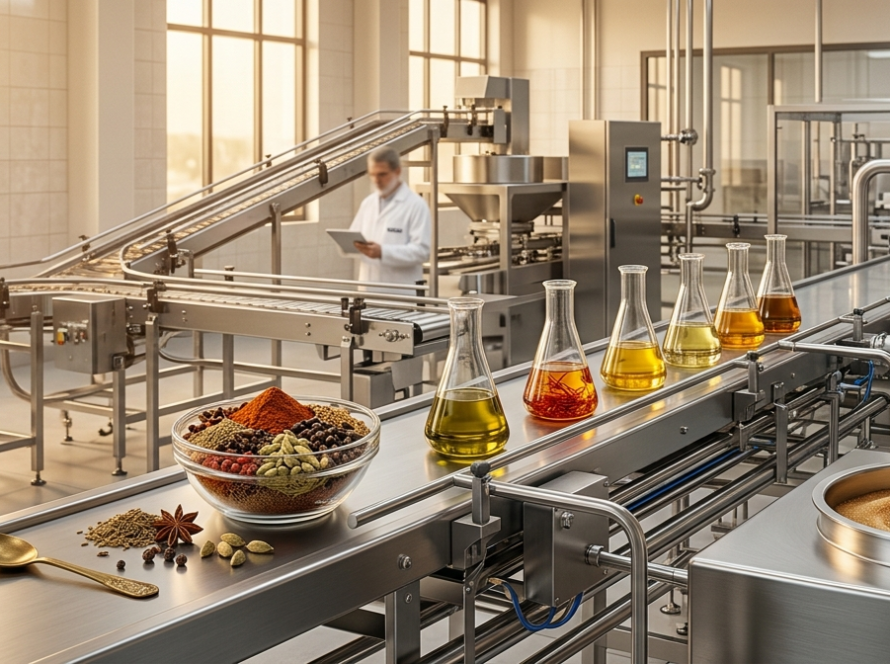
“The future of food production is not just about meeting demand. It’s about doing so sustainably and efficiently,” said a renowned expert. As we move forward, automated food production is key in shaping the industry. At our company, we have a team of specialists in food technology, industrial design, and project management. They ensure the success of your factory or kitchen. Our team guides clients through the latest automation trends, helping them stay ahead in a competitive market. Staying updated with the latest advancements is crucial for businesses to remain competitive. We emphasize our team’s expertise in guiding clients through these developments. This ensures successful implementation of their projects.
Key Takeaways
- Understanding the latest trends in automation.
- The importance of sustainable and efficient production methods.
- Expert guidance for successful project implementation.
- Staying competitive through technological advancements.
- Collaborative partnership for future success.
The Evolution of Food Processing Automation in 2023
In 2023, food processing automation is changing fast. We’re seeing smarter, more efficient systems. As experts in food factories and central kitchens, we’ve seen big changes in how the industry uses automation.
The Shift from Manual to Automated Systems
The move from manual to automated systems in food processing has been slow but steady. It’s driven by the need for more productivity and efficiency. Before, food processing relied a lot on manual labor, which had its limits.
Historical Context and Recent Acceleration
The path to automation in food processing started decades ago. But new tech has made it move faster. “Automation is not just about replacing human labor; it’s about making it better with precision and reliability,” say industry leaders. Now, more automated systems are being used to meet growing demand and stay competitive.
Impact on Productivity and Efficiency
Automation has greatly improved productivity and efficiency in food processing. It allows for non-stop production, cuts down on labor costs, and reduces errors. For example, robotic systems can work all the time, boosting output. Smart solutions also let for quick monitoring and adjustments, keeping performance top-notch.
Key Drivers Behind Automation Adoption
Several factors are pushing the food processing industry towards automation. Knowing these drivers is key for those considering automated technologies.
Labor Shortages and Cost Considerations
Labor shortages and high costs are big reasons for automation. With fewer workers and higher wages, automated systems help keep production up. “Investing in automation is not just about saving money; it’s a smart move for staying competitive,” says a top expert.
Consumer Demand for Consistent Quality
Today, people want food products that are always the same quality. Automation helps meet this demand by ensuring every product is up to standard. New tech, like robots and smart packaging, is key to keeping quality high.
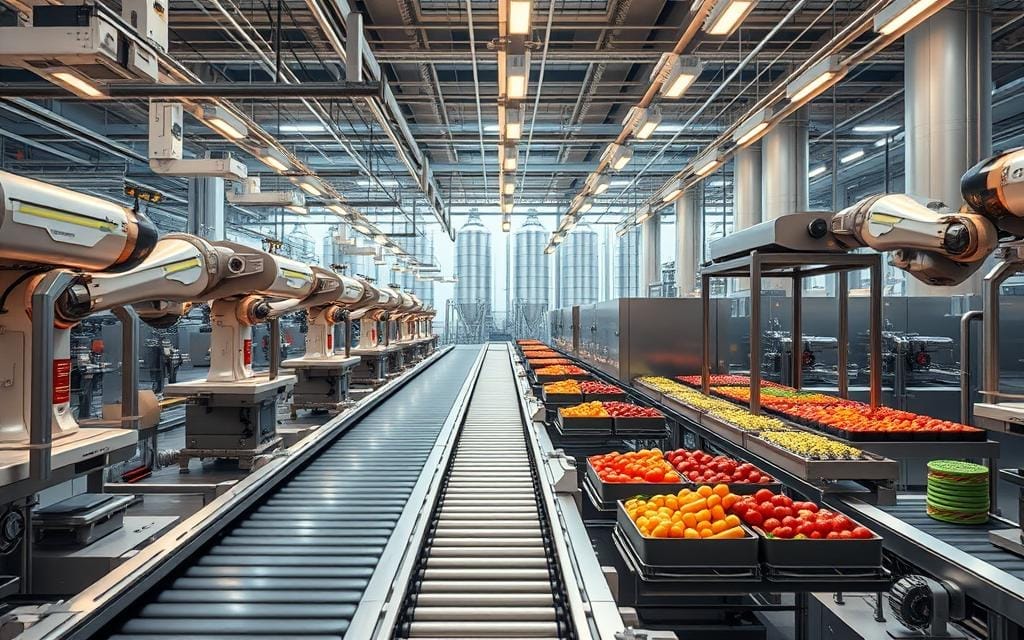
As we move forward in food processing automation, technology’s role will only grow. By embracing new automation, businesses can boost their productivity, efficiency, and quality. This will help them grow and stay competitive in the market.
Artificial Intelligence and Machine Learning Transformations
AI is changing food manufacturing, making it more precise and consistent. We’re seeing big changes in food processing, thanks to AI and machine learning.
1. AI-Powered Quality Control Systems
AI is making food processing more accurate and efficient. These systems use advanced tech to check products and find any problems.
Computer Vision for Defect Detection
Computer vision, a part of AI, spots defects in food products. It looks at images in real-time, catching even tiny flaws.
Real-time Quality Adjustments
AI lets for quick changes to keep products up to standard. This cuts down on waste and boosts quality.
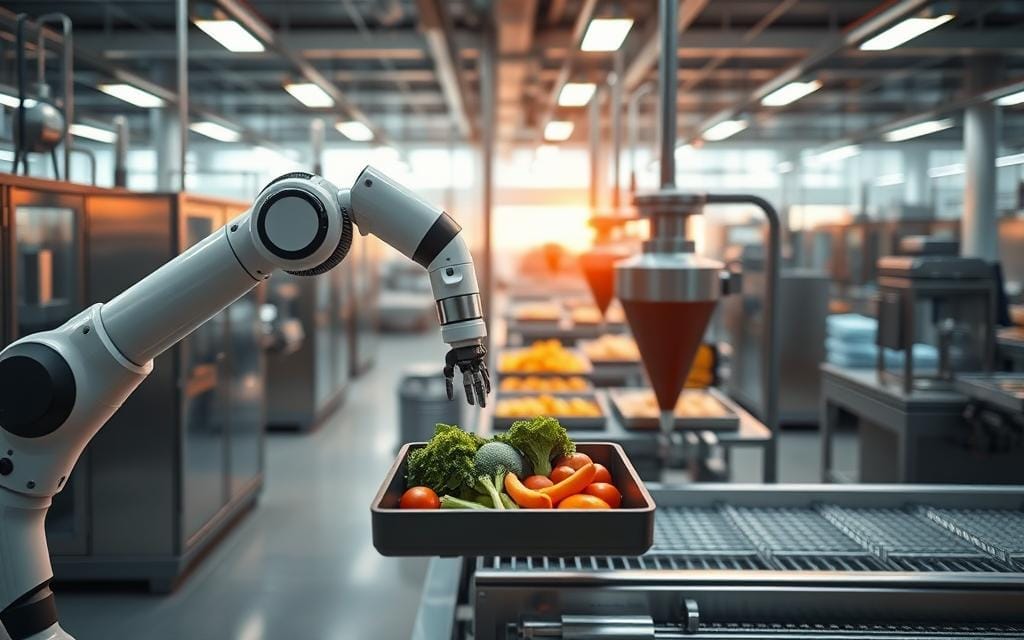
2. Predictive Maintenance Using Machine Learning
Machine learning helps predict when equipment needs maintenance. This cuts downtime and boosts efficiency.
Preventing Downtime Through Data Analysis
Machine learning looks at sensor data to forecast equipment failures. This way, maintenance can be planned ahead of time.
Cost Savings and Efficiency Gains
Predictive maintenance saves money by avoiding emergency repairs and reducing waste. It also keeps production running smoothly.
| Benefits | Description | Impact |
|---|---|---|
| Reduced Downtime | Predictive maintenance schedules repairs before failures | High |
| Cost Savings | Minimizes emergency repairs and reduces waste | Significant |
| Efficiency Gains | Optimizes production flow and reduces interruptions | Substantial |
3. Recipe Optimization Through AI Algorithms
AI is also improving recipes, enhancing flavors and suggesting ingredient swaps.
Flavor Profile Enhancement
AI looks at flavor data to suggest ways to improve taste and quality.
Ingredient Substitution Intelligence
AI can find alternative ingredients based on what’s available, cost, and more. This helps keep products consistent while adjusting to changes. “The use of AI in food manufacturing is not just a trend; it’s a revolution that is transforming how we produce, process, and deliver food products. By embracing AI and machine learning, food manufacturers can significantly improve efficiency, quality, and customer satisfaction. “At ProNano, we help hotels, hospitals, and food factories use AI and machine learning. Our expertise helps them improve their operations and stay ahead in the market.
Robotics Revolution in Food Manufacturing
The food manufacturing world is changing fast thanks to robotics. These new systems make production better and products higher quality. Advanced robots are making a big difference in how food is made.
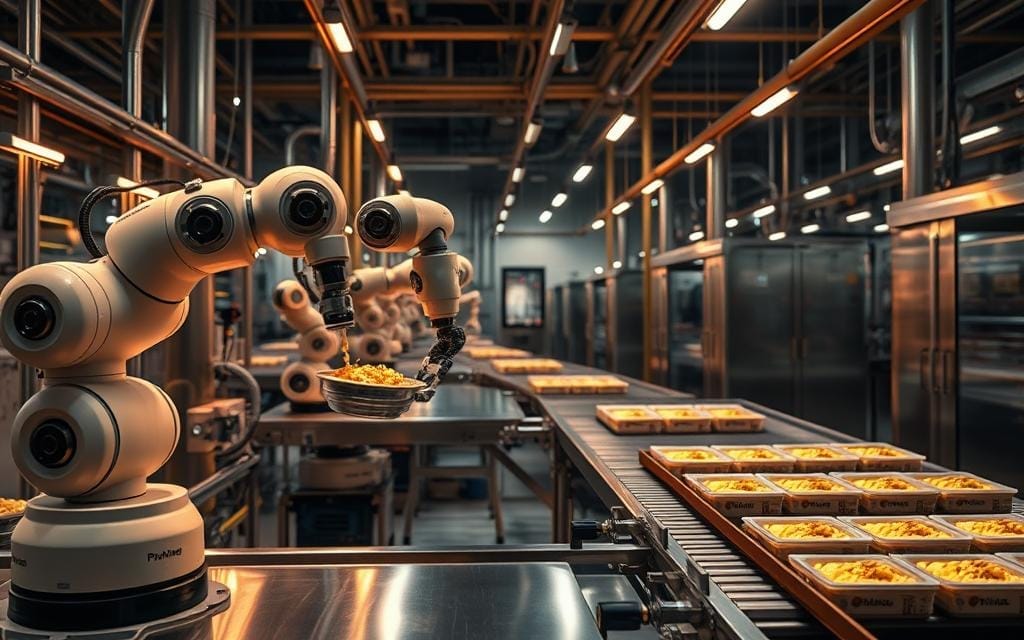
4. Collaborative Robots (Cobots) in Food Processing
Cobots are becoming popular in food processing. They work with people, making things safer and more efficient.
Human-Robot Collaboration Benefits
Using cobots in food processing has many advantages. These include:
- More flexible production lines
- Workers are safer because robots handle tough tasks
- Products are better made because robots handle them carefully
Implementation Challenges and Solutions
Bringing cobots into food processing can be tricky. But, there are ways to overcome these issues. For example:
| Challenge | Solution |
|---|---|
| Getting cobots to work with old systems | Special software can help |
| Training workers | Good training programs are key |
5. Advanced Picking and Sorting Robotic Systems
New robotic systems are changing how food is picked and sorted. They make things faster and more precise.
Precision and Speed Improvements
These systems use smart vision and AI. They can:
- Find and sort food accurately
- Work quickly without losing precision
Handling Delicate Food Products
Robots are great for handling fragile foods. They can be set to apply just the right amount of force. This reduces damage and waste.
6. Automated Packaging Solutions
Food packaging is getting smarter. Now, there are flexible and green options for makers.
Flexible Packaging Systems
Flexible systems can change to fit different products. This lets makers keep up with what customers want.
Sustainable Packaging Automation
There’s a push for green packaging. This means less waste and using materials that are better for the planet. It’s what people want. We help food makers from the start to when they’re ready to run. We make sure robots fit smoothly into their work.
Current Food Processing Automation Trends Reshaping the Industry
Emerging trends in food processing automation are changing the industry. Automation is key in modern food production. It’s vital for the industry’s future.
7. Internet of Things (IoT) Integration
The IoT is changing food processing automation. It connects equipment and systems for better efficiency and productivity.
Connected Equipment Networks
IoT creates connected equipment networks. This allows for real-time monitoring and control. It ensures all machinery works together for better production.
Data-Driven Decision Making
IoT lets food processing facilities use data analytics. They can make informed decisions by analyzing data from connected devices. This helps identify areas for improvement.
8. Blockchain for Food Traceability
Blockchain is being used in the food industry for traceability. It provides a secure and transparent record of transactions. This ensures the food supply chain’s integrity.
Farm-to-Table Transparency
Blockchain makes it easy to track food from farm to table. This transparency builds trust and confidence in the food industry.
Recall Management Efficiency
In case of a food safety issue, blockchain helps manage recalls efficiently. It quickly identifies affected products. This minimizes the impact of a recall and protects consumers.
9. Cloud-Based Manufacturing Execution Systems
Cloud-based MES is changing food processing operations. It provides real-time insights and control. This enables manufacturers to optimize production and improve efficiency.
Remote Monitoring Capabilities
Cloud-based MES allows for remote monitoring of production. Manufacturers can respond quickly to changes or issues. This keeps production on track, even with unexpected challenges.
Scalable Production Management
Cloud-based MES also makes production management scalable. Manufacturers can easily adjust operations to meet changing demand. We have a unique perspective on food processing automation trends through our partnerships in Turkey, the Gulf, and Europe. Adapting to these trends is crucial for staying competitive globally. Automation will continue to be vital in food processing’s future. By embracing these trends, manufacturers can succeed in a complex and competitive industry.
| Trend | Description | Benefits |
|---|---|---|
| IoT Integration | Connecting equipment and systems for real-time monitoring and control | Increased efficiency, productivity, and data-driven decision making |
| Blockchain for Traceability | Secure and transparent record of transactions for enhanced traceability | Farm-to-table transparency, efficient recall management, and enhanced consumer trust |
| Cloud-Based MES | Real-time insights and control for optimized production | Remote monitoring capabilities, scalable production management, and improved efficiency |
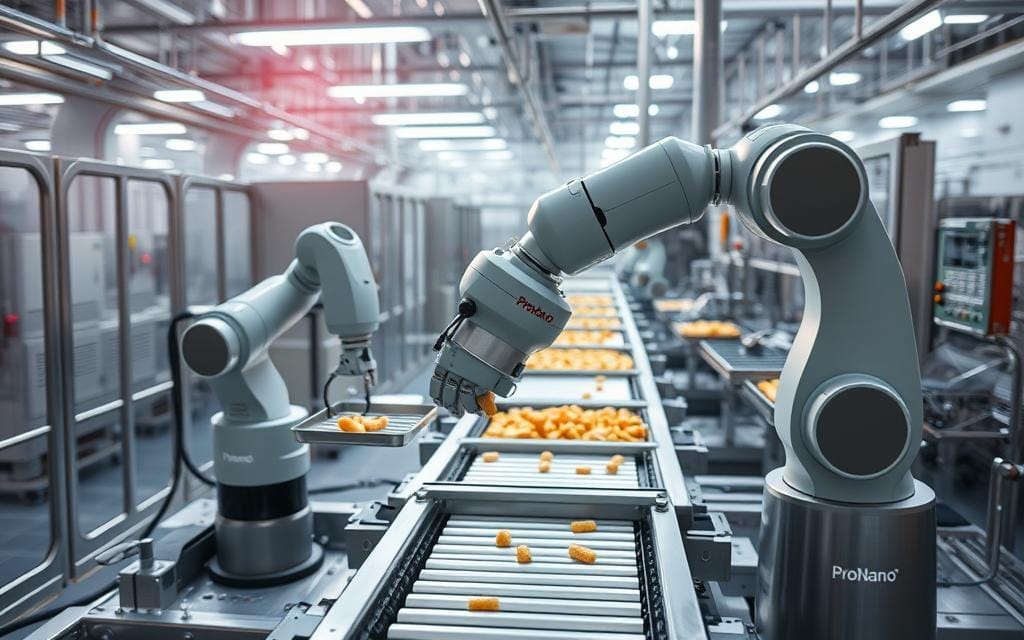
Sustainable Automation Technologies
The use of sustainable automation technologies is changing food processing. It makes these operations more eco-friendly and cost-effective. We’re seeing big improvements in energy use, water saving, and waste reduction.
10. Energy-Efficient Processing Equipment
Our energy-saving equipment uses less energy but still works well. This cuts down costs and helps the food industry be greener.
Smart Energy Management Systems
Smart energy systems are key in food processing. They use data to find and fix energy waste. This makes operations more efficient.
ROI of Energy-Efficient Upgrades
Energy-saving upgrades can really pay off for food companies. They cut costs and boost profits, all while being good for the planet.
11. Water Conservation Automation Systems
Water saving is vital in food processing. Our systems cut down on water waste and use water wisely.
Closed-Loop Water Recycling
Our closed-loop water recycling lets facilities use water over and over. This cuts down on water use and waste.
Automated Cleaning Optimization
Our cleaning systems use the right amount of water and cleaners. This reduces waste and protects the environment.
12. Waste Reduction Technologies
Reducing waste is a big goal in sustainable food processing. Our technologies aim to cut down waste and use raw materials better.
Byproduct Repurposing Automation
Our byproduct repurposing automation turns waste into valuable products. This reduces waste and brings in extra money.
Precision Portioning Systems
Precision portioning systems cut down on waste. They ensure products are portioned just right, reducing overproduction and packaging waste.
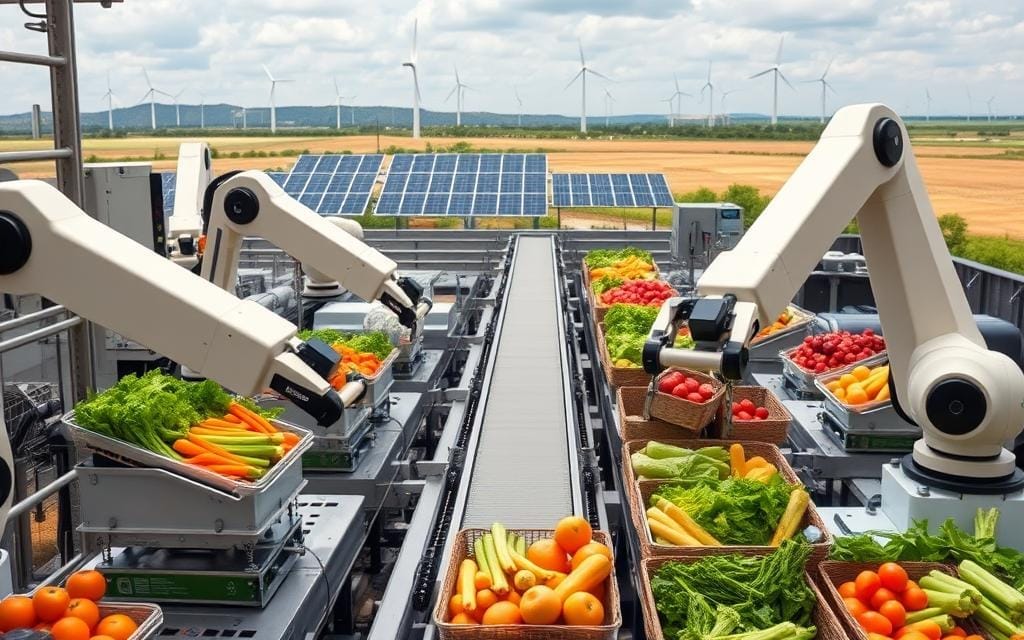
At ProNano, we know the value of custom solutions for food operations. Our team works with clients to create tailored automation plans. These plans boost sustainability and efficiency.
Food Safety and Compliance Automation
Food processing automation is growing fast. Making sure food is safe and following rules is now a big deal. We know how important it is to keep consumers safe and follow the law.
13. Automated HACCP Monitoring Systems
Automated HACCP systems are changing how we manage food safety. They watch and control important parts of making food. This helps catch and fix problems quickly.
Critical Control Point Tracking
Our HACCP systems keep an eye on key points in food making. They check things like temperature and pH levels. This makes sure food is safe to eat.
Automated Documentation and Reporting
Our systems make it easy to follow rules. They keep detailed records of food safety checks. This helps with audits and following laws.
14. Real-Time Pathogen Detection Technologies
Real-time pathogen detection is making food safer. It finds bad stuff fast. This lets us act quickly to keep food safe.
Rapid Testing Innovations
New fast tests can find pathogens quickly. Our systems use smart sensors and data to give fast results. No more waiting days for answers.
Integration with Production Lines
Our systems work well with food making lines. This means we can watch for dangers and act fast. It keeps food safe during making.
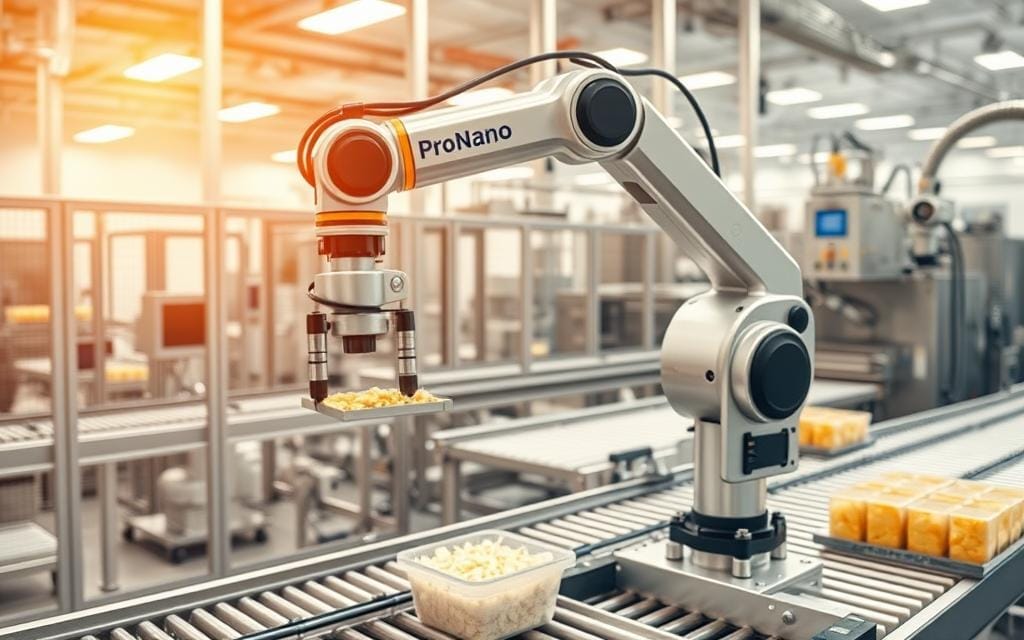
15. Digital Compliance Documentation Solutions
Digital solutions are changing how we handle food safety rules. Our system helps keep all important documents in one place. This makes it easy to stay up-to-date.
Regulatory Adaptation Capabilities
Our solutions can keep up with new rules. They update documents and reports automatically. This helps food makers stay in line with the latest laws.
Audit Preparation Automation
Getting ready for audits is easier now. Our system makes detailed reports and gives insights in real-time. This helps food makers show they follow the rules. Using these advanced tools, food makers can make food safer, follow rules better, and avoid big problems. We help our clients use these systems to keep food safe and meet rules.
Smart Factory Concepts for Food Processors
Smart factory solutions are changing food processing by adding advanced automation and data analytics. This change helps food processors work better, make better products, and save money. We will look at the main smart factory ideas that are changing the food processing world.
16. Digital Twins in Food Production
Digital twins are virtual copies of real production processes. They let food makers test and improve production in a virtual space.
Virtual Process Optimization
Using digital twins, food processors can make production better without stopping real work. This makes things more efficient and cuts down waste.
Scenario Testing Without Disruption
Digital twins let food makers test scenarios in a virtual space. This way, they can predict results and make smart choices without stopping production.
17. Augmented Reality for Maintenance and Training
Augmented reality (AR) is becoming more common in food processing for maintenance and training. AR adds digital info to the real world, helping technicians do complex tasks better.
Hands-Free Guided Repairs
AR helps with repairs and maintenance without needing hands. This cuts down on downtime and makes work more accurate.
Immersive Operator Training
AR makes training for operators more immersive. This helps them understand complex equipment and processes better.
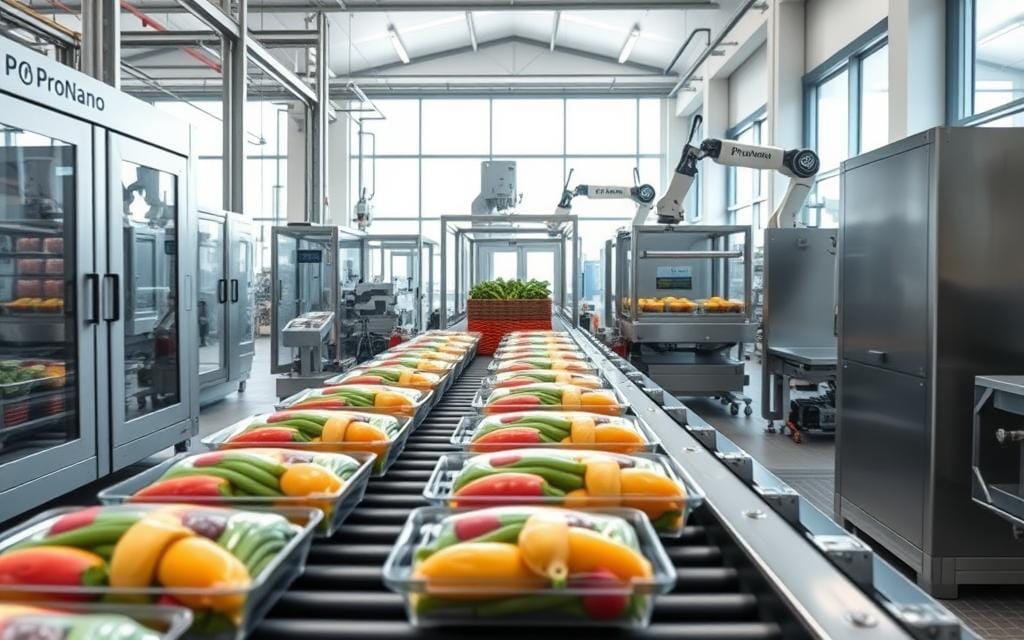
18. Autonomous Guided Vehicles (AGVs) in Food Facilities
AGVs are being used in food facilities to make material transport and logistics better.
Intelligent Material Transport
AGVs make material transport smarter, reducing manual work and boosting efficiency.
Integration with Warehouse Management Systems
AGVs work with warehouse management systems for better coordination and material flow.
19. Advanced Sensory Systems for Product Consistency
Advanced sensory systems, like electronic noses and taste sensors, ensure product quality and consistency.
Electronic Noses and Taste Sensors
These technologies mimic human senses. They let food makers check product quality in real-time and spot any issues.
Texture Analysis Automation
Automated texture analysis checks if products meet standards. This makes consumers happier.
20. Customized Production Lines for Product Flexibility
Customized production lines are key for flexibility. They let food makers quickly change to meet new consumer wants.
Quick-Change Tooling Systems
Quick-change tooling systems let production lines change fast. This cuts downtime and boosts flexibility.
Modular Equipment Configurations
Modular equipment makes it easy to adjust production size or add new lines. This helps food processors adapt quickly. At ProNano, we know how important smart factory ideas are in food processing. Our experts are here to help you use the latest automation technologies. Contact ProNano today to start your food project with confidence.
ProNano: Your Partner in Food Processing Automation
At ProNano, we get the challenges of food processing automation. We help businesses keep up with new trends. Our team offers solutions that fit each client’s needs.
Expert Consulting for Food Production Facilities
Our specialists know a lot about food technology and design. We create customized solutions for different food operations. This ensures our clients get the best automation strategies.
Specialized Team in Food Technology and Industrial Design
Our experts stay updated on the latest in food processing automation, including AI in food manufacturing. We work with clients to understand their needs and challenges.
Customized Solutions for Various Food Operations
We help with everything from improving production lines to introducing new automation. Our goal is to make things more efficient, cut costs, and improve product quality.
Comprehensive Support from Concept to Operation
At ProNano, we offer more than just advice. We support our clients from the start to the end of a project. We make sure they have the help and knowledge they need.
Project Management Excellence
Our project management team is all about delivering on time, within budget, and to high quality standards. We’ve successfully managed many complex automation projects.
International Partnerships in Turkey, the Gulf, and Europe
Our international partnerships give us access to a wide network of experts. This lets us bring top solutions to our clients, using global best practices in food processing automation.
Tailored Solutions for Diverse Food Operations
We know that different food operations face different challenges. Our team provides tailored automation solutions for various sectors. This includes hotel and hospital kitchens, central kitchens, and food factories.
Hotel and Hospital Kitchen Automation
We specialize in automating kitchens for hotels and hospitals. This improves efficiency, food quality, and reduces labor costs.
Central Kitchen and Food Factory Optimization
Our solutions for central kitchens and food factories aim to optimize production. We focus on improving product consistency and ensuring food safety. For more information on how ProNano can help with your food processing automation needs, please contact us at info@foodsconsultancy.com.
Conclusion: Embracing the Future of Food Processing
The future of food processing is changing fast. New trends in automation are making food production, processing, and delivery better. Advances in AI, robotics, and IoT are leading this change, making food safer and of higher quality.
At ProNano, we keep up with these changes to help you stay ahead. Whether you’re starting a new food factory or upgrading an existing one, we’re here to help. Our team offers expert advice and support from the beginning to the end of your project.
By using the latest automation, you can make your food production more efficient and cost-effective. We’re excited to work with you and help your business succeed in this new era of food processing.
FAQ
What are the key benefits of implementing automated food processing systems?
Automated food systems boost productivity and quality. They cut down on labor costs and waste. This leads to consistent output.
How does AI contribute to food processing automation?
AI helps in quality control and maintenance. It also optimizes recipes. This means better quality and less downtime.
What is the role of robotics in modern food manufacturing?
Robotics brings in cobots and advanced sorting systems. These improve speed and safety. They handle food delicately.
How can IoT integration benefit food processing operations?
IoT connects equipment for better decision making. It optimizes production and cuts energy use. This leads to smarter food processing.
What are the advantages of using blockchain technology in food processing?
Blockchain ensures product tracking and quick recall management. It builds trust and reduces recalls.
How can food processing businesses ensure compliance with food safety regulations?
Businesses can use automated HACCP systems and real-time detection. These tools track and test products, reducing risks.
What are the benefits of adopting smart factory concepts in food processing?
Smart factories use digital twins and augmented reality. They improve efficiency and product quality. This reduces downtime.
How can ProNano support food processing businesses in implementing automation technologies?
ProNano offers expert consulting for food facilities. We provide tailored solutions for various operations. Our team ensures successful implementation.