The demand for liquid egg products is growing fast in Europe, especially in Germany and the EU. The food industry is changing, making modern egg processing facilities crucial.
At ProNano, we help clients set up liquid egg processing plants. We guide them from the first steps to using aseptic packaging solutions. Our team of experts in food tech and project management work together to make your project a success.
Key Takeaways
Expert guidance through the establishment of a state-of-the-art liquid egg processing plant. Collaborative partnership for successful project implementation. Specialized knowledge in food technology and project management. Support from concept to operational readiness. Implementation of aseptic tetra pak packaging solutions.
The Growing Market for Liquid Egg Products in Europe
More people want easy and safe food choices. This is making the European liquid egg products market grow a lot. The demand for pasteurized egg products is up because they last longer and are good for many dishes.
Current Market Trends in Germany and the EU
In Germany and the EU, people love easy and safe food. This is because the food industry is getting bigger. More people want top-notch, simple-to-use food items. So, there’s a big need for places that can make lots of egg products.
Advantages of Liquid Egg Products for Commercial Use
Liquid egg products have many benefits for businesses. They are always the same quality, cut down on waste, and are easy to use. They’re great for companies that need lots of egg ingredients.
By using commercial egg processing places, businesses can get pasteurized egg products that are safe and reliable.
Benefits of Establishing a Liquid Egg Processing Plant
Starting a liquid egg processing plant is a smart move. It brings many benefits like better food safety and more product options. It also helps meet the growing need for easy-to-use egg products.
Extended Shelf Life and Food Safety Advantages
The pasteurization process in these plants makes egg products last longer and safer. It kills harmful bacteria, giving consumers safe products. “Pasteurization is key to keeping egg products safe,” by cutting down Salmonella and other pathogen risks.
Versatility in Product Offerings
These facilities can make many products, like whole eggs, yolks, and whites. This flexibility lets us serve various needs, from bakeries to restaurants. We can make egg products tailored to specific needs, broadening our offerings.
Meeting Growing Consumer Demand for Convenience
More people want safe, easy-to-use food due to their busy lives. A liquid egg processing plant can fulfill this need. We offer safe, easy-to-use egg products, perfect for those looking for convenience without sacrificing quality.
Initial Planning and Feasibility Study for Your Egg Processing Facility
Before starting your egg processing facility, a detailed study is key. This phase helps understand if your project will work and succeed in the long run.
Market Analysis and Business Plan Development
A deep market analysis is vital for your egg processing facility’s success. We guide you to find your target market and study competitors. We also look at what consumers like.
This info is crucial for a strong business plan. It should cover how much you’ll produce, your prices, and how you’ll market. Important points include:
- Market size and growth potential
- Competitor analysis and market share
- Consumer trends and preferences
- Regulatory requirements and compliance
Site Selection and Infrastructure Requirements
Finding the best location for your facility is key. We help you choose a spot that’s good for efficiency and saving money. We look at things like:
- Proximity to suppliers
- Transportation options
- Labor availability
We also check what your facility needs, like:
- Utility connections (water, electricity, gas)
- Waste management and disposal
- Building design and layout
- Equipment installation and integration
Regulatory Considerations for German Facilities
In Germany, following EU and local rules is crucial. We offer advice on food safety, environmental laws, and labor rules. Following these rules early on saves you from big problems later.
Our thorough planning and study give you a strong base for your facility. This careful start helps you make smart choices, avoid risks, and succeed in the food industry.
Liquid Egg Processing Plant-Whole Egg, Yolk, and Egg White Aseptic Tetra Pak Facility Design
Creating a liquid egg processing plant needs careful planning. This ensures it works well and can grow. It’s key for meeting the demand for liquid egg products in Europe, especially in Germany.

Optimal Layout and Flow Considerations
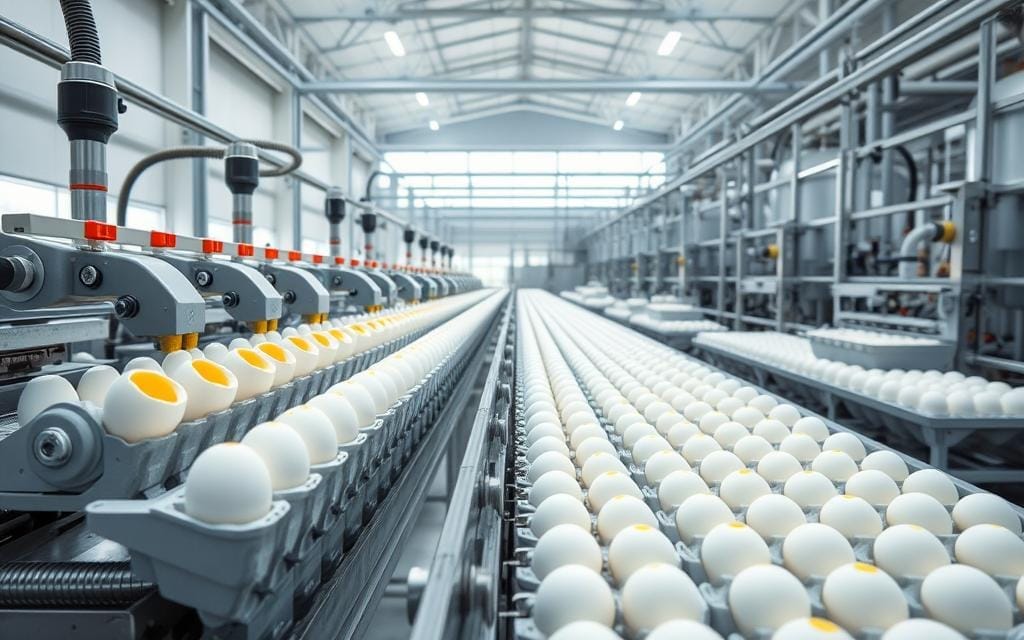
A good layout is essential for avoiding contamination and keeping operations smooth. We suggest a one-way flow to keep raw and processed eggs separate.
Important points include:
- Segregated areas for egg reception, breaking, separation, and pasteurization
- Adequate space for equipment maintenance and cleaning
- Clear pathways for personnel and material movement
Capacity Planning and Scalability
Planning for capacity is crucial to meet demand now and in the future. We look at production volume, product mix, and growth needs. This includes:
- Assessing current market trends and demand forecasts
- Designing a modular layout to facilitate future expansions
- Implementing flexible production lines to accommodate various product types
Utility Requirements and Energy Efficiency
Utility needs and energy efficiency are key to saving costs and reducing environmental impact. We aim to reduce energy use through:
- Efficient pasteurization and cooling systems
- Water conservation measures
- Renewable energy integration where feasible
Essential Equipment for Egg Breaking and Separation
Breaking and separating eggs need advanced tools and tech. This is key in making high-quality egg products.

Egg Reception and Washing Systems
The first step is egg reception and washing. Egg reception systems gently handle eggs to avoid cracks. Washing systems clean the eggshells, keeping the product safe from dirt and germs.
Breaking and Separation Technology
The heart of egg processing is the breaking and separation tech. It includes several important parts:
- Whole Egg Collection Systems
- Yolk Separation Equipment
- Egg White Processing Lines
Whole Egg Collection Systems
These systems collect the egg content after it’s broken. They handle the egg gently to keep its quality.
Yolk Separation Equipment
Yolk separation needs special tools. This equipment makes sure the yolk and white are separate, creating pure products.
Egg White Processing Lines
Egg whites are then processed in special lines. These lines are made to keep the egg whites clean and pure.
Equipment Function Table
Equipment | Function |
Egg Reception Systems | Gentle handling of eggs to prevent cracking |
Egg Washing Systems | Removal of dirt and contaminants from eggshells |
Whole Egg Collection Systems | Collection of egg content after breaking |
Yolk Separation Equipment | Separation of yolk from egg white |
Egg White Processing Lines | Processing of egg whites to maintain purity and integrity |
Using the best equipment for egg breaking and separation boosts a plant’s efficiency and product quality.
Pasteurization Systems for Egg Products
Pasteurization systems are key for keeping egg products safe and good to eat. This step is vital in making egg products. It makes sure the product is free from harmful bacteria and other pathogens.
HTST Pasteurization for Liquid Eggs
High Temperature Short Time (HTST) pasteurization is a common method for liquid eggs. It heats the egg product to a high temperature for a short time. This is usually around 161°F (72°C) for at least 15 seconds, then it cools down fast. HTST pasteurization effectively eliminates pathogens while keeping the egg product’s quality and nutritional value.
Specialized Treatment for Different Egg Components
Different egg parts, like whole eggs, yolks, and whites, need special pasteurization because of their unique traits.
Whole Egg Pasteurization Parameters
Whole egg pasteurization needs careful thought about temperature and time. This ensures the egg is safely pasteurized without losing its natural texture and function. Usually, whole eggs are pasteurized at about 140°F (60°C) for a few minutes. This gentle pasteurization process helps keep the egg’s natural texture and functionality.
Yolk-Specific Processing Requirements
Pasteurizing yolks is tricky because of their high fat content and sensitivity to heat. The process for yolks often uses a higher temperature and shorter time than whole eggs. Careful control of pasteurization parameters is crucial to prevent damage to the yolk’s emulsifying properties.
Egg White Pasteurization Challenges
Pasteurizing egg whites is hard because of their high protein content and sensitivity to heat. The process must be carefully optimized to prevent protein denaturation while killing pathogens. Advanced pasteurization techniques and precise temperature control are essential for producing high-quality pasteurized egg whites.
Understanding the specific pasteurization needs for different egg parts helps manufacturers make high-quality egg products. These products meet strict safety and quality standards.
Aseptic Processing Technology for Egg Products
Aseptic processing is key in making liquid egg products safe and of high quality. We’ll look into how it works, the tools needed, and keeping everything clean during production.
Principles of Aseptic Processing
Aseptic processing makes sure the product and packaging are clean before mixing them. This keeps the product safe for a long time. The main goal is to stop contamination by keeping everything clean during production and packaging.
First, the product is sterilized with high heat. The packaging is also made clean, often with hydrogen peroxide or heat. Then, the product is filled into the clean packaging in a special clean area. This stops any dirt from getting in.
Equipment Requirements for Aseptic Systems
To make aseptic products, you need special equipment. This includes machines for cleaning the product and packaging, and for filling them in a clean area. Advanced technologies make sure this equipment meets strict clean standards.
- Sterilization units for product and packaging
- Aseptic filling machines
- Systems for maintaining sterile environments
This equipment is very important. It helps keep the product clean and safe for a long time.
Maintaining Aseptic Conditions in Production
Keeping production clean is very important. This means following strict cleaning rules and checking the process often. Training staff is also key to keeping everything clean.
By using aseptic processing, makers can create top-notch egg products. These products are safe and last longer.
Tetra Pak Packaging Solutions for Liquid Egg Products
Aseptic packaging is key for liquid egg products. Tetra Pak’s solutions meet top safety and quality standards. We’ll look at the packaging options for whole eggs, yolks, and whites.
Available Tetra Pak Formats for Egg Products
Tetra Pak has many packaging formats for liquid egg products. The right choice depends on the product and its needs.
Packaging Options for Whole Eggs
For whole eggs, Tetra Pak offers safe and reliable packaging. You can find various carton sizes and shapes.
Specialized Containers for Egg Yolks
Egg yolks need special packaging to stay safe and fresh. Tetra Pak’s solutions are designed for this purpose.
Egg White Packaging Considerations
Egg whites are sensitive to contamination. Tetra Pak’s aseptic packaging keeps them safe and fresh.
Filling and Sealing Technology
The filling and sealing process is vital for aseptic packaging. Tetra Pak’s technology fills and seals in a sterile environment.
Some key features of Tetra Pak’s technology include:
- Advanced aseptic filling systems
- Precise sealing mechanisms to prevent leakage
- Integration with packaging material sterilization
Packaging Material Considerations
The right packaging material is crucial for safety and quality. Tetra Pak’s materials work well with their technology.
- Carton-based packaging: Composed of paperboard, polyethylene, and aluminum; Provides excellent barrier properties, is eco-friendly
- Aseptic packaging film: Multi-layered film for enhanced barrier properties; Ensures sterility, flexible for various packaging formats
Choosing Tetra Pak’s solutions ensures top safety, quality, and convenience for liquid egg products.
Quality Control and Food Safety Systems
Quality control and food safety systems are key for egg processing facilities. They ensure the safety and quality of liquid egg products. This task involves several important steps.
HACCP Implementation for Egg Processing
A Hazard Analysis and Critical Control Points (HACCP) system is a key approach. It helps identify and control hazards in the production process. We help facilities create a detailed HACCP plan to address biological, chemical, and physical hazards.
- Identifying critical control points in the process
- Establishing critical limits for each control point
- Implementing monitoring procedures
- Developing corrective actions
- Verifying the effectiveness of the HACCP plan
Microbiological Testing Protocols
Testing for pathogens is vital for liquid egg product safety. We suggest regular tests for Salmonella and E. coli. Our team assists in setting up testing protocols.
Test Type | Frequency | Parameters |
Salmonella Testing | Daily | Presence/Absence |
E. coli Testing | Weekly | CFU/g |
Traceability and Recall Procedures
Traceability and recall procedures are crucial for product safety. They help quickly identify and remove affected products. We guide facilities in setting up robust traceability systems.
- Batch numbering and coding
- Record-keeping of production and distribution data
- Regular audits and verification of traceability systems
By using these systems, egg processing facilities can produce safe, high-quality liquid egg products. These products meet regulatory standards and consumer expectations.
Regulatory Compliance for German Egg Processing Facilities
Following rules is key for egg processing in Germany. Facilities must deal with many rules to keep eggs safe and good quality.
EU Regulations for Egg Products
The European Union has strict rules for egg products. These rules cover cleanliness, safety, and how eggs are labeled. Key EU regulations include:
- Regulation (EC) No 853/2004 on food hygiene for food of animal origin
- Regulation (EC) No 2073/2005 on microbiological criteria for foodstuffs
German-Specific Requirements
Germany has its own rules on top of EU ones. These rules cover how facilities are built, how they work, and the environment. German rules might be stricter on things like waste and worker safety.
Certification and Documentation Needs
Facilities need certifications and lots of paperwork to show they follow the rules. This includes HACCP certification, production records, and labeling rules. Good paperwork is important for checks and audits.
By following these rules, egg facilities in Germany can stay safe, keep quality high, and work well within the law.
Operational Considerations and Staff Requirements
Running an egg processing facility needs careful thought. It requires skilled people, good training, and strict cleaning and upkeep. This ensures top-quality eggs and follows food safety rules.
Key Personnel Roles and Qualifications
The success of an egg processing facility depends on its team. Important roles include production managers, quality control experts, and maintenance techs. They need the right training and experience for their jobs.
We look for people with a background in food processing. This ensures they know their stuff.
Training Programs for Food Safety and Quality
Good training is key for keeping food safe and of high quality. Our programs cover HACCP, cleaning, and using equipment right. Regular training keeps staff ready and promotes a culture of quality and safety.
Maintenance and Sanitation Protocols
Keeping things running smoothly and clean is vital. We have a maintenance plan to catch problems early. Our cleaning rules meet or beat what’s required, keeping the place safe for egg processing.
By focusing on these areas, we make sure our egg processing facility runs well. It meets the highest quality and safety standards.
Financial Aspects and Return on Investment
Looking into the financial side is key to see if a liquid egg processing plant makes sense. Starting such a plant costs a lot upfront. It also has ongoing costs and ways to make money, all affecting its financial health.
Capital Investment Requirements
The start-up costs for a liquid egg plant include design, buying equipment, and first expenses. Key parts of the investment are:
- Egg breaking and separation equipment
- Pasteurization and aseptic processing technology
- Tetra Pak packaging machinery
- Building the facility and setting up the infrastructure
These costs add up quickly. It’s important to do a deep dive to figure out the total investment needed.
Operating Cost Analysis
Running a liquid egg plant costs money for eggs, energy, workers, and upkeep. Keeping these costs low is key to making money. What affects these costs are:
- Where and how much eggs cost
- How efficient the equipment is with energy
- What workers make and training costs
Payback Period and Profitability Projections
The time it takes to get back the money spent on a liquid egg plant depends on the costs and how much it makes. Getting the financials right is crucial for seeing if it’s worth it. Things that affect making money are:
- How much people want to buy the product
- What prices it can be sold for
- How well the plant can make the product
By looking closely at these financial points, investors can decide wisely about starting a liquid egg processing plant.
Why Choose ProNano’s Expert Team for Your Liquid Egg Processing Project
ProNano’s team has experience in food technology and project management.
Proven Experience in Food Factory Equipment
We’re proud of our experience in setting up food factories and kitchens. Our work includes many projects with top-notch equipment. This means our clients get the best results. We customize our services for your project’s unique needs.
Comprehensive Support from Concept to Operation
We support you from the start to when your plant is ready. Our team gets to know your needs and designs a solution. This support makes sure your plant runs smoothly.
European Partnerships and Technical Expertise
We have strong partnerships in Europe, using local and global knowledge. Our food processing tech and knowledge of European rules help your plant meet standards.
Conclusion / Contact ProNano
Starting a liquid egg processing plant needs careful planning. This includes initial studies and choosing the right packaging. We’ve looked at the main points, benefits, and hurdles of liquid egg processing. Aseptic tetra pak packaging is key for keeping products safe and of high quality.
Our team at ProNano is ready to help you through this complex journey. We bring our knowledge in food tech and project management to the table. By working with us, your plant will meet top quality and safety standards. We use the newest tech in plant design and packaging.
With ProNano’s help, you can set up a liquid egg processing facility that works well. This will give you a good return on your investment and help you stand out in the European market.

FAQ
- What are the key considerations for establishing a liquid egg processing plant?
- What are the benefits of pasteurized egg products?
- How do I ensure the quality and safety of my egg products?
- What are the regulatory requirements for operating an egg processing facility in Germany?