Guacamole Shelf Life Extension Methods in Industrial Production
In avocado-based products, increasing production volume is rarely the main challenge. The real difficulty lies in maintaining stability once the product leaves the production line. Guacamole, in particular, is highly sensitive to oxygen, microbial activity, and structural degradation.
For manufacturers, Guacamole Shelf Life Extension Methods are not just about preservation. They are about controlling a product that continues to react, change, and degrade over time. At ProNano, we have seen that extending shelf life is less about adding solutions and more about understanding how the product behaves under real production and distribution conditions.
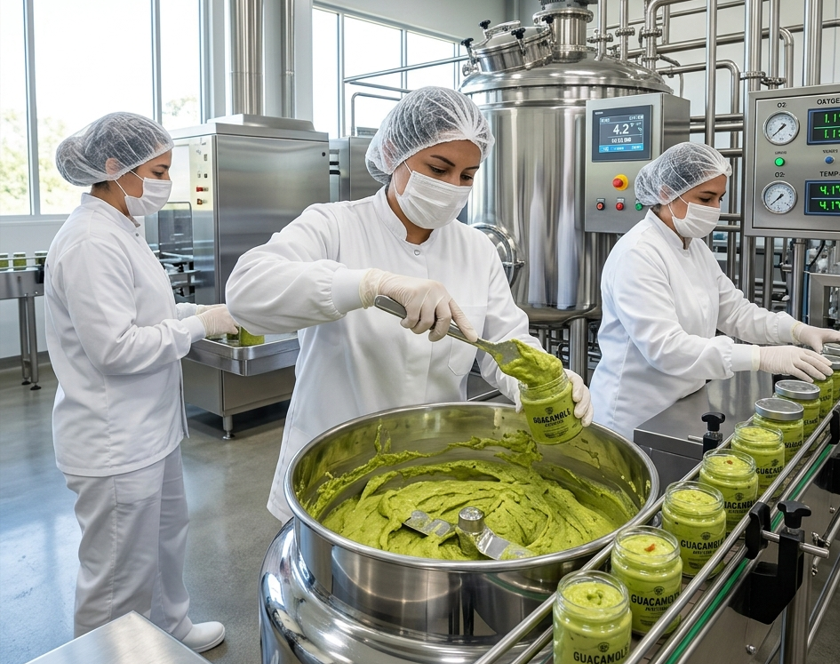
Understanding Why Guacamole Is Difficult to Stabilize
Guacamole is not a static product. It is a dynamic system influenced by enzymatic activity, oxygen exposure, and formulation balance.
One of the most immediate challenges is enzymatic browning. Once the avocado tissue is disrupted, oxidation begins almost instantly. This affects not only color but also flavor perception and consumer acceptance.
At the same time, guacamole has a relatively high water activity and a neutral pH range, which makes it vulnerable to microbial growth. Even when initial quality parameters are met, instability often appears later during storage or transport.
Small formulation or process changes can impact:
• Color retention and oxidation rate
• Texture and structural integrity
• Microbial stability
• Consistency across batches
In one case we observed, a slight delay between processing and packaging significantly accelerated browning. The formulation remained unchanged, but exposure time to oxygen increased, leading to visible quality loss within days.
Practical Guacamole Shelf Life Extension Methods in Production
In industrial environments, extending shelf life requires combining multiple control strategies rather than relying on a single solution.
From our experience, the most effective Guacamole Shelf Life Extension Methods include:
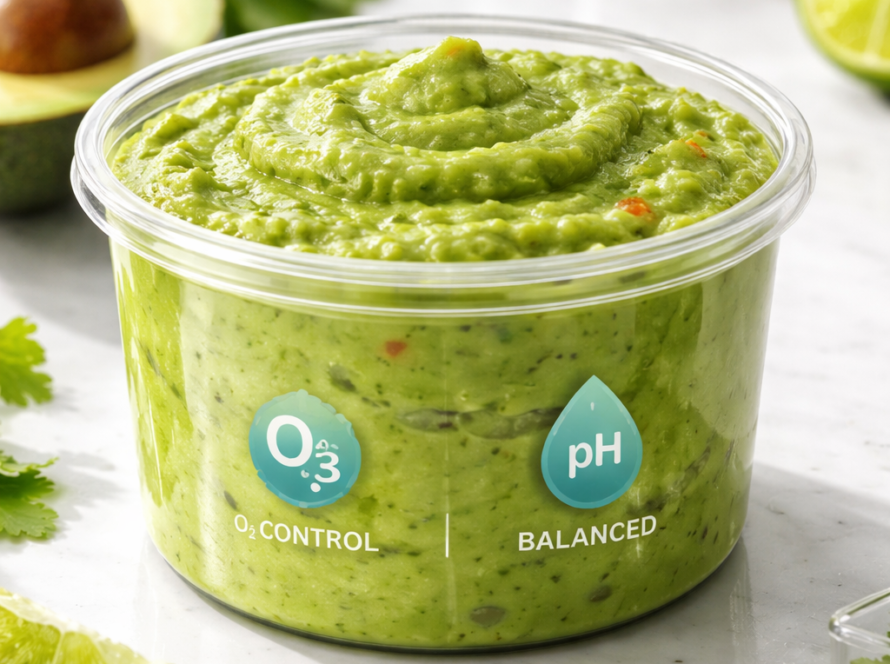
• Oxygen control
Limiting oxygen exposure during processing and packaging is critical. Even small variations in oxygen levels can significantly affect oxidation rates.
• Acidification and pH control
Adjusting pH using ingredients like lime or citric acid helps slow enzymatic activity and microbial growth, but must be balanced to avoid altering flavor.
• Temperature management
Maintaining low and stable temperatures throughout processing, storage, and distribution is essential to slow both chemical and microbial reactions.
• Ingredient functionality
Using natural antioxidants or stabilizers can support oxidation control and texture retention, but their effectiveness depends on correct integration into the formulation.
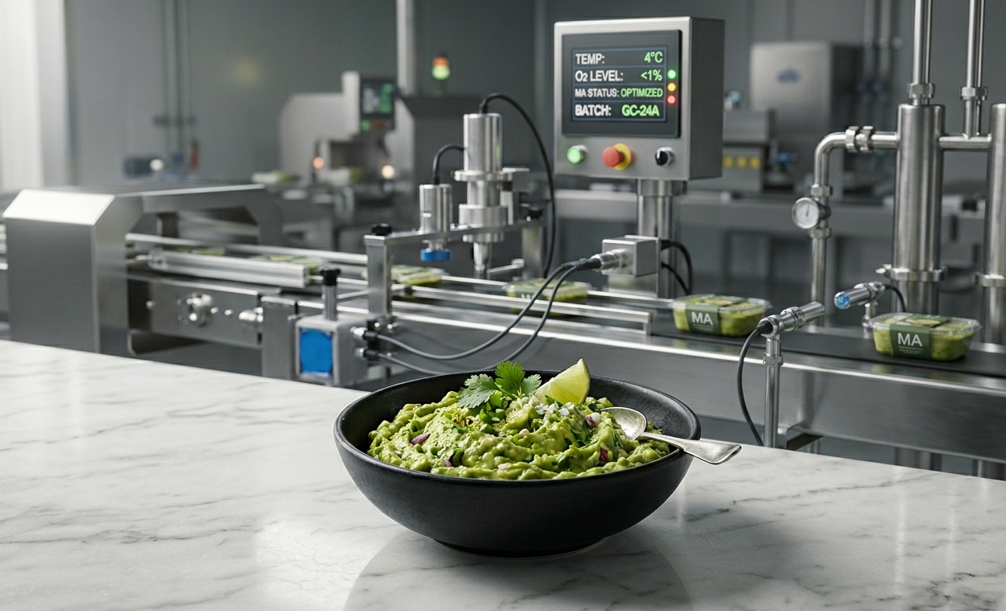
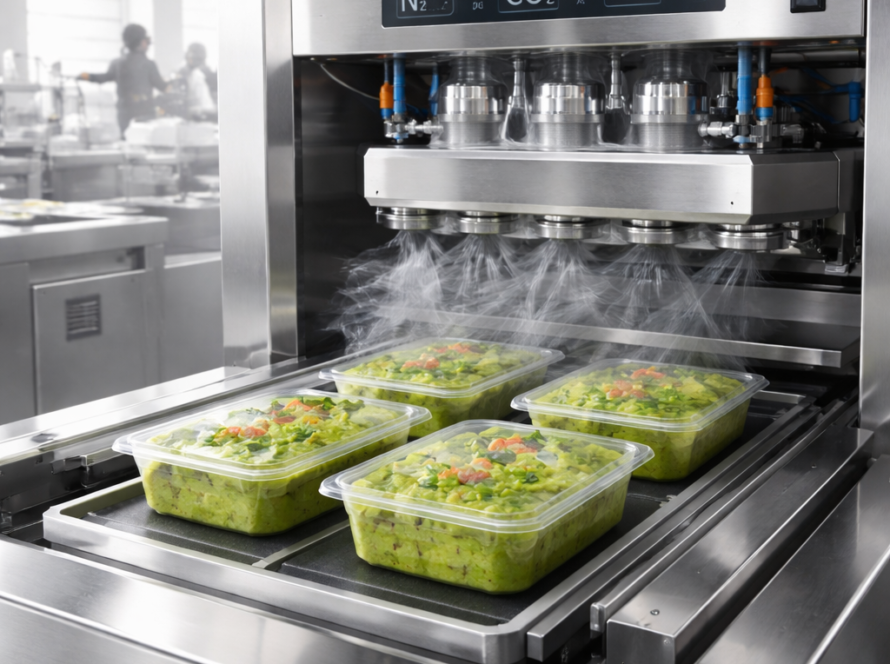
• Modified Atmosphere Packaging (MAP)
Replacing oxygen with controlled gas mixtures significantly reduces oxidation and extends shelf life when properly applied.
Each of these methods works best when aligned with the overall production system, not applied in isolation.
The Role of Processing Conditions
Shelf life is often influenced more by processing conditions than by formulation itself.
Factors such as cutting method, mixing intensity, and processing time all affect how quickly oxidation begins. Over-processing, for example, can damage cell structure and accelerate enzymatic reactions.
In one production line we supported, reducing mixing intensity slightly improved texture stability and slowed browning. The formulation remained identical, but the process adjustment made the difference.
This highlights an important point: Guacamole Shelf Life Extension Methods must include process optimization, not just ingredient changes.
Packaging as a Control Tool, Not Just a Container
In guacamole production, packaging plays an active role in product stability.
The choice of material, oxygen barrier properties, and sealing integrity all influence how the internal environment evolves over time. Even with MAP, poor sealing or unsuitable film permeability can compromise results.
Key considerations include:
• Oxygen transmission rate of packaging materials
• Headspace gas composition
• Seal consistency across batches
• Compatibility with filling equipment
When properly designed, packaging becomes a continuation of the production process, not its final step.
Stability as the Real Performance Indicator
In industrial production, shelf life is not just a number. It is a measure of consistency over time.
A product that performs well on day one but degrades unpredictably during distribution creates operational challenges and increases waste.
For guacamole, stability should be evaluated based on:
• Color retention under real distribution conditions
• Texture consistency over time
• Microbial safety margins
• Resistance to temperature fluctuations
Without this broader view, shelf life extension remains incomplete.
The ProNano Approach
At ProNano, we approach Guacamole Shelf Life Extension Methods as a system-level challenge.
Our work focuses on:
• Mapping how the product reacts across the entire process
• Identifying critical points where oxidation or instability begins
• Testing under real production and distribution conditions
• Aligning formulation, processing, and packaging into one controlled system
In many cases, improving shelf life does not require major changes. It requires better alignment between existing elements.
Conclusion
Extending the shelf life of guacamole is not about applying a single method. It requires controlling a product that continues to react
throughout processing, storage, and distribution.
Guacamole Shelf Life Extension Methods are most effective when formulation, processing, and packaging are aligned as one integrated system. This approach allows manufacturers to improve stability, reduce variability, and maintain consistent product quality over time.
If you are working on improving guacamole stability within your production lines, it may be worth taking a closer look at how your current system performs under real conditions. Contact ProNano to assess your processes, refine your approach, and implement solutions that deliver stable and measurable results.
Read more about 5 key to enhance product stability & safe food reformulation.