 العربية
 English
 Türkçe
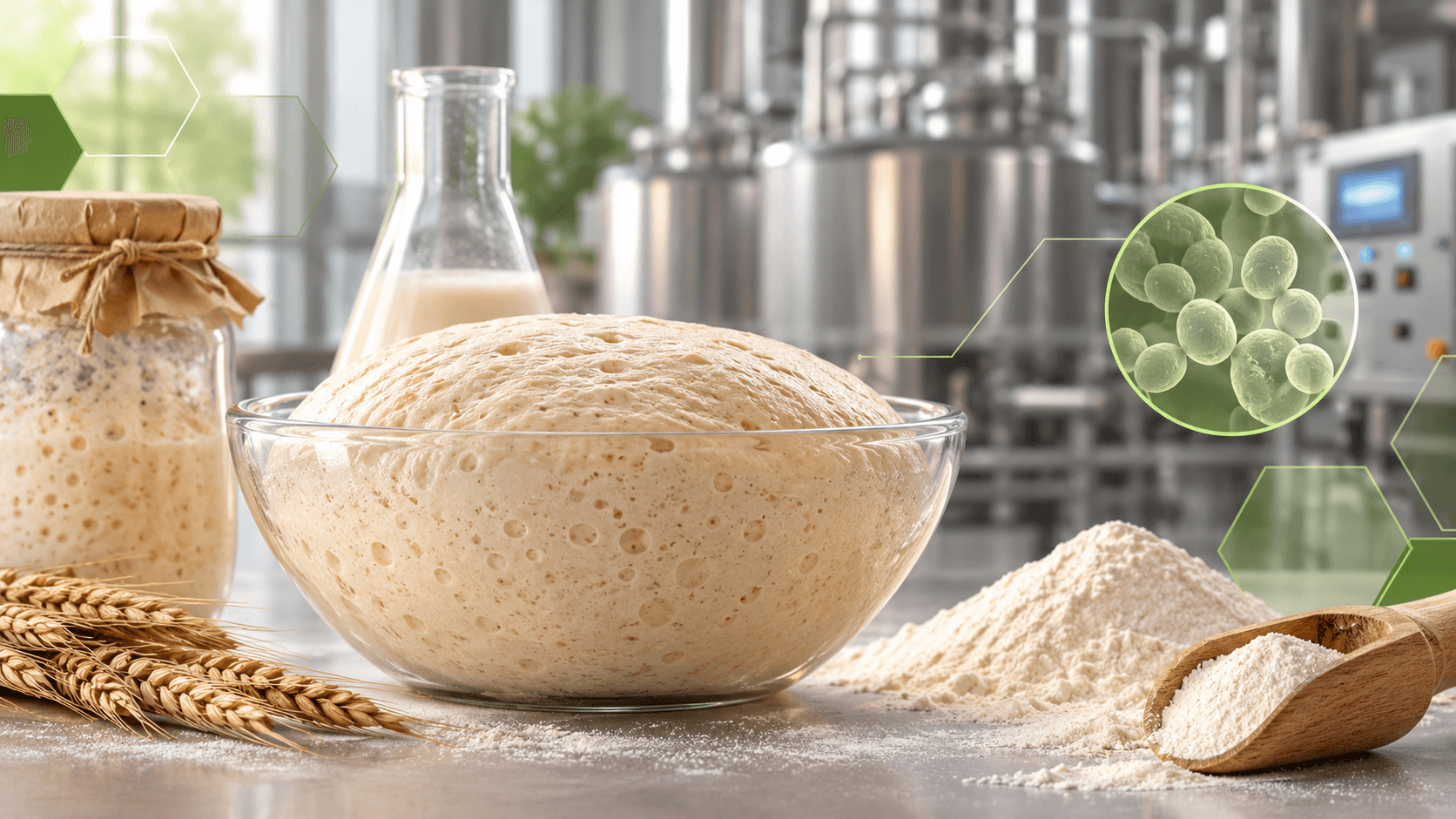
Cheese-curdling enzymes, stevia-flavored sweeteners without farming, and whey-like protein without a cow. These ingredients share a single production method: genetically programmed microorganisms running inside a bioreactor to produce one specific target molecule. This is precision fermentation.
Its most prominent applications today include producing dairy proteins (such as casein and beta-lactoglobulin) and egg proteins (such as ovalbumin) using microbial cells. These proteins are then purified to provide matching functional properties in foaming, gelling, and solubility in the final product.
What is precision fermentation?
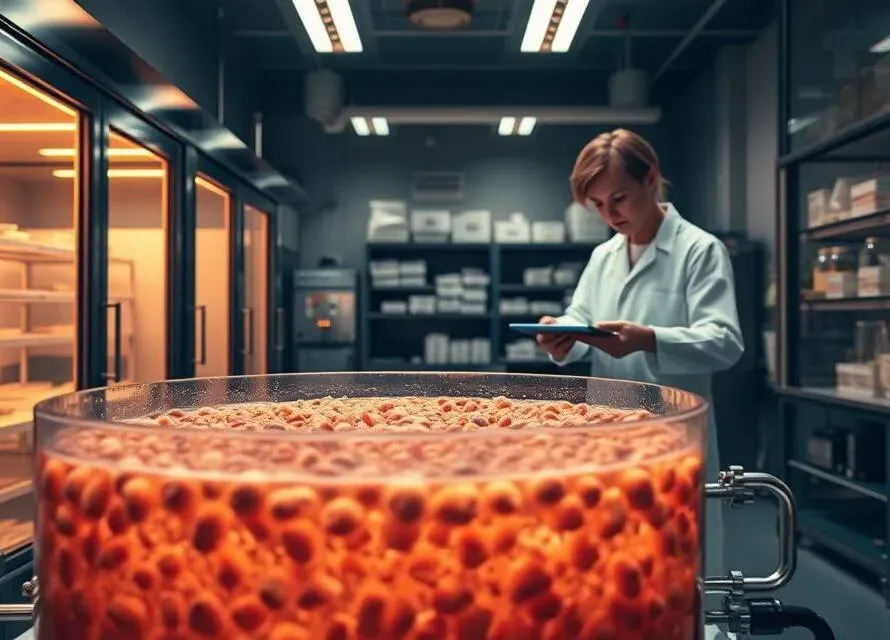
It involves inserting the genetic sequence responsible for a specific compound into host microorganisms—such as yeasts, filamentous fungi, or bacteria. These microbes feed on a carbon source (typically sugars) in a bioreactor, secreting the target compound, which is then separated and purified. In most cases, the final product contains no production cells.
The result is an ingredient that is molecularly identical to its natural counterpart, whether a protein, lipid, vitamin, pigment, or enzyme, without relying on agriculture or animal sources.
Three types of fermentation: do not confuse them
|
Type |
What is the product? |
Example |
|---|---|---|
|
Traditional fermentation |
The microorganism transforms the food matrix itself |
Yogurt, bread, pickles |
|
Biomass fermentation |
The cells themselves are the product |
Mycoprotein |
|
Precision fermentation |
A specific target molecule secreted by cells and then purified |
Chymosin, proteins, sweeteners |
How does the process work?
- Strain design: Selecting the microbial host, engineering the genetic sequence, and optimizing expression.
- Fermentation: Cultivating the strain in a bioreactor under controlled conditions (temperature, pH, oxygen, feed), typically using fed-batch fermentation.
- Downstream processing: Separating cells via centrifugation or filtration, followed by ultrafiltration concentration and chromatographic purification if needed.
- Drying and formulation: Converting the ingredient into a stable powder or liquid concentrate, ready for use in food formulations.
Where does practical adoption stand today?
Precision fermentation is not an unproven future technology. Some applications have been established for decades, while others are expanding commercially right now:
- Enzymes: Recombinant chymosin was the first genetically engineered product approved by the FDA for food use (1990) and is now standard for cheese curdling in most dairy plants worldwide.
- Sweeteners: Steviol glycosides like Reb M are produced via fermentation at yields that are difficult to extract economically from plants.
- Human milk oligosaccharides (HMOs): Such as 2'-FL, widely used in infant formula.
- Proteins: Whey proteins (such as beta-lactoglobulin), egg proteins like ovalbumin, and plant-based heme in meat alternatives.
- Vitamins: Such as B12 and riboflavin, long produced commercially via fermentation; their classification depends on whether strain engineering was used in production.
Milk and egg proteins: what changes in manufacturing?
These proteins are discrete functional ingredients, not direct full-matrix replacements for milk or eggs. They deliver protein functionality without fats, lactose, or minerals, making them suitable for formulated products like protein beverages, ice cream, and bakery products.
- Whey: Beta-lactoglobulin is the most abundant protein in bovine whey.
- Casein: It is more challenging to produce because its technical functionality in cheese and yogurt depends on micelle structure, which often requires post-translational modifications like phosphorylation.
- Egg white: Ovalbumin drives foaming and gelling performance, which can be influenced by host post-translational modifications. Functional equivalence must be validated in product formulations, not assumed.
In every case, success is judged within the matrix itself: solubility, thermal stability, foaming, and flavor profile—not solely protein purity.
When is precision fermentation economically viable?
Precision fermentation is not a universal substitute. It typically succeeds when several key criteria align:
- High value per kilogram: The ingredient commands a price that covers bioreactor capital and downstream purification costs.
- Low-dose efficacy: Small inclusion rates deliver a clear functional effect, such as flavorings, colors, or enzymes.
- Traditional sourcing bottlenecks: Scarcity, supply chain volatility, complex extraction, or inconsistent quality in conventional inputs.
- Unique technical functionality: Specific properties (foaming, gelling, solubility) that alternative plant-based ingredients fail to match.
In contrast, commodity-scale bulk proteins still face severe cost hurdles.
Key challenges that determine success
Technical and economic factors
- TRY metrics: Titer, rate, and yield on feedstock are the core technical determinants of economic viability.
- Downstream processing: Downstream processing is estimated in biomanufacturing literature at 50–80% of total production costs, depending on target purity and application.
- Industrial scale-up: Benchtop laboratory success does not guarantee performance in industrial bioreactors of tens of cubic meters, and global contract fermentation capacity remains constrained.
Regulatory and compliance
- Regulatory approval: Approval pathways vary by jurisdiction. In the European Union, ingredients typically require Novel Food authorization, whereas the US utilizes the GRAS pathway. Gulf and Turkish markets require reviewing national regulatory frameworks on a case-by-case basis.
- Allergen management: Fermentation-derived proteins are molecularly identical to animal counterparts; recombinant dairy proteins are still allergens and require clear labeling.
- Halal compliance: Auditing the gene source, growth media ingredients, and processing aids is essential, alongside alignment with the relevant halal certification bodies whose standards can vary.
- Biosafety and quality systems: Full strain characterization, verifying the absence of residual host cells or DNA, and implementing GMP and HACCP supported by certifications such as ISO 22000 or FSSC 22000.
Critical questions to address before starting
- Does the target ingredient economically justify precision fermentation?
- What are the target markets, and what regulatory pathway applies in each?
- Will you build in-house manufacturing capacity or partner with a contract manufacturing organization (CMO)?
- What are the specific requirements for halal certification, allergen declarations, and labeling?
- How will the ingredient integrate into the final food matrix without compromising sensory and functional qualities?
How ProNano supports your business
We take projects from concept to market-ready compliance: evaluating ingredient feasibility, mapping regulatory routes, structuring quality and food safety systems, and optimizing formulation and matrix integration.
If you are considering incorporating precision fermentation ingredients into your portfolio, start by evaluating feasibility and regulatory compliance before investing in R&D. Contact our team to define the optimal roadmap for your product.