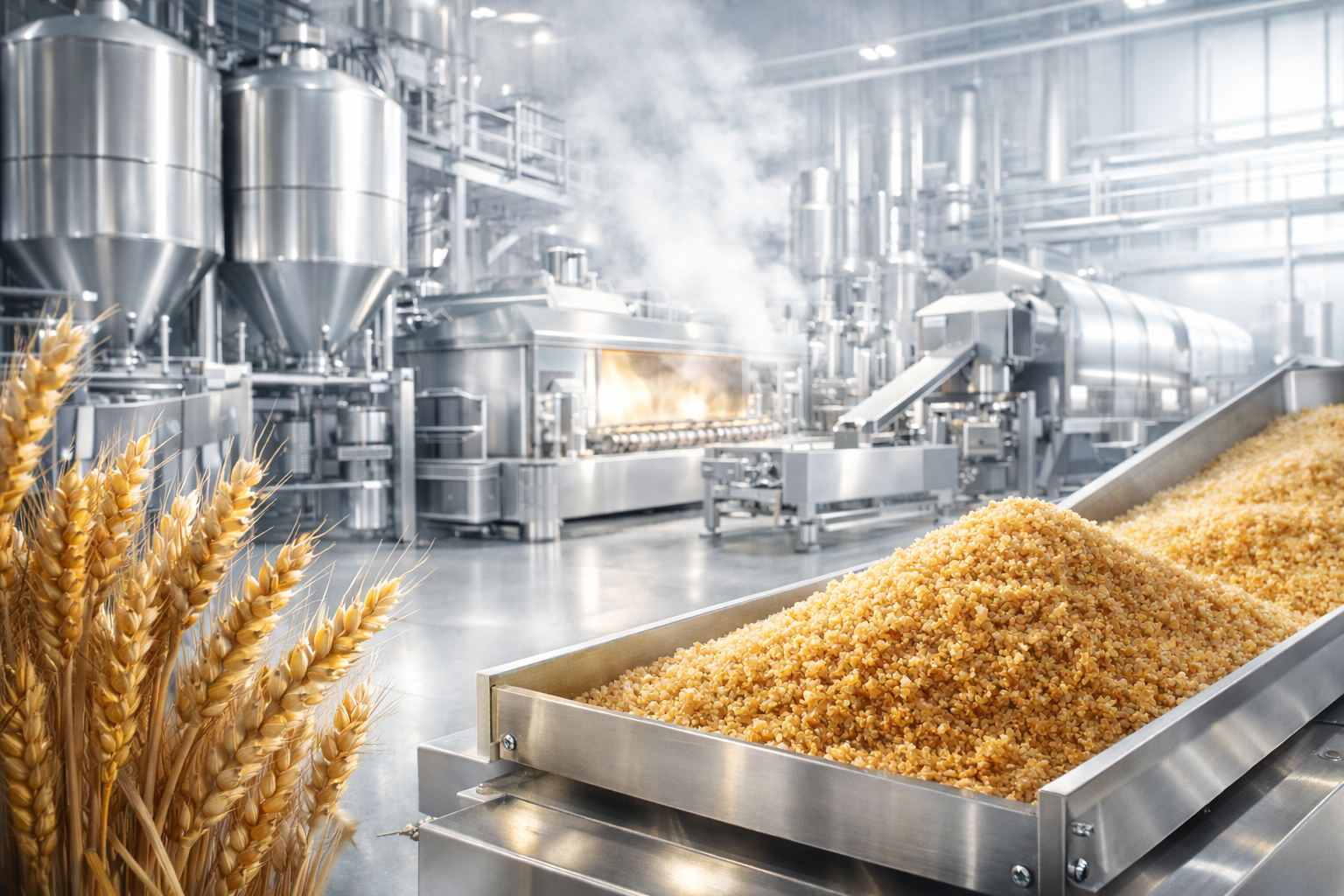
Bulgur manufacturing has evolved into a controlled industrial process that requires precise thermal treatment, staged drying systems, and calibrated milling operations. Modern production facilities depend on strict wheat selection standards, optimized parboiling conditions, and continuous quality monitoring to ensure consistent product stability and cooking performance.
This guide explains the full bulgur manufacturing process, critical production parameters, industrial challenges, and best practices for improving efficiency and product quality.
 What Is Bulgur Industrially?
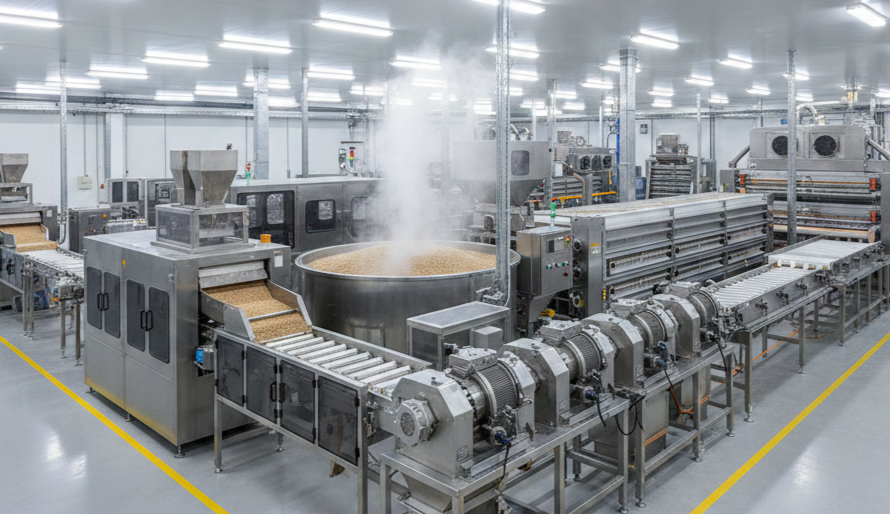
Bulgur is a processed cereal product made primarily from Durum Wheat through several industrial stages:
• Cleaning and grading
• Partial cooking (parboiling)
• Drying
• Dehulling
• Cracking and size classification
Its industrial value lies in:
• Long shelf stability
• Fast cooking time
• Strong nutritional profile
• Compatibility with automated production lines
Raw Materials & Wheat Selection Standards
Industrial bulgur manufacturing begins with strict raw material control.
Recommended wheat specifications:
• Protein content: 11–13%
• Moisture level: below 12%
• Intact, non-broken kernels
• Free from mycotoxins
• Foreign matter below 1%
Using low-quality wheat may lead to:
• Excessive product breakage
• Dark color formation
• Poor cooking texture
 Industrial Bulgur Production Stages
Cleaning & Pre-Treatment
Removal of impurities including:
• Dust
• Stones
• Foreign seeds
• Metallic particles
Using:
• Vibratory sieves
• Magnetic separators
• Air aspiration systems
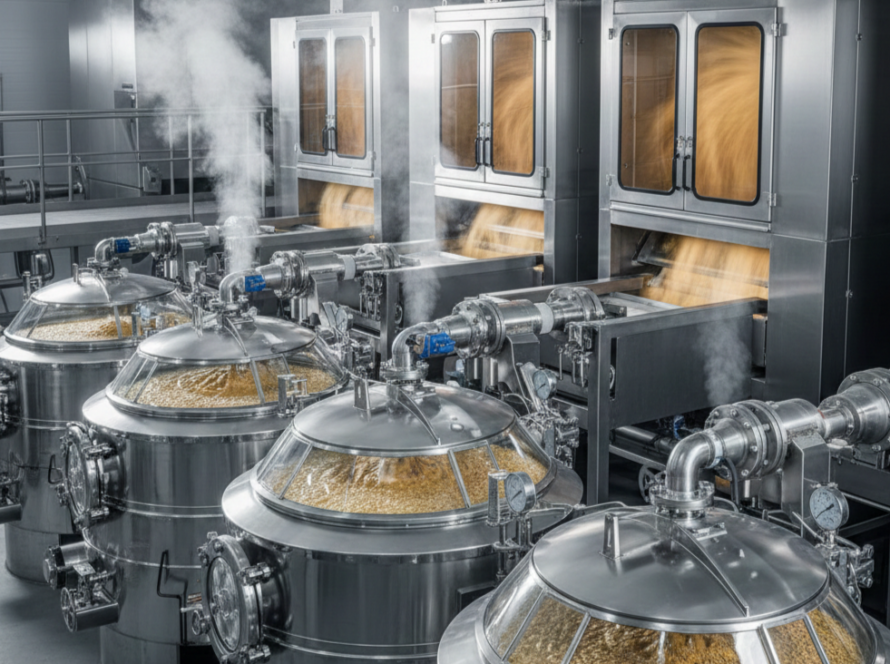
Parboiling (Critical Stage in Bulgur Manufacturing)
Parboiling is the most critical phase in bulgur manufacturing.
Processing parameters:
• Temperature: 95–100°C
• Time: 20–40 minutes
Main objectives:
• Starch gelatinization
• Color stabilization
• Improved milling performance
Improper parboiling directly affects final cooking quality and structural consistency.
Drying
After cooking, wheat kernels are dried to reach:
• Final moisture content of 10–12%
Drying systems typically include:
• Industrial hot air dryers
• Multi-stage drying chambers
Overly rapid drying may cause:
• Kernel cracking
• Structural inconsistency
• Increased breakage during milling
Dehulling & Cracking
Final mechanical processing includes:
• Removal of outer bran layer
• Controlled coarse cracking
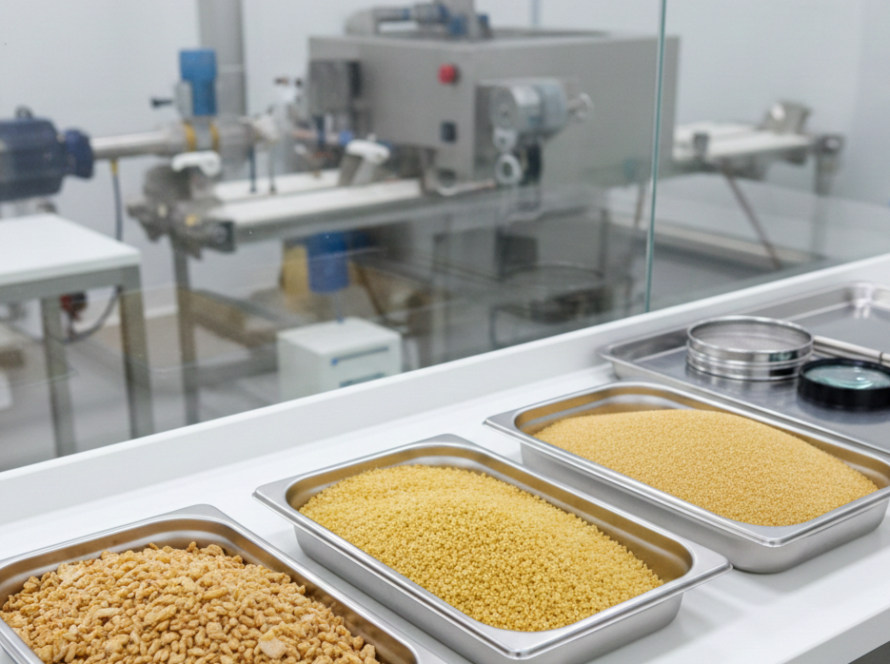
• Size grading and classification
Final commercial types:
• Coarse bulgur
• Medium bulgur• Fine bulgur
 Major Industrial Challenges in Bulgur Manufacturing
Dark Color Formation
Caused by:
• Excessive thermal exposure
• Low-grade raw wheat
High Breakage Ratio
Caused by:
• Rapid moisture loss
• Uneven internal moisture distribution
Poor Cooking Texture
Caused by:
• Incomplete starch gelatinization
• Incorrect thermal timing
Quality Control in Bulgur Manufacturing Facilities
Critical parameters to monitor:
• Final moisture content
• Water activity (aw)
• Particle size distribution
• Instrumental color measurement
• Cooking performance testing
Modern bulgur manufacturing facilities implement:
• HACCP systems
• Full batch traceability
• Process documentation and verification protocols
Process Optimization in Modern Bulgur Manufacturing
Advanced bulgur manufacturing operations rely on process control systems to reduce losses and improve uniformity.
Optimization strategies include:
• Thermal mapping during parboiling
• Real-time moisture monitoring
• Energy-efficient drying cycles
• Milling calibration and yield analysis
Nutritional Value of Bulgur
Bulgur remains nutritionally competitive due to:
• High dietary fiber content
• Plant-based protein
• Moderate glycemic index
• Rich B-vitamin profile
Improving Profitability of a Bulgur Production Line
Operational improvements may include:
• Energy-efficient drying systems
• Reduction of milling losses
• Bran valorization strategies
• Moisture-controlled packaging solutions
Bulgur Manufacturing Consultation by ProNano
At ProNano Food Industry Consulting, we specialize in advisory services for bulgur manufacturing and cereal processing
optimization. As a food industry consulting team, we support manufacturers in improving production performance and product stability.
Our services include:
• Production line technical evaluation
• Process parameter optimization
• Quality control system development
• HACCP planning and compliance guidance
• Operational efficiency improvement strategies
FAQ
What is the difference between bulgur and freekeh?
Freekeh is harvested green and roasted, while bulgur is made from mature wheat that is parboiled, dried, and cracked.
What is the ideal final moisture in bulgur manufacturing?
The ideal final moisture ranges between 10–12% to ensure product stability and safe storage conditions.
What is the shelf life of bulgur?
Bulgur typically has a shelf life of 12–24 months when stored in dry and controlled environments.
Can bulgur be produced without parboiling?
No. Parboiling is essential in bulgur manufacturing for starch gelatinization and consistent cooking quality.
Want to take your bulgur manufacturing to the next level? Contact ProNano today for expert food industry consulting and tailored solutions.