





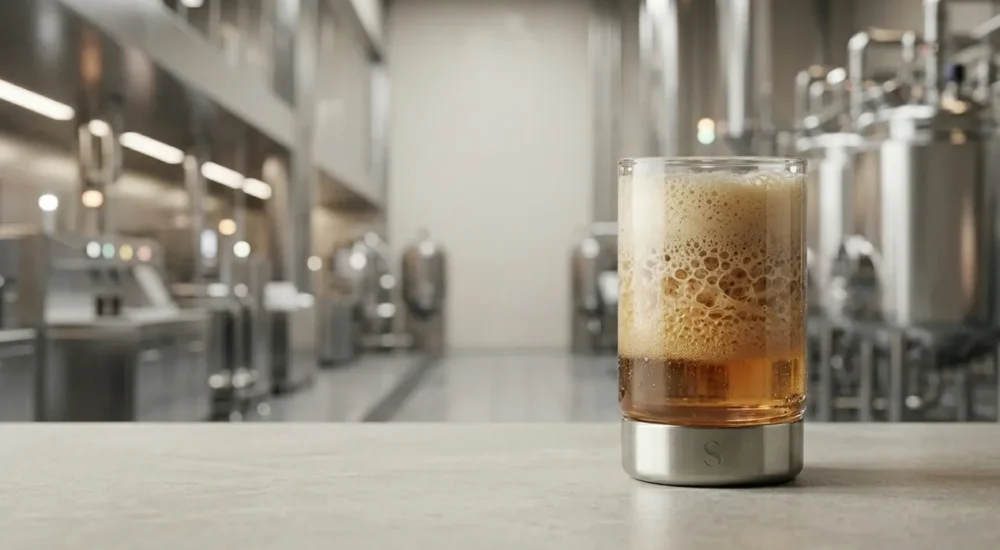
Self-Aerating Food Systems
The food innovation sector is undergoing a massive shift today. Specifically, experts now focus heavily on Structural Food Engineering, moving far beyond traditional ingredient tweaking. In this context, Self-Aeration Food Systems are emerging as a game-changing technology. This technique generates internal aeration chemically and physically within the formulation itself, without relying on mechanical air injection.
Consequently, this breakthrough completely transforms the mouthfeel experience. Moreover, it delivers superior sensory engagement for consumers. This benefit is particularly evident in functional foods, beverages, and high-protein systems, where sensory quality directly drives commercial success.
What Are Self-Aerating Food Systems?
Engineers design self-aerating food systems as specialized food matrices. Specifically, these structures automatically generate internal gas bubbles during manufacturing, preparation, or consumption. This process relies on specific chemical or physical triggers.
Furthermore, this technology differs significantly from traditional mechanical methods (Mechanical Aeration). Because of this, the formulation generates gas internally through intrinsic component reactions. Therefore, the goal extends beyond simple foaming to achieve precise texture control, which optimizes the following dimensions:
- Textural Lightness: As a result, the product reduces its apparent density while preserving its core nutritional value.
- Enhanced Mouthfeel: In addition, the food texture continuously evolves during drinking or chewing.
- Increased Volume Perception: Consequently, the expanded portion size effectively supports natural satiety signals.
- Controlled Structural Collapse: Furthermore, the matrix breaks down smoothly in the mouth to release flavors efficiently.
Why Is Self-Aeration Vital for Modern Food Manufacturing?
Food manufacturers face a major double challenge today. Specifically, producers strive to boost nutritional density while maintaining an exceptional sensory experience. This obstacle appears clearly in protein-rich formulations, low-sugar items, and foods fortified with micronutrients.
Additionally, these dense formulations typically suffer from a dry, chalky, or heavy mouthfeel. However, self-aerating systems solve this issue effectively. Because of this, these systems restructure the internal architecture rather than increasing density, delivering a lighter, smoother texture without compromising nutritional targets.
Key Industry Drivers for Self-Aeration Adoption:
- Rising Demand for Interactive Foods: For example, consumers increasingly prefer products that transform dynamically during preparation.
- Growth in Functional Nutrition: Furthermore, manufacturers want to mask the sensory defects of active proteins.
- Focus on Experiential Consumption: Consequently, texture and freshness have become primary drivers for repeat purchases.
Scientific and Technical Mechanisms Behind Self-Aeration
Self-aeration engineering relies on advanced interactions between formulation components and external triggers:
- Controlled Gas Release Systems: Specifically, ingredients trigger precise acid-base or enzymatic reactions upon hydration, generating micro-bubbles instantly.
- Encapsulated Functional Ingredients: Microencapsulation technology protects gas-generating compounds. Consequently, the gas releases only when exposed to heat or mechanical agitation.
- Thermal Activation: Furthermore, cooking heat expands the internal structure and releases trapped gases seamlessly.
- Pressure-Responsive Structures: As a result, these advanced formulations react directly to mechanical chewing pressure, transforming texture instantly inside the mouth.
Industrial Applications of the Technology
1. Functional and Ready-to-Drink (RTD) Beverages
Manufacturers apply this technology to liquids to improve drinkability. For instance, key applications include:
- High-concentration protein drinks.
- Sports hydration and recovery beverages.
- In addition, plant-based dairy alternatives (Plant-Based RTD Beverages).
2. Complex Protein Systems
Targeted aeration effectively reduces the gritty or chalky texture of whey or plant proteins (such as pea and soy). As a result, the final product achieves a smooth, creamy texture.
3. Satiety and Weight Management Products
On the other hand, expanding the food matrix increases food volume within the stomach. Consequently, these products naturally reinforce fullness signals for the consumer.
4. Instant Foods and Interactive Desserts
Furthermore, the technology integrates easily into fast-dissolving powders, effervescent drinks, and desserts designed for direct visual and sensory enjoyment.
Manufacturing Challenges and Shelf-Life Stability
Producing self-aerating foods at an industrial scale requires rigorous processing control. Specifically, essential quality parameters include:
- Mixing Intensity and Homogenization Pressure: As a result, this ensures precise control over micro-bubble sizing.
- Particle Size Distribution: In addition, this guarantees total homogeneity and prevents unwanted clumping.
- Advanced Drying Technologies: For example, utilizing spray drying or freeze drying builds stable, porous matrices.
Regarding shelf-life stability, these products face high sensitivity to ambient moisture. Consequently, smart packaging solutions serve as an indispensable part of the functional system to prevent premature activation.
The Future of Food Engineering: Toward “Structural Intelligence”
The food industry is rapidly moving toward AI-driven formulation to predict structural behavior accurately. Consequently, manufacturers will transition from simply adding functional ingredients to developing products with structural intelligence that adapts automatically to preparation conditions.
Conclusion
Ultimately, self-aerating food systems represent a major leap forward in food technology. Because of this, this approach transforms physical structure into an active functional element that elevates overall product value.
Therefore, contact the Pronano team today to discover how self-aeration technologies and texture engineering can help you build next-generation functional foods on an industrial scale.