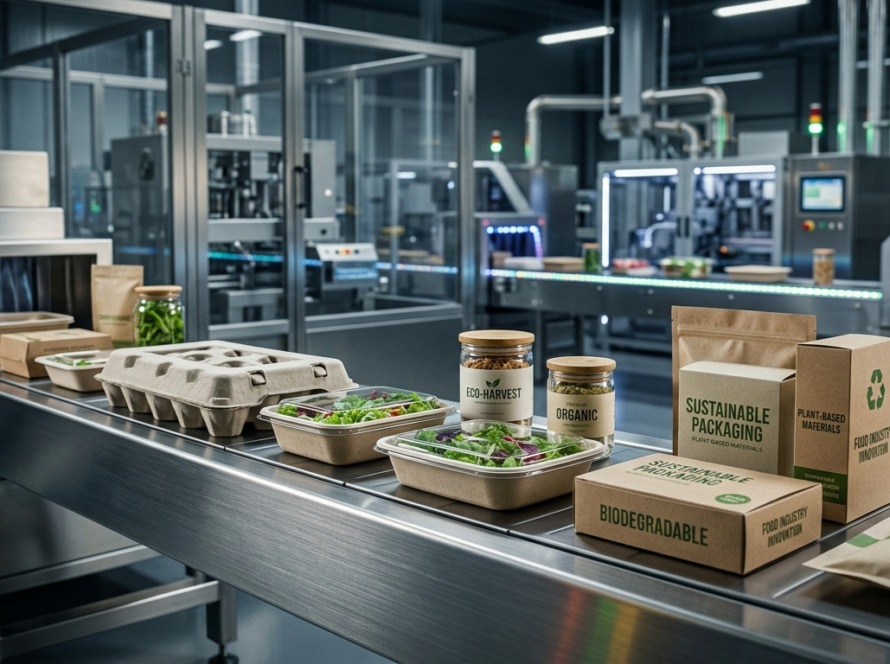
Carbon footprint is often treated as a sustainability metric, something to report, track, and include in presentations. However, on the production floor, it behaves very differently. In food manufacturing, carbon footprint is not just about emissions. It is a direct reflection of how efficiently a system is operating. When processes are well optimized, emissions tend to decrease naturally. When they are not, carbon footprint becomes a symptom rather than a standalone issue. In many cases, it is one of the earliest indicators that something in the operation is not fully controlled or aligned.
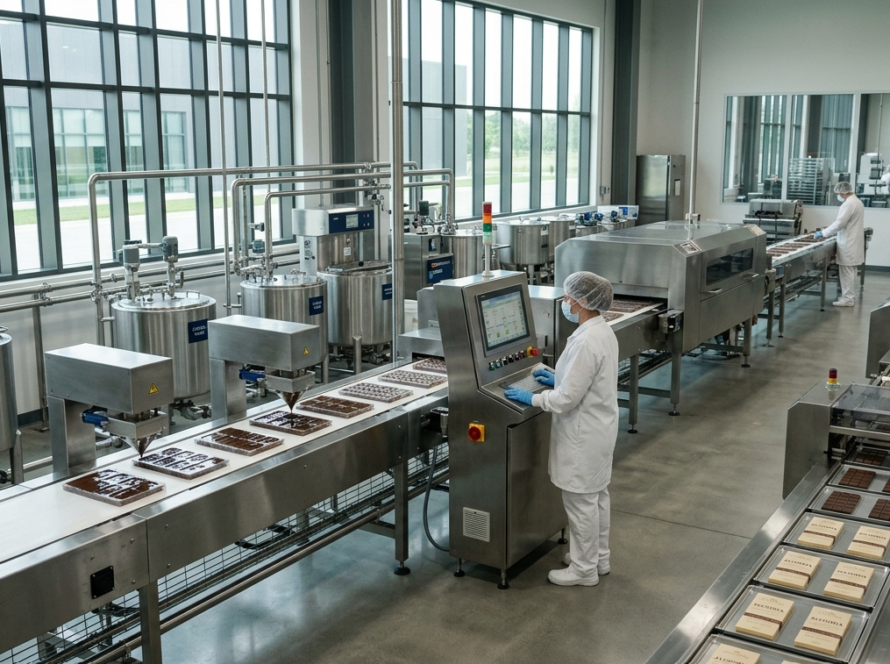
Why Carbon Footprint Is Becoming a Production KPI
For many manufacturers, carbon footprint has traditionally been handled as part of sustainability reporting, separate from daily production decisions. That separation is no longer practical. The same factors that increase emissions also affect energy cost, throughput, and product consistency.
Two production lines may deliver the same product with identical specifications, yet one consumes more energy, requires more time, and generates more waste. This difference is not only environmental. It is operational and directly impacts profitability.
1. Energy systems are often overdesigned and under-optimized
Heating, cooling, and thermal processing are among the largest contributors to carbon footprint in food production. In many facilities, these systems operate beyond what is actually required. Temperatures are set higher than necessary, processing times are extended, and cooling cycles are not aligned with real demand.
This situation usually develops over time, as safety margins become standard practice. While initially implemented to ensure consistency, they often remain unchanged even when no longer needed.
How to improve it:
Reassess actual process requirements based on real operating data rather than fixed assumptions.
2. Time inefficiencies accumulate across the process
On paper, production processes may appear efficient. In reality, small delays occur at multiple stages. Waiting times between steps, extended holding periods, and slow transitions between batches all contribute to increased production time.
Individually, these delays may seem insignificant. Collectively, they lead to higher energy consumption and increased carbon footprint.
How to improve it:
Analyze real production timelines to identify hidden inefficiencies rather than relying solely on planned schedules.
3. Waste carries a hidden carbon cost
When a batch is rejected or falls outside specifications, the loss goes beyond raw materials. It includes all the energy, water, labor, and processing time that were invested in producing it.
This makes waste one of the most underestimated contributors to carbon footprint in food production. High variability leads to more corrections, and more corrections lead to higher overall emissions.
How to improve it:
Focus on process stability. Reducing variability is one of the most effective ways to reduce both waste and emissions.
4. Process design directly influences emissions
The structure of the process itself plays a major role in determining energy usage. Unnecessary recirculation, repeated heating and cooling cycles, and inefficient flow paths all increase the energy required per unit of product.
These issues are not always visible during development, but they become evident during full-scale production.
How to improve it:
Simplify process flow wherever possible. Efficient design reduces both operational complexity and energy consumption.
5. Packaging decisions extend beyond the production line
Packaging is often selected based on cost and availability, but its impact goes far beyond the factory. It influences shelf life, product protection, and distribution efficiency.
A product with limited stability will generate more waste throughout the supply chain, increasing the overall carbon footprint.
How to improve it:
Evaluate packaging as part of the total system, ensuring alignment with product behavior and shelf-life requirements.
6. Scaling amplifies inefficiencies
Processes that perform well at pilot scale do not always translate effectively to industrial scale. At larger volumes, heat distribution, mixing dynamics, and process timing all change.
Small inefficiencies that were previously manageable can become significant, leading to increased energy consumption and variability.
How to improve it:
Optimize processes before scaling. Efficiency should improve with scale, not decline.
7. Carbon footprint reflects system integration
In most cases, carbon footprint is not driven by a single factor. It is the result of how formulation, process, equipment, and packaging interact.
When these elements are not aligned, inefficiencies accumulate. Carbon footprint becomes a visible outcome of deeper system-level issues.
Conclusion
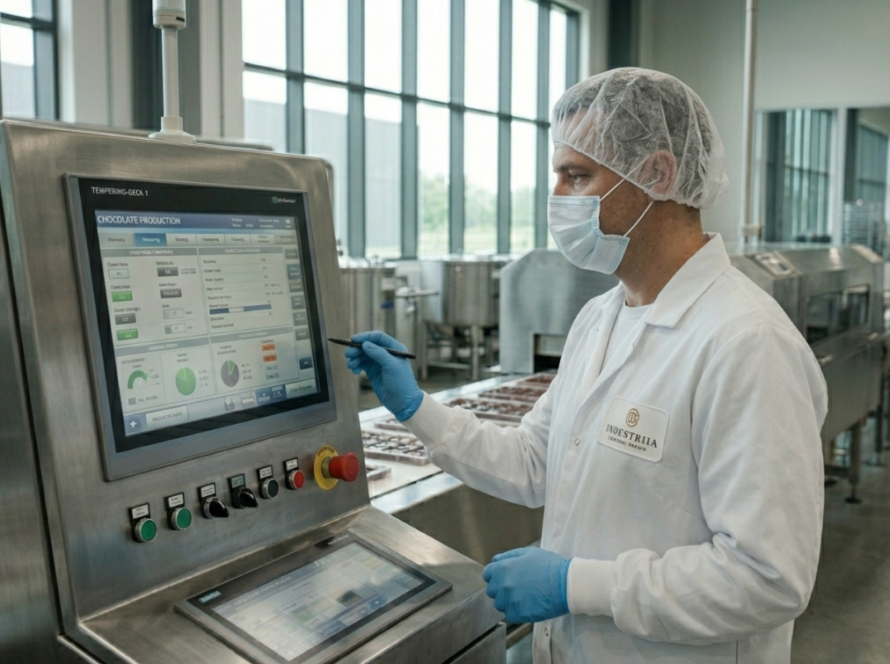
Carbon footprint is no longer just an environmental metric. It is a practical indicator of how well a production system is designed and operated.
High emissions are rarely caused by one major issue. They are typically the result of multiple small inefficiencies across the process. Addressing these inefficiencies not only reduces emissions but also improves overall performance.
For manufacturers, the opportunity lies in treating carbon footprint as part of process optimization rather than a separate objective.
If you are looking to improve efficiency, reduce variability, and lower your carbon footprint under real production conditions, contact ProNano to evaluate your process and identify where performance can be improved.
Read more about Vegicaps Plant-Based Softgels.