As we approach a food technology revolution, a big question emerges: Can new ways to make meat meet the world’s protein needs without harming the environment?
At ProNano, we think lab-grown meat is leading this change. It’s a sustainable option compared to raising animals for meat. Our team, with skills in food tech, design, and project management, supports this advanced tech.
We use our knowledge to help clients turn their food ideas into reality. From the start to the finish, we aim for a sustainable success.
Key Takeaways
• New ways to make meat are vital for meeting global protein needs.
• Lab-grown meat is a sustainable choice compared to traditional farming.
• Expert advice is key for food project success.
• Working together is crucial for food project improvements.
• Sustainable food tech is on the verge of a big change.
The Evolution of Meat Production: From Farm to Lab
Cellular agriculture is changing how we make meat. It offers a more controlled and sustainable way.This shift moves us from traditional farming to lab-grown meat.
Traditional Livestock Farming and Its Limitations
For centuries, traditional farming has been key to the meat industry. Yet, it faces big challenges. It harms the environment a lot, causing deforestation, water pollution, and more.
 The Birth of Cellular Agriculture
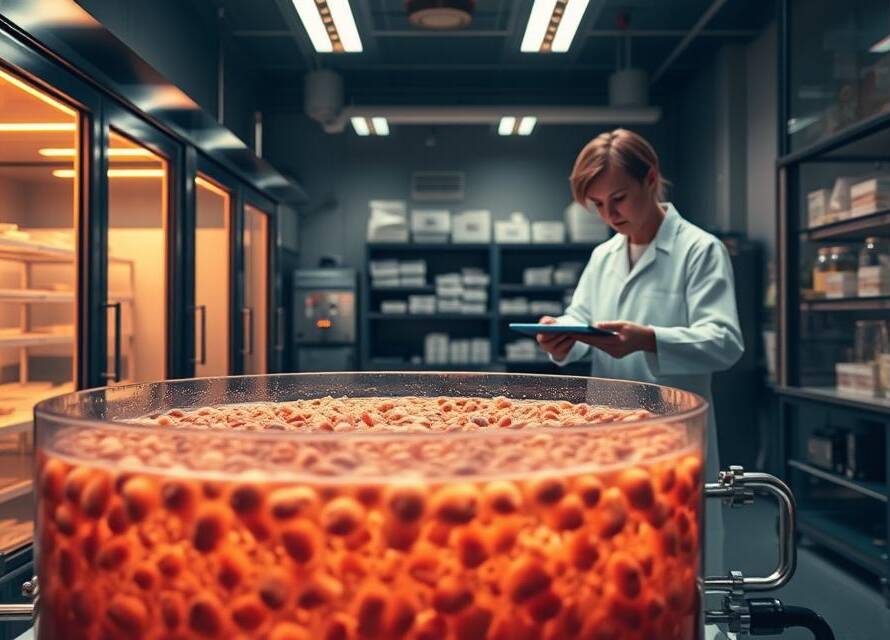
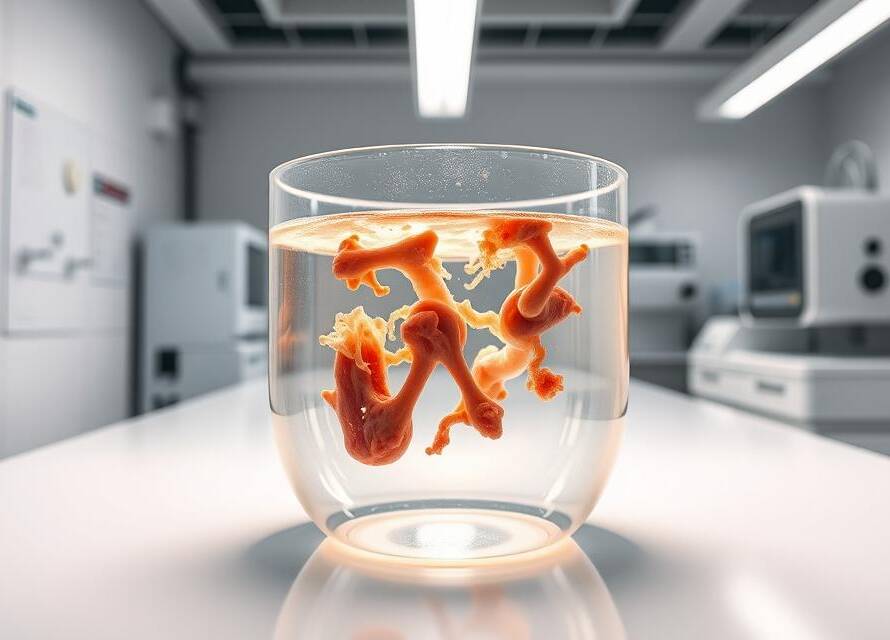
Cellular agriculture, or lab-grown meat, tackles some of these problems. It grows meat cells in a controlled space.
This method cuts down on environmental harm and improves animal care.
It also lets us make meat with the exact nutrients people want. This meets the demand for healthier food choices.
The Need for Sustainable Food Solutions
As the world’s population grows, we need better food options. Lab-grown meat is a promising solution.
It’s a new way to make meat that’s better for our planet.
At ProNano, we help the food industry grow. We’re ready to support this new, sustainable meat production.
| Aspect | Traditional Livestock Farming | Lab-Grown Meat |
|---|---|---|
| Environmental Impact | High: contributes to deforestation, water pollution, and greenhouse gas emissions | Low: reduces environmental footprint through controlled production |
| Animal Welfare | Concerns regarding animal suffering and welfare | Improved: eliminates the need for animal slaughter and reduces suffering |
| Nutritional Control | Limited: nutritional content varies based on breed and feed | High: allows for the production of meat with specific nutritional profiles |
What Is Lab-Grown Meat and How Is It Produced?
Lab-grown meat, also known as clean or cultivated meat, is made by growing animal cells in a controlled space. This space is often a bioreactor. It’s a complex process that uses cell biology and advanced technology.
The Science Behind Cultivated Meat
The science of cultivated meat focuses on cell biology. It’s about taking animal cells and growing them in a controlled environment. This environment provides the cells with what they need to grow and multiply.
Current Production Methods and Techniques
• Cell isolation and culture media optimization
• Bioreactor design for scalable production
• Nutrient and growth factor supply systems
Companies are always finding new ways to make this process better and cheaper.
Key Players in the Clean Meat Industry
| Company/Institution | Focus Area | Notable Achievements |
|---|---|---|
| Memphis Meats | Beef, chicken, and duck production | First lab-grown meatball and chicken strip |
| Just (formerly Hampton Creek) | Clean meat and plant-based products | Pioneering work in lab-grown chicken |
| University of Maastricht | Research in cellular agriculture | Significant contributions to the science behind clean meat |
These groups are pushing the limits of what’s possible in clean meat technology. They’re driving innovation and investment.
Recent Technological Breakthroughs
Recent advances have focused on making lab-grown meat more affordable and nutritious.
These improvements are key for clean meat to become commercially viable.
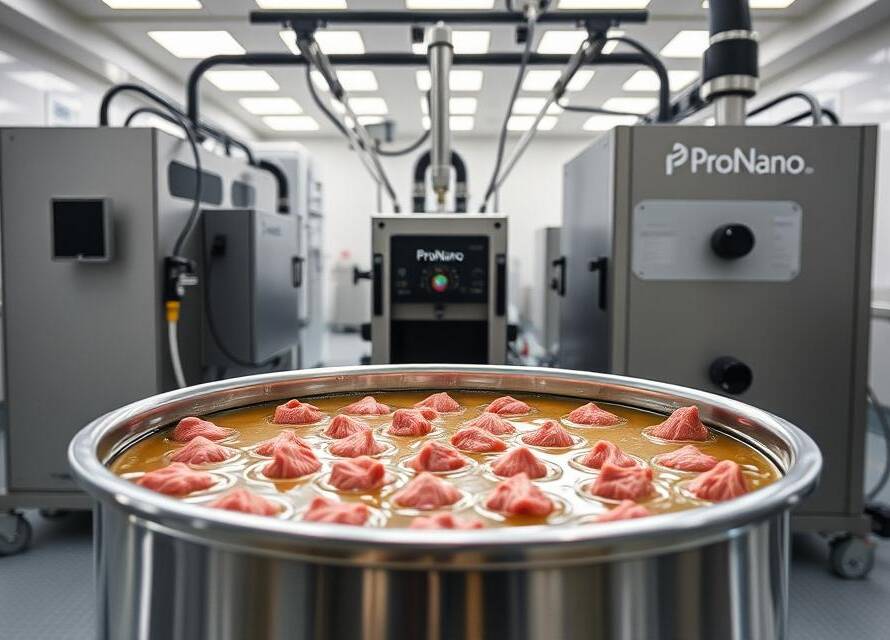
At ProNano, we support food projects from start to finish. We help our clients succeed in the emerging clean meat market.
 Environmental Benefits of Sustainable Meat Alternatives
The benefits of lab-grown meat for the environment are clear as the field grows. It’s a sustainable food option that beats traditional farming in many ways.
Land and Water Conservation
• Lab-grown meat needs much less land than raising animals. This saves natural habitats and ecosystems.
• It also uses less water because it’s made in a controlled setting.
Reduced Agricultural Pollution
• Lab-grown meat cuts down on pollution from farming.
• It uses fewer fertilizers, pesticides, and antibiotics. This makes it a cleaner choice for our planet.
| Environmental Impact | Traditional Livestock Farming | Lab-Grown Meat |
|---|---|---|
| Land Usage | High | Low |
| Water Usage | High | Low |
| Agricultural Pollution | High | Low |
At ProNano, we back sustainable meat alternatives in Turkey, the Gulf, and Europe. We offer local support and know-how to help lab-grown meat become a global choice.
Ethical Considerations and Animal Welfare
Lab-grown meat is a game-changer for animal welfare. It cuts down on animal slaughter, maybe even stops it altogether. This is a big win for animal rights.
Eliminating Animal Suffering in Meat Production
• Lab-grown meat could end animal suffering. Traditional farming can hurt animals.
• But lab-grown meat is made in a safe place, away from harm.
 Perspectives from Vegetarians and Animal Rights Advocates
• Vegetarians and animal lovers have always worried about meat.
• Now, cruelty-free meat options are here. Lab-grown meat is a kinder choice for our planet and animals.
Addressing Religious and Cultural Concerns
• Lab-grown meat brings up new questions, like how it fits into faith and culture.
• We talk to hotels, hospitals, and food places to understand these worries.
• We offer help to make food production fair for everyone.
At ProNano, we think the future of meat is in tech and ethics. We want to make lab-grown meat available to more people. This way, we can all eat in a way that’s good for the planet and animals.
Nutritional Profile of Lab-Grown Meat Products
Lab-grown meat has a big advantage: it can be made to fit what consumers need. “The ability to engineer the nutritional content of meat products represents a significant leap forward in food technology,” says a leading expert in the field.
Comparing Nutritional Content with Conventional Meat
• Lab-grown meat can have controlled amounts of fat, protein, and nutrients. This makes it a healthier choice than regular meat.
• Research shows it has less saturated fat and more omega-3 fatty acids.
Potential for Enhanced Nutritional Engineering
• The way lab-grown meat is made lets us add nutrients through bioengineering.
• This could make meat products with extra health benefits, like more vitamins or minerals.
Addressing Health and Safety Concerns
• Lab-grown meat is good for health, but we must also think about safety.
• The controlled making process lowers the chance of contamination.
• But we need strict testing and rules to keep consumers safe.
At ProNano, we help our clients succeed in the food industry.
Regulatory Landscape and Market Readiness in Saudi Arabia
• Cultured meat is growing, and Saudi Arabia is changing its rules to keep it safe and legal.
• As a leader in new food tech, Saudi Arabia is making rules for the future of meat alternatives.
Global Regulatory Frameworks for Novel Food Technologies
• Worldwide, rules for lab-grown meat are being set.
• We see stricter safety and labeling rules. This will guide Saudi Arabia’s rules too.
Specific Considerations for the Middle East Region
• The Middle East has its own rules for meat, especially for Halal certification.
• This is key for cultured meat in Saudi Arabia.
• Knowing these local rules is important for getting into the market.
Timeline for Commercial Availability in Saudi Markets
• We think lab-grown meat will come to Saudi Arabia when rules and people are ready.
• With our help in setting up food places, we are ready to help this new industry.
• As rules change, companies wanting to be in Saudi Arabia need to keep up with cultured meat news.
Consumer Acceptance and Cultural Integration
• The success of lab-grown meat in new markets depends on addressing consumer skepticism and cultural nuances.
• As we introduce this innovative food technology, understanding the factors that influence consumer acceptance is crucial.
Addressing Skepticism and Misconceptions
• Nutritional value and safety
• Environmental impact
• Taste and texture compared to traditional meat
• By providing transparent information and education, we can alleviate these concerns and foster a positive perception of lab-grown meat.
Cultural and Religious Perspectives in Saudi Arabia
• Cultural and religious beliefs play a significant role in shaping consumer attitudes towards food.
• In Saudi Arabia, understanding these perspectives is essential for successful market entry.
• We work closely with local stakeholders to ensure that our lab-grown meat products align with cultural and religious requirements.
Marketing Strategies for New Food Technologies
• Educational campaigns to raise awareness
• Sampling events to showcase product quality
• Collaborations with influencers and thought leaders
• By adopting a culturally sensitive and informative marketing strategy, we can drive consumer acceptance and pave the way for the successful integration of lab-grown meat in Saudi Arabia.
Economic Implications of Lab-Grown Meat Technology
• The arrival of lab-grown meat is changing the meat industry a lot.
• It brings big economic changes. We need to look at the current problems and what might happen next.
Cost Analysis: Challenges and Projections
• Now, making lab-grown meat costs more than raising animals.
• But new tech and bigger production will lower prices.
• We think cultured meat will be as cheap as regular meat in about 10 years.
Impact on Traditional Livestock Industries
• Lab-grown meat could shake up the old ways of farming, leading to job losses.
• Yet, it opens up new jobs in growing meat in labs.
• Working together and investing wisely will help everyone adjust.
Investment Opportunities in Food Technology
• Our work in Turkey, the Gulf, and Europe has shown us the demand for lab-grown meat.
• There are big investment chances in food tech, especially where innovation and green living are key.
• The rise of plant-based foods and meat alternatives is also attracting investors.
Implementing Sustainable Meat Alternatives in Food Production Facilities
• Adding lab-grown meat to food production needs a detailed plan.
• This plan covers setting up the right space, growing the production, and making sure everything works together.
• Looking into sustainable meat alternatives means we must think about how to make it work in real life.
Infrastructure Requirements for Cellular Agriculture
• Places making lab-grown meat need special tools and tech. This includes bioreactors, cell culture media, and systems to watch over the growing process.
• Bioreactors designed for cell culture
• Advanced cell culture media formulations
• Monitoring and control systems for temperature, pH, and other critical parameters
Scaling Production from Laboratory to Commercial Scale
• Going from small lab batches to big commercial production is tough.
• It needs bigger gear and better ways to keep quality up.
Integration with Existing Food Processing Systems
• Getting lab-grown meat to work with current food systems is key.
• It’s all about knowing how things work now and finding ways to make it better.
Equipment and Technology Considerations
• Choosing the right tools and tech is crucial.
• Places making lab-grown meat need systems that make good meat and follow food safety rules.
Staff Training and Operational Adjustments
• Teaching staff to use new gear and follow new steps is vital.
• Adjustments might be needed to fit the special needs of lab-grown meat.
At ProNano, we provide customized consulting services for adding lab-grown meat to food production. This includes hotels, hospitals, central kitchens, and food factories. Our help makes the switch to sustainable meat easier, boosting your place’s abilities and what you can offer.
ProNano’s Expert Team: Pioneering Food Technology Solutions
• ProNano’s team is all about leading the way in food tech.
• We focus on clean meat technology and sustainable food options.
• We help with food projects from start to finish.
Comprehensive Support from Concept to Construction
• We give full support for your food project.
• We plan and execute every detail.
• From the first meeting to the final build, we’re with you every step.
Specialized Consulting for Various Food Production Settings
• Hotel and Hospitality Industry Applications
• Healthcare Facility Implementations
• Central Kitchen and Food Factory Projects
• We know the hospitality industry’s needs. We provide solutions just for them.
Healthcare Facility Implementations
• We help healthcare places with food tech.
• This improves care and makes things run smoother.
Central Kitchen and Food Factory Projects
• We’re also good at central kitchens and food factories.
• We make production better and follow rules.
International Partnerships and Regional Expertise
• ProNano has partners worldwide.
• This lets us help clients in many places.
Operations in Turkey, the Gulf, and Europe
• We work in Turkey, the Gulf, and Europe.
• This gives us a wide reach and local knowledge.
Customized Solutions for Saudi Arabian Market
• We tailor solutions for Saudi Arabia.
• We make sure they fit local rules and tastes.
| Region | Expertise | Services Offered |
|---|---|---|
| Turkey | Food Technology | Consulting, Construction |
| Gulf | Sustainable Food Options | Project Management, Support |
| Europe | Clean Meat Technology | Research, Development |
Conclusion: The Future of Sustainable Protein Production
Looking ahead, lab-grown meat and other sustainable proteins will be key in the food world. At ProNano, we’re dedicated to helping our clients navigate this change. We offer expert advice and full support for their food projects.
The move towards lab-grown meat is picking up speed. It’s seen as a better choice than traditional farming.This change aims to lessen environmental harm, improve animal care, and boost nutrition.
Whether you’re starting a food factory, planning a kitchen for hotels or hospitals, or growing your food factory, we’re here for you. Our team at ProNano will guide you from the start to the finish. We make sure your project is a success and eco-friendly.
By choosing lab-grown meat and other sustainable proteins, businesses can lead the way. They can meet the growing need for green and healthy food.
FAQ
• What is lab-grown meat, and how is it produced?
Lab-grown meat, also known as clean meat, is made by growing animal cells in a lab. It starts with taking cells from animals. Then, these cells are grown in a controlled setting.
• What are the environmental benefits of sustainable meat alternatives like lab-grown meat?
Lab-grown meat can help the environment. It uses less land and water than traditional farming. This reduces pollution and saves natural resources.
• How does lab-grown meat address animal welfare concerns?
Lab-grown meat doesn’t need animals to be killed. This makes vegetarians and animal lovers happy. But it also depends on people’s beliefs about eating meat.
• What is the current nutritional profile of lab-grown meat compared to conventional meat?
Scientists are still studying lab-grown meat’s nutrition. It might be better for you than regular meat. This is because it can be made with special nutrients.
• What are the regulatory frameworks for lab-grown meat in Saudi Arabia?
Saudi Arabia is making rules for new foods like lab-grown meat. They’re figuring out how to make it available to the public. This is important for businesses.
• How can food production facilities implement lab-grown meat, and what infrastructure is required?
To use lab-grown meat, food places need the right setup. This includes the right equipment and training for staff. They also need to adjust how they work.
• What are the economic implications of lab-grown meat technology, and what investment opportunities are available?
Lab-grown meat could change the food industry a lot. It might be expensive now, but could be cheaper later. There are chances to invest in this new technology.
• How can ProNano support the implementation of lab-grown meat in food production projects?
At ProNano, we help with food projects from start to finish. We offer advice for different places, like hotels and food factories.
Want to take your food project to the next level? Contact our expert team at ProNano today and start your journey with lab-grown meat!