




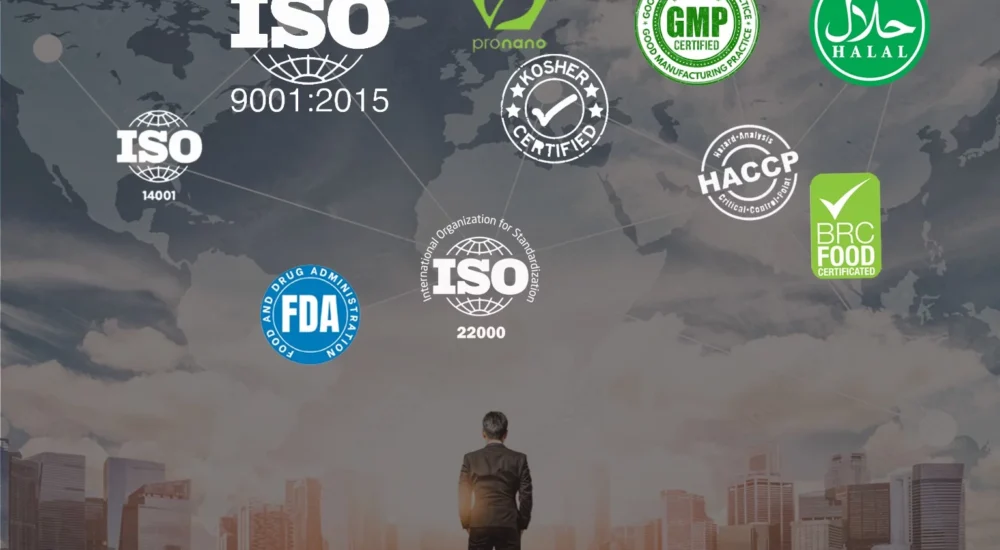
Food Quality and Safety Certifications
Food quality and safety form the bedrock of success for any business operating within the food manufacturing and biotechnology sectors. In an era marked by heightened regulatory scrutiny and growing consumer awareness, compliance with international standards is no longer just a legal obligation or a marketing choice—it is an absolute necessity to safeguard public health, mitigate operational risks, and ensure supply chain sustainability. In this comprehensive guide, we explore the primary international quality and safety certifications, their underlying operational principles, and how ProNano guides your facility toward international accreditation through structured consultancy services.
1. Demystifying International Food Quality and Safety Standards
International standard frameworks operate cohesively to protect food products at every stage of processing, handling, and distribution. Here is a detailed breakdown of the primary certifications and their practical impact:
ISO 22000: Food Safety Management Systems
ISO 22000 is an international standard that integrates the principles of quality management with food hazard controls. It establishes a unified framework for managing food safety risks across the entire supply chain, from primary production to packaging and distribution. This standard ensures that your facility maintains complete product traceability and can execute rapid product recalls during emergencies.
HACCP: Hazard Analysis and Critical Control Points
HACCP is a preventive, science-based methodology focused on preventing food hazards before they occur, rather than relying solely on end-product testing. The system requires identifying biological (e.g., bacteria), chemical (e.g., pesticide residues, cleaning agents), and physical hazards (e.g., foreign particles), establishing Critical Control Points (CCPs) along production lines, enforcing strict critical limits, and implementing continuous monitoring and corrective actions.
GMP & GHP: Good Manufacturing and Hygiene Practices
Good Manufacturing Practices (GMP) and Good Hygiene Practices (GHP) provide the essential prerequisite programs and infrastructure for any robust food safety management system. They focus on sanitary facility design, proper ventilation, smooth equipment surfaces to prevent bacterial buildup, employee hygiene, pest control, and preventing cross-contamination between raw materials and finished goods.
Advanced Standards for Global Market Entry (BRCGS & FDA)
- BRCGS (Global Standard for Food Safety): Recognized by the Global Food Safety Initiative (GFSI), this rigorous standard evaluates manufacturing environments, process controls, and operational hygiene. Achieving BRCGS certification is a key requirement for supplying major international retail chains.
- US FDA Compliance & FSMA: Aligning with US Food and Drug Administration regulations and the Food Safety Modernization Act (FSMA) requires comprehensive risk-based preventive controls, which are mandatory for exporting and distributing food products within the United States and international markets.
Specialized and Environmental Compliance (Halal, Kosher, ISO 14001, ISO 9001)
- Halal & Kosher Certifications: These compliance standards verify that ingredients, processing aids, and production methods conform to specific dietary and religious laws, enabling expansion into major target markets globally.
- ISO 9001: Focuses on overarching quality management, vendor oversight, process efficiency, and continuous customer satisfaction.
- ISO 14001: Helps food manufacturing plants measure, monitor, and reduce their environmental impact, waste, and industrial emissions to support corporate sustainability goals.
2. Advanced Pillars in Modern Food Safety Management
Modern food processing requires going beyond basic compliance to adopt advanced operational pillars that guarantee absolute product integrity:
Allergen Management
Food allergens (such as gluten, soy, peanuts, and dairy) represent significant health risks to consumers. International safety standards require strict segregation protocols across processing lines, validated cleaning and sanitation routines, and precise labeling on final packaging to prevent cross-contact and avoid legal liabilities.
Traceability and Emergency Recall Systems
A facility’s resilience relies on its ability to trace any production batch (Lot/Batch) from raw material sourcing to retail shelves within minutes. At ProNano, we help establish bi-directional traceability systems and conduct mock recall drills to ensure your team is fully prepared to manage potential crisis situations seamlessly.
3. The ROI of Quality and Safety Compliance
Implementing accredited quality and safety systems is not an added cost or an administrative burden—it is a strategic investment that shields facilities from financial losses while unlocking significant commercial advantages:
| Strategic Area | Expected Operational and Commercial ROI |
|---|---|
| Global Market Expansion | Eliminates technical trade barriers, facilitating exports, government tenders, and listings with major retail chains. |
| Waste and Cost Reduction | Minimizes product scrap, rework rates, and the risk of costly product recalls that can damage financial stability. |
| Brand Protection and Trust | Builds long-term consumer loyalty and B2B partner confidence by consistently delivering safe, high-quality products. |
| Regulatory Compliance | Protects the facility against regulatory fines, formal warnings, and operational shutdowns caused by non-compliance. |
4. ProNano’s Step-by-Step Accreditation Methodology
At ProNano, we believe certification is the natural result of a robust operational system rather than a standalone objective. As food technology and processing consultants, we combine scientific expertise with practical solutions to prepare your facility for international accreditation without interrupting ongoing operations:
- Comprehensive Gap Analysis: We perform on-site evaluations of production lines, facility engineering, documentation, and operational behaviors to benchmark your current compliance level against target standards.
- Custom Documentation and System Design: We draft customized quality manuals, Standard Operating Procedures (SOPs), tailored HACCP plans, and control records tailored to your specific processing environment.
- Staff Training and Capability Building: We deliver targeted training programs across all organizational tiers—from floor workers to senior management—fostering a culture of food safety ownership.
- On-Site Implementation Support: Our technical experts guide the re-engineering of process flows, storage conditions, and sanitation protocols to ensure full alignment with standards.
- Simulated Internal Audits: We conduct mock audits that mirror official certification inspections to identify and resolve any procedural or documentation gaps in advance.
- Certification Liaison and Continuous Improvement: We coordinate with accredited international certification bodies, support your team during the final audit, and establish ongoing monitoring plans to sustain compliance.
Elevate Your Food Manufacturing Facility with ProNano
Building a robust food safety and quality management system is the defining step that separates conventional processing plants from industry-leading enterprises. ProNano offers end-to-end technical, engineering, and advisory solutions tailored to the scale and nature of your processing operations. Invest in product safety and the future of your brand. Contact ProNano’s experts today to schedule a readiness assessment for international accreditation.